How Silymarin Fights Lung Cancer and Stops Its Spread

Greg Howard
22nd October, 2024

How Silymarin Fights Lung Cancer and Stops Its Spread

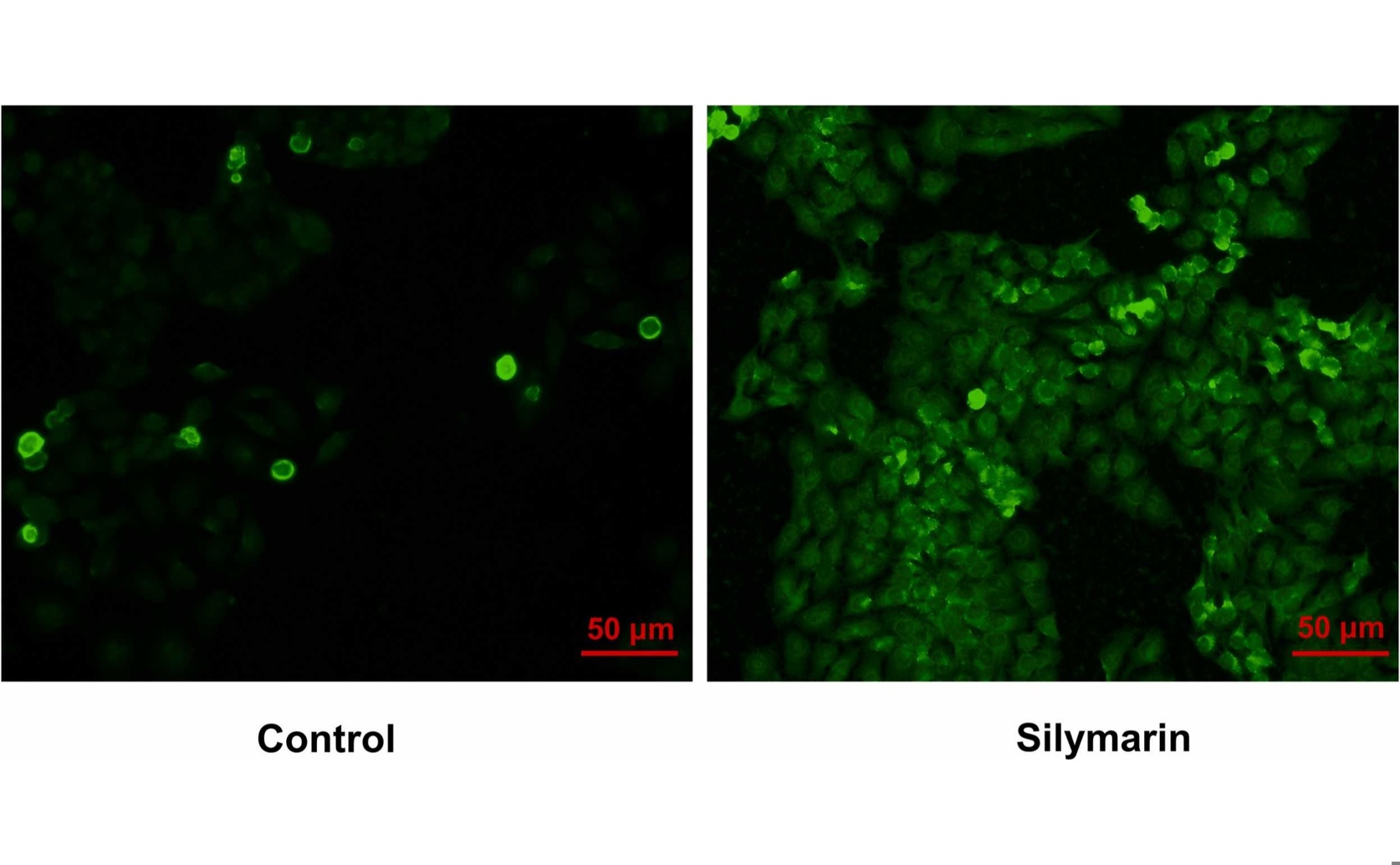
Study found that treatment with silymarin significantly increased intracellular reactive oxygen species (ROS) in A549 lung cancer cells, highlighting the induction of oxidative stress as a key mechanism contributing to its cancer-killing effects.

Image adapted from: Srinivasan et al. / CC BY (Source)

Key Findings

  • The study by SIMATS found that silymarin, a compound from milk thistle, can reduce lung cancer cell invasion and metastasis
  • Silymarin inhibits enzymes MMP-2 and MMP-9, which are crucial for cancer cell movement and ECM degradation
  • Silymarin treatment leads to cancer cell death, reduced cell proliferation, and impaired ability of cancer cells to migrate and form new colonies
Lung cancer metastasis remains a significant challenge in cancer therapy, necessitating the exploration of novel treatment modalities. A recent study conducted by the Saveetha Institute of Medical and Technical Science (SIMATS) has explored the inhibitory effects of silymarin, a natural compound derived from milk thistle, on lung cancer metastasis[1]. This study reveals the underlying processes, focusing on the activities of matrix metalloproteinase (MMP) 2 and MMP-9, which are enzymes known to play critical roles in cancer cell invasion and metastasis. Metastasis is the primary cause of cancer-related deaths, yet it remains poorly understood[2]. The invasive tumor cells interact with various proteins and cells on their way to the target site, and these interactions are crucial for understanding the metastatic process. Additionally, the extracellular matrix (ECM), a major component of the tumor microenvironment, undergoes extensive reorganization during cancer progression[3]. The abnormal ECM directly promotes cancer cell proliferation, survival, migration, and differentiation. The SIMATS study investigated the effects of silymarin on lung cancer cells using a combination of in vitro and molecular docking analyses. The researchers found that silymarin effectively reduced the motility and invasion of lung cancer cells by modulating the expression of MMP-2 and MMP-9. These findings are significant because MMPs are enzymes that degrade the ECM, facilitating cancer cell invasion and metastasis[3]. By inhibiting these enzymes, silymarin potentially impedes the metastatic process. The study also employed MTT assays, which revealed a dose-dependent inhibition of cell proliferation upon silymarin treatment, with the IC50 value identified at 58 µM. The IC50 value is the concentration of a substance that inhibits 50% of the cell population, indicating the potency of silymarin in reducing cancer cell viability. Furthermore, the study observed apoptotic morphology in silymarin-treated groups, which is indicative of programmed cell death—a desirable effect in cancer therapy. Cell cycle analysis exhibited cell cycle arrest at the G1 phase, with a 25.8% increase in apoptosis in silymarin-treated groups, as evidenced by Annexin V staining. This finding is crucial because cell cycle arrest can prevent cancer cells from proliferating. Additionally, silymarin treatment resulted in elevated lipid peroxidation levels and reduced enzymatic antioxidant levels, indicating its potential role in inducing oxidative stress and subsequent cell death. The study also employed gelatin zymography assays, which demonstrated that silymarin has the ability to inhibit MMP-2 and MMP-9 expression in lung cancer cells. This inhibition is further supported by molecular docking studies, which showed strong binding affinities of silymarin with MMP-2 and MMP-9, with binding energies of -10.26 and -6.69 kcal/mol, respectively. Moreover, cell migration assays and colony formation assays revealed impaired migratory and colony-forming abilities of lung cancer cells when treated with silymarin. This suggests that silymarin not only inhibits the enzymes that facilitate metastasis but also directly affects the cancer cells' ability to migrate and form new colonies. The findings from this study highlight the multifaceted anticancer properties of silymarin against lung cancer metastasis. By modulating the expression of key enzymes involved in the metastatic process and inducing cell cycle arrest and apoptosis, silymarin shows potential as an adjuvant treatment strategy for lung cancer. These insights contribute to the growing body of research aimed at understanding and combating metastasis, which is responsible for the majority of cancer-related deaths[4].

MedicineHealthBiochem

References

Main Study

1) Exploring the anti-cancer and antimetastatic effect of Silymarin against lung cancer.

Published 21st October, 2024

https://doi.org/10.1016/j.toxrep.2024.101746


Related Studies

2) Molecular principles of metastasis: a hallmark of cancer revisited.

https://doi.org/10.1038/s41392-020-0134-x


3) The Functional Role of Extracellular Matrix Proteins in Cancer.

https://doi.org/10.3390/cancers14010238


4) Cancer Metastasis: A Reappraisal of Its Underlying Mechanisms and Their Relevance to Treatment.

https://doi.org/10.1146/annurev-pathol-020117-044127


Related Articles

An unhandled error has occurred. Reload 🗙