
Fluid Pressure and Cell Changes Drive Blood Vessel Growth
Greg Howard
23rd February, 2025


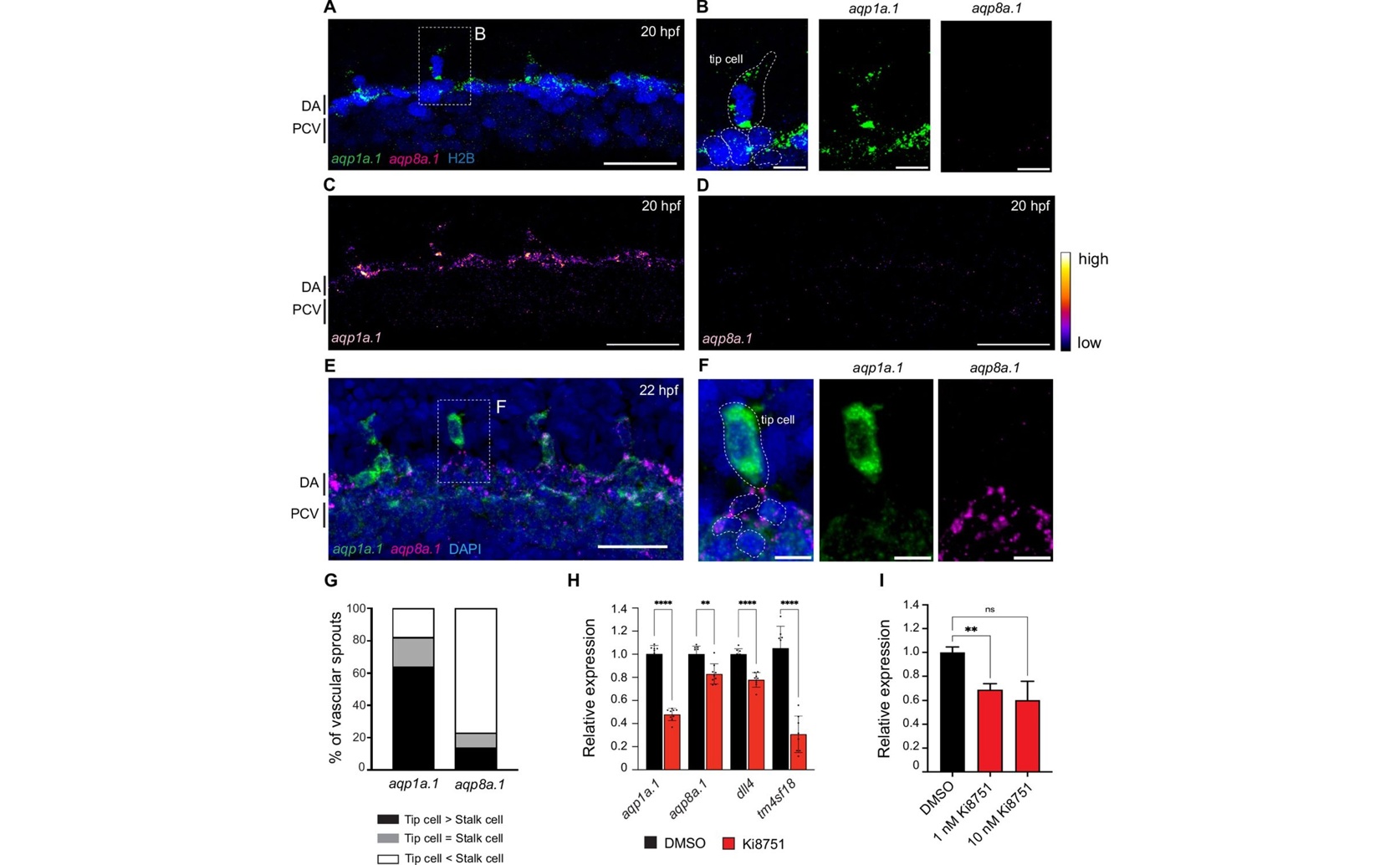
High-resolution imaging of vascular sprouts in Zebrafish (Danio rerio) reveals differential enrichment of aqp1a.1 in tip cells and aqp8a.1 in stalk cells (a–g), while quantitative PCR assays demonstrate that the expression of these water channels is induced by VEGFR2 signaling in both zebrafish and human endothelial cells (h, i).
Key Findings
- *Researchers in Kobe, Japan discovered that Aquaporin proteins help blood vessel cells move even when usual movement methods are blocked.*
- *Disabling these Aquaporins in zebrafish leads to slower and impaired blood vessel formation due to smaller cell size and fewer membrane extensions.*
- *Manipulating Aquaporin activity could offer new ways to promote or inhibit blood vessel growth in various diseases.*
References
Main Study
1) Combined forces of hydrostatic pressure and actin polymerization drive endothelial tip cell migration and sprouting angiogenesis
Published 20th February, 2025
https://doi.org/10.7554/eLife.98612
Related Studies
2) Hydraulic control of mammalian embryo size and cell fate.
3) Aquaporins enriched in endothelial vacuole membrane regulate the diameters of microvasculature in hyperglycaemia.
4) Trans-epithelial fluid flow and mechanics of epithelial morphogenesis.
5) Hydrostatic pressure as a driver of cell and tissue morphogenesis.
Related Articles
 22nd October, 2024 | Greg Howard