How Dehydration Triggers Key Gene Activity in a Wide Range of Plants

Greg Howard
29th January, 2025

How Dehydration Triggers Key Gene Activity in a Wide Range of Plants

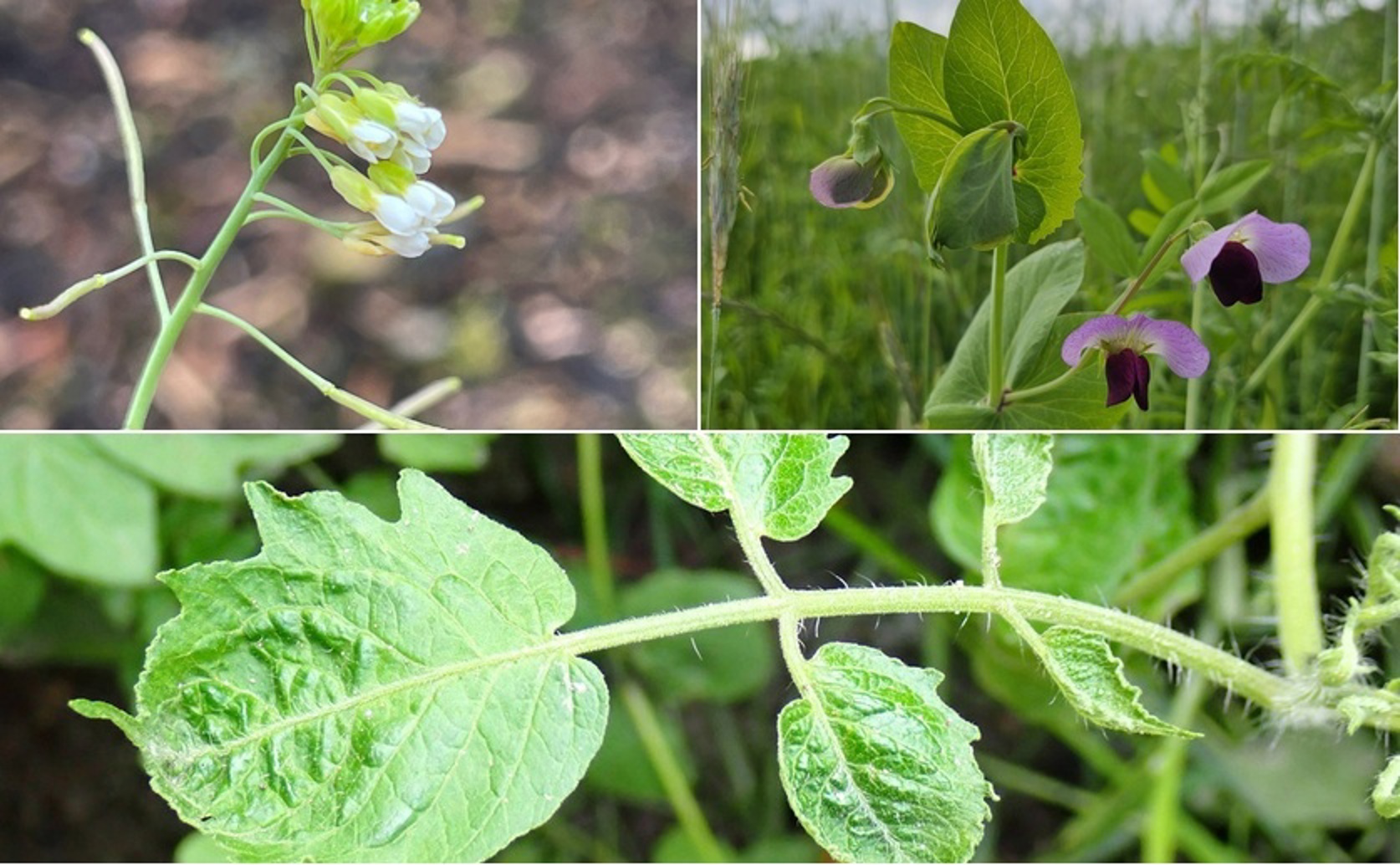
This study found that despite their differences, Arabidopsis (Arabidopsis thaliana, left), pea (Pisum sativum, right), and tomato (Solanum lycopersicum, bottom) all use a specific, evolutionarily related gene to quickly activate their defenses against dehydration and conserve water.

Composite: Natural Science News / CC BY. [Sources]

Key Findings

  • Researchers identified a single NCED gene in Arabidopsis, pea, and tomato that rapidly activates during dehydration to trigger stomatal closure and reduce water loss
  • These dehydration-responsive NCED genes belong to a conserved subclade, suggesting an evolutionary role in rapid drought responses across eudicot species
  • The findings could help improve drought tolerance in crops by predicting and utilizing similar NCED genes in other plants
Plants face constant challenges from their environment, including water scarcity. A critical adaptive mechanism involves the rapid synthesis of abscisic acid (ABA), a plant hormone that helps minimize water loss by triggering the closure of stomata—tiny pores on leaf surfaces. However, the genetic basis for this rapid ABA production has remained unclear, particularly given the presence of multiple Nine-cis-Epoxycarotenoid Dioxygenase (NCED) genes in most plant species. These genes encode the key enzyme in ABA biosynthesis. Recent research from the University of Tasmania[1] has identified a single NCED gene within a specific subclade responsible for rapid dehydration responses in three model dicot species: Arabidopsis thaliana, pea, and tomato. This study provides new insights into the evolutionary conservation of this response and its potential applications in improving drought tolerance in crops. The study focused on understanding which NCED genes are transcriptionally activated during dehydration stress, both in the short term (within 20 minutes) and over longer durations (hours). The researchers found that in each species, a single NCED gene—AtNCED3 in Arabidopsis, PsNCED2 in pea, and SlNCED1 in tomato—was consistently and rapidly upregulated in response to dehydration. This activation coincided with the physiological closure of stomata, a critical response to limit water loss. To confirm the functional importance of this gene, the researchers used mutant Arabidopsis plants lacking AtNCED3 and observed impaired stomatal responses to sudden drops in humidity. This finding underscores the pivotal role of this gene in the rapid dehydration response. The study also explored the evolutionary relationships among NCED genes across diverse land plant species. Using sequence data, the researchers determined that the dehydration-responsive NCED genes in Arabidopsis, pea, and tomato belong to the same subclade within the NCED gene family. This phylogenetic analysis suggests that this subclade has a conserved role in rapid dehydration responses across eudicot species. Such conservation could help predict dehydration-responsive NCED genes in other plants, offering a valuable tool for crop improvement. These findings build on earlier research into the role of NCED genes in ABA biosynthesis. Previous studies[2] had shown that NCED3 is a major contributor to ABA production under water deficit conditions in Arabidopsis. The current research expands this understanding by identifying homologous genes in other species and confirming their rapid activation during dehydration. Additionally, the study aligns with earlier work[3] on ABA's role in coordinating plant responses to environmental stress, including its ability to modulate turgor pressure and other physiological processes. In tomato, earlier findings[4] highlighted the role of SlNCED1 in fruit ripening and ABA accumulation, but this study emphasizes its critical function in stress responses. The dual role of SlNCED1 in both fruit development and dehydration responses illustrates the versatility of NCED genes in regulating ABA production under diverse conditions. The methods employed in this study included transcriptional profiling to measure gene expression during dehydration, mutant analysis to assess physiological responses, and phylogenetic analysis to trace the evolutionary history of NCED genes. These approaches collectively provided robust evidence for the conserved role of a specific NCED subclade in rapid dehydration responses. By identifying a conserved genetic mechanism for rapid ABA production, this study offers a foundation for future research aimed at enhancing drought tolerance in crops. The ability to predict dehydration-responsive NCED genes in other eudicot species could accelerate the development of genetically resilient plants, addressing a critical challenge in agriculture as water scarcity becomes increasingly prevalent.

GeneticsBiochemPlant Science

References

Main Study

1) Dehydration rapidly induces expression of NCED genes from a single subclade in diverse eudicots.

Published 28th January, 2025

https://doi.org/10.1007/s00425-025-04626-z


Related Studies

2) Epoxycarotenoid cleavage by NCED5 fine-tunes ABA accumulation and affects seed dormancy and drought tolerance with other NCED family members.

https://doi.org/10.1111/j.1365-313X.2011.04887.x


3) THESEUS1 modulates cell wall stiffness and abscisic acid production in Arabidopsis thaliana.

https://doi.org/10.1073/pnas.2119258119


4) SlNCED1 and SlCYP707A2: key genes involved in ABA metabolism during tomato fruit ripening.

https://doi.org/10.1093/jxb/eru288


Related Articles

An unhandled error has occurred. Reload 🗙