How Yulu Seaberry Grows and Responds to Drought Stress: An In-Depth Analysis

Greg Howard
11th December, 2024

How Yulu Seaberry Grows and Responds to Drought Stress: An In-Depth Analysis

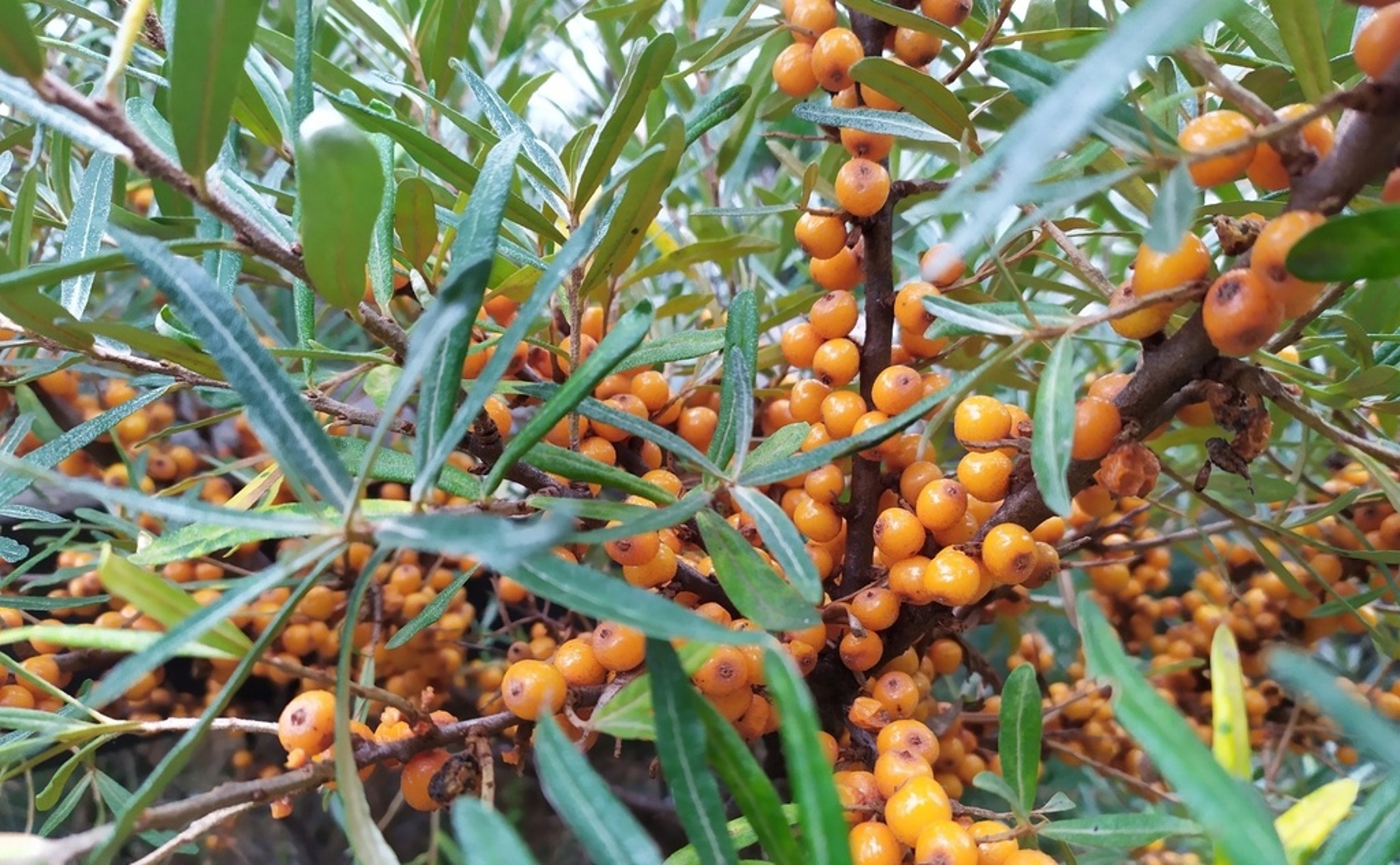
Sea-buckthorn (Hippophae rhamnoides)

Photo adapted from: Ewa Olchanowska / CC BY (Source)

Key Findings

  • The study by Hebei Agricultural University examined how the tree species H. rhamnoides responds to drought stress
  • Drought stress reduced plant height, ground diameter, root biomass, and superoxide dismutase (SOD) activity, but increased main root length
  • Severe drought conditions led to significant changes in gene and protein expression, highlighting the importance of plant hormone signaling and peroxisome functions in drought response
Drought stress is a significant challenge that negatively impacts plant growth and productivity. Understanding how plants respond to drought at a cellular and molecular level is crucial for developing drought-resistant varieties. A recent study conducted by Hebei Agricultural University focused on the response of Hippophae rhamnoides (H. rhamnoides), a tree species known for its ecological and economic benefits in arid regions, to drought stress[1]. In this study, one-year-old Yulu H. rhamnoides was subjected to three different water conditions: control (CK), moderate (T1), and severe (T2), over 120 days. Researchers assessed phenotypic traits and physiological indices, and performed RNA-Seq transcriptome and Tandem Mass Tags (TMT) proteome analysis on the roots. The results showed that drought stress significantly reduced plant height, ground diameter, root biomass, and superoxide dismutase (SOD) activity. However, the main root length increased under drought conditions. Compared to the control, 5789 and 5594 differential genes and 63 and 1012 differential proteins were identified in the moderate and severe drought conditions, respectively. This indicates a substantial change in gene and protein expression in response to drought. The combined transcriptome and proteome analysis revealed that 28 and 126 differentially expressed genes (DEGs) and differentially expressed proteins (DEPs) were associated with moderate and severe drought conditions, respectively. Seven and 36 of these genes achieved effective KEGG annotation, highlighting their involvement in various biological processes. Notably, under severe drought conditions, 38 plant hormone signal transduction function genes and 10 peroxisome-related genes were identified. This suggests that plant hormone signaling and peroxisome functions are crucial in the drought response of H. rhamnoides. The study found that as drought stress increased, the combined expression of DEGs and DEPs also increased. H. rhamnoides appeared to allocate more resources toward catalase (CAT) activity while decreasing SOD and peroxidase (POD) activities to mitigate oxidative stress induced by drought. This finding aligns with previous studies that have shown the importance of antioxidant enzymes in drought tolerance. For example, overexpression of the ERF194 transcription factor in poplar increased CAT and SOD activities, enhancing drought tolerance[2]. Similarly, the DnaJ-like zinc finger protein OR in Arabidopsis thaliana was found to increase the activities of SOD and CAT under drought stress, contributing to improved drought tolerance[3]. Additionally, the study by Hebei Agricultural University highlighted the significant role of plant hormone signal transduction in drought response. This is consistent with earlier findings that plant hormone signaling pathways are critical in mediating drought responses. For instance, the study on Medicago truncatula demonstrated that drought stress modulates membrane lipid order and endocytosis, which are important for signal transduction[4]. In conclusion, the study by Hebei Agricultural University provides valuable insights into the molecular mechanisms underlying drought stress response in H. rhamnoides. By identifying key genes and proteins involved in antioxidant activity and hormone signaling, this research contributes to our understanding of how plants cope with drought. These findings could be used to develop drought-resistant varieties, which are essential for agriculture in arid and semi-arid regions.

GeneticsBiochemPlant Science

References

Main Study

1) Growth and physiological response of Yulu Hippophae rhamnoides to drought stress and its omics analysis.

Published 31st December, 2024 (future Journal edition)

https://doi.org/10.1080/15592324.2024.2439256


Related Studies

2) Transcription Factor ERF194 Modulates the Stress-Related Physiology to Enhance Drought Tolerance of Poplar.

https://doi.org/10.3390/ijms24010788


3) The DnaJ-like Zinc Finger Protein ORANGE Promotes Proline Biosynthesis in Drought-Stressed Arabidopsis Seedlings.

https://doi.org/10.3390/ijms23073907


4) Drought stress stimulates endocytosis and modifies membrane lipid order of rhizodermal cells of Medicago truncatula in a genotype-dependent manner.

https://doi.org/10.1186/s12870-019-1814-y


Related Articles

An unhandled error has occurred. Reload 🗙