
Spread and Changes of Tomato Virus during Plant-to-Plant Transmission
Jim Crocker
2nd November, 2024


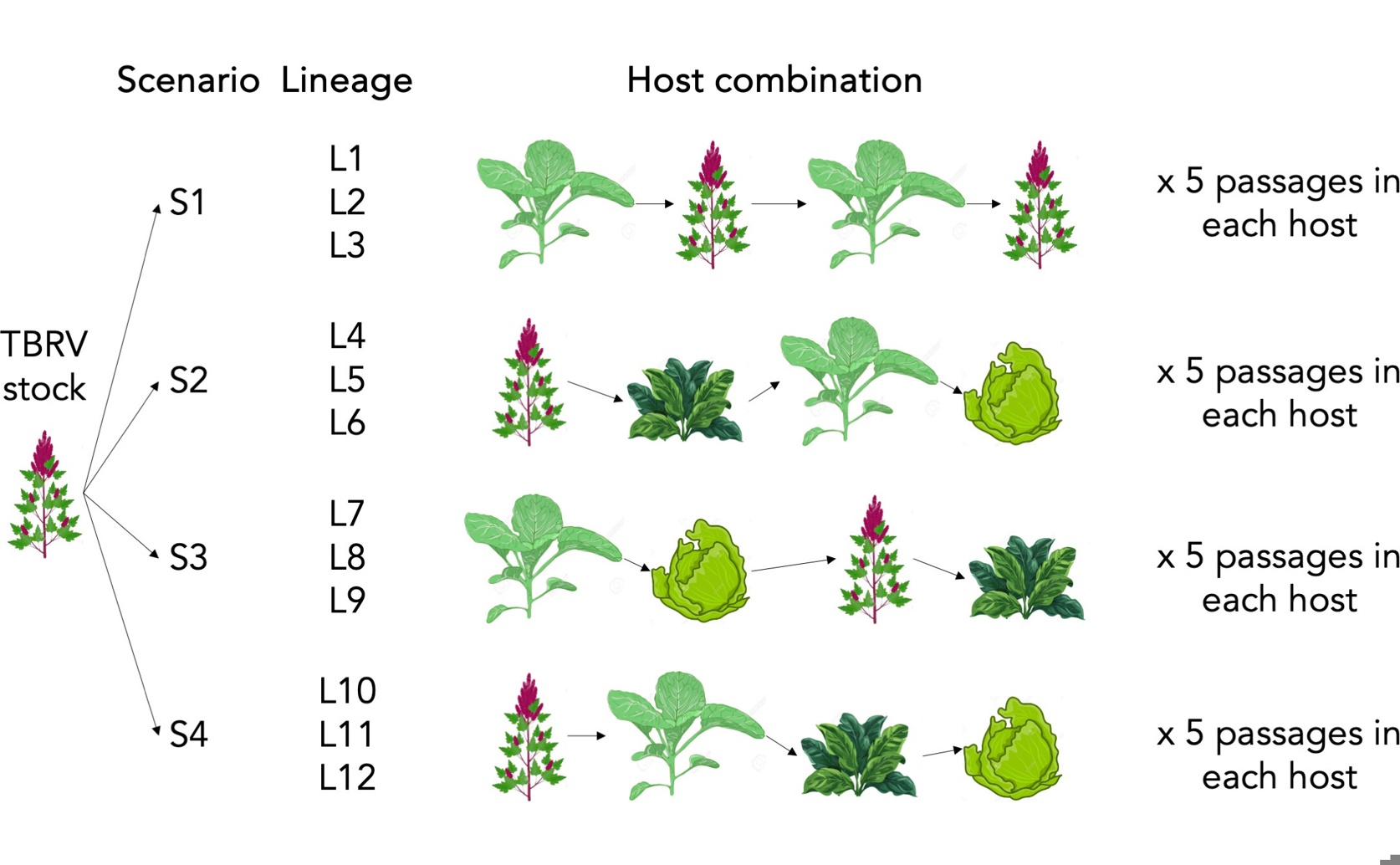
This experimental design, involving the serial passaging of Tomato black ring virus (Nepovirus nigranuli) through four distinct scenarios of host plant combinations (S1–S4), revealed that the sequence of host-to-host transmission significantly influences the generation and abundance of defective viral genomes.
Key Findings
- The study by the Institute of Plant Protection in Poland investigated how different host plants affect the formation and dynamics of defective viral genomes (DVGs) in tomato black ring virus (TBRV)
- Researchers found that DVGs were generated when TBRV was passed through different host species, with the abundance of DVGs varying across plant combinations
- Deletions were the most common type of DVGs, and their diversity and abundance were influenced by the sequence of host species used in the study
References
Main Study
1) Population dynamics of defective viral genomes of tomato black ring virus during host-to-host transmission.
Published 31st October, 2024
https://doi.org/10.1128/jvi.01244-24
Related Studies
2) Defective viral genomes are key drivers of the virus-host interaction.
3) Identification and quantification of defective virus genomes in high throughput sequencing data using DVG-profiler, a novel post-sequence alignment processing algorithm.
4) Defective RNA particles derived from Tomato black ring virus genome interfere with the replication of parental virus.
5) Accumulation of copy-back viral genomes during respiratory syncytial virus infection is preceded by diversification of the copy-back viral genome population followed by selection.
Related Articles
 9th October, 2024 | Jim Crocker