Eating Cinnamon Can Help You Live Longer and Stay Healthier

Greg Howard
7th January, 2025

Eating Cinnamon Can Help You Live Longer and Stay Healthier

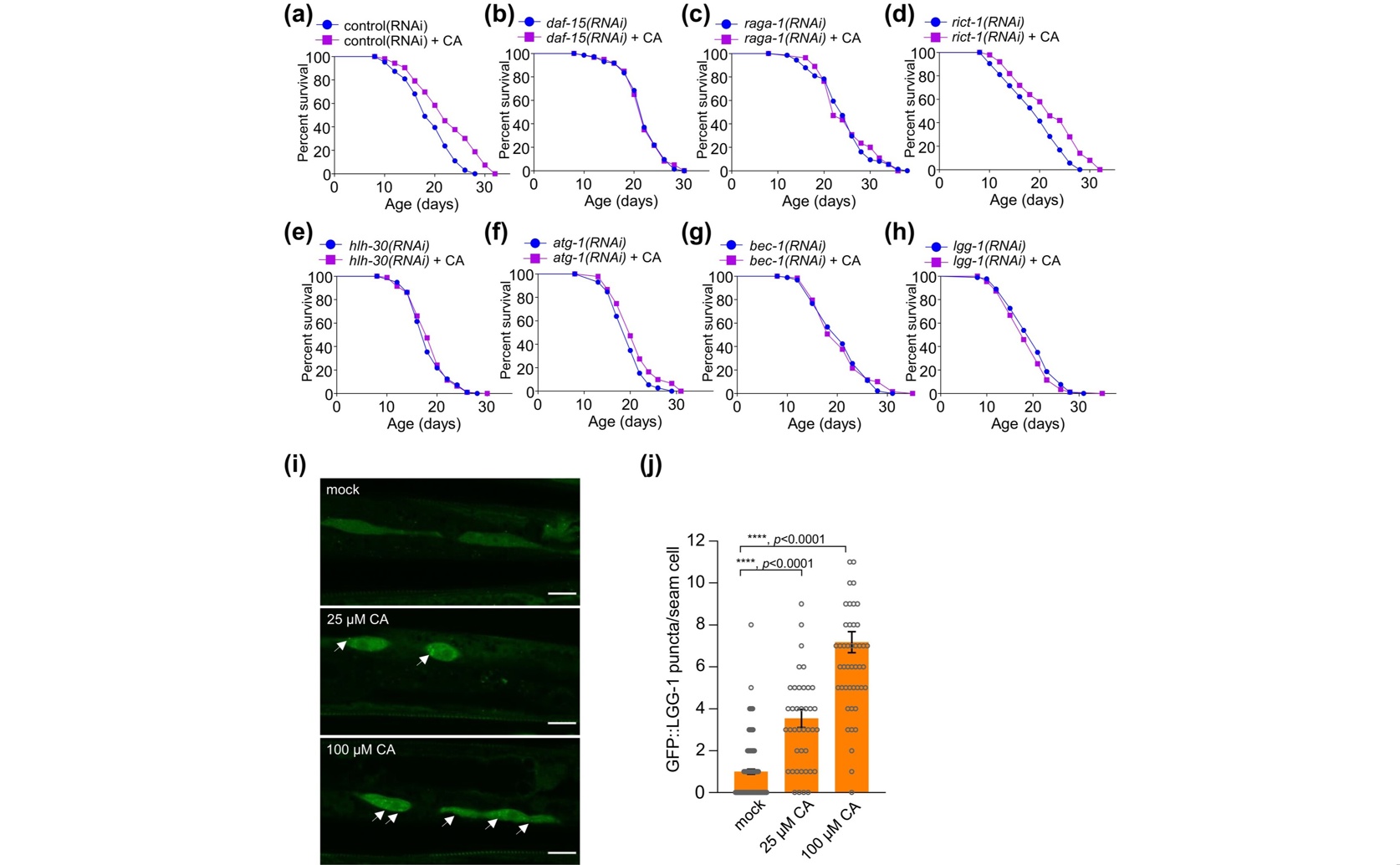
Cinnamaldehyde extends lifespan by stimulating autophagy (i, j), a pro-longevity effect that requires the mTORC1 signaling pathway and essential autophagy genes for its mechanism of action (a–h).

Image adapted from: Guo et al. / CC BY (Source)

Key Findings

  • Researchers at Huazhong University found that cinnamaldehyde (CA), an active ingredient in cinnamon, significantly extended the lifespan of C. elegans
  • CA improved stress resistance and reduced β-Amyloid toxicity in a C. elegans model of Alzheimer's disease, suggesting benefits for healthspan
  • The study revealed that CA works by inhibiting mTORC1 and promoting autophagy, mimicking the effects of dietary restriction without reducing food intake
Cinnamon, a popular spice known for its aromatic flavor, has long been considered beneficial for human health, with potential therapeutic effects on diseases such as diabetes, cancer, and neurodegenerative conditions. Despite its widespread use, the mechanisms behind cinnamon's health benefits have been unclear. Recent research conducted by the Huazhong University of Science and Technology[1] has shed light on this topic, using the model organism Caenorhabditis elegans (C. elegans) to investigate the effects of cinnamaldehyde (CA), the active ingredient in cinnamon oil, on aging and disease. The study found that feeding C. elegans cinnamaldehyde significantly prolonged their lifespan. Additionally, CA promoted stress resistance and reduced β-Amyloid toxicity in a C. elegans model of Alzheimer's disease. These findings suggest that CA can enhance both lifespan and healthspan, the period of life spent in good health. The researchers discovered that CA achieves these benefits through its effects on two critical cellular pathways: mTORC1 and autophagy. The mechanistic target of rapamycin (mTOR) is a master regulator of cellular metabolism, existing in two complexes, mTORC1 and mTORC2[2]. mTORC1, in particular, is known to drive cell growth and inhibit autophagy—a process where cells degrade and recycle their components to maintain cellular homeostasis[3]. The study revealed that CA induces a state similar to dietary restriction, which is known to extend lifespan in various organisms, without actually reducing food intake[4]. This suggests that CA acts as a dietary restriction mimetic, mimicking the beneficial effects of dietary restriction at the cellular level. The connection between mTORC1, autophagy, and aging is well-documented. Autophagy plays a crucial role in eliminating damaged molecules and organelles, promoting cellular health and longevity[3]. By inhibiting mTORC1, CA removes the block on autophagy, allowing the cells to engage in this beneficial recycling process. This relationship between mTOR and autophagy is part of a complex regulatory loop where autophagy lies both downstream and upstream of mTOR[2]. Interestingly, the study found that CA's effects on mTORC1 and autophagy signaling are conserved in human cells, suggesting that the mechanisms observed in C. elegans may also apply to humans. This conservation across species highlights the potential for cinnamon to be used as a therapeutic agent to promote healthy aging and mitigate age-related diseases in humans. The findings from this study build on previous research that has highlighted the importance of nutrient-sensing pathways in aging and disease. For instance, studies have shown that dietary restriction and reduced activity of nutrient-sensing pathways can lower the incidence of age-related diseases and increase lifespan in various organisms, including humans[4]. The new research suggests that CA can achieve similar benefits by modulating these pathways. Moreover, the study ties into existing knowledge about the role of Nrf/CNC proteins in cellular protection and longevity. In C. elegans, the ortholog of these proteins, SKN-1, plays a central role in promoting longevity through its regulation of stress responses and metabolic processes[5]. The involvement of CA in enhancing stress resistance and reducing neurodegenerative toxicity aligns with the protective functions of SKN-1, further supporting the potential of CA as a beneficial compound for aging and healthspan. In conclusion, the research conducted by the Huazhong University of Science and Technology provides compelling evidence that cinnamaldehyde, the active ingredient in cinnamon oil, promotes longevity and healthspan by modulating mTORC1 and autophagy signaling. These findings not only enhance our understanding of the mechanisms behind cinnamon's health benefits but also open up new avenues for developing dietary and therapeutic strategies to promote healthy aging and combat age-related diseases.

HealthBiochemSpices

References

Main Study

1) Dietary cinnamon promotes longevity and extends healthspan via mTORC1 and autophagy signaling.

Published 6th January, 2025

https://doi.org/10.1111/acel.14448


Related Studies

2) The mTOR-Autophagy Axis and the Control of Metabolism.

https://doi.org/10.3389/fcell.2021.655731


3) Autophagy in healthy aging and disease.

https://doi.org/10.1038/s43587-021-00098-4


4) Extending healthy life span--from yeast to humans.

https://doi.org/10.1126/science.1172539


5) SKN-1/Nrf, stress responses, and aging in Caenorhabditis elegans.

https://doi.org/10.1016/j.freeradbiomed.2015.06.008


Related Articles

An unhandled error has occurred. Reload 🗙