Thyme, Cumin, and Sumac Extracts Impact Liver Cancer Cell Death

Jenn Hoskins
27th March, 2025

Thyme, Cumin, and Sumac Extracts Impact Liver Cancer Cell Death

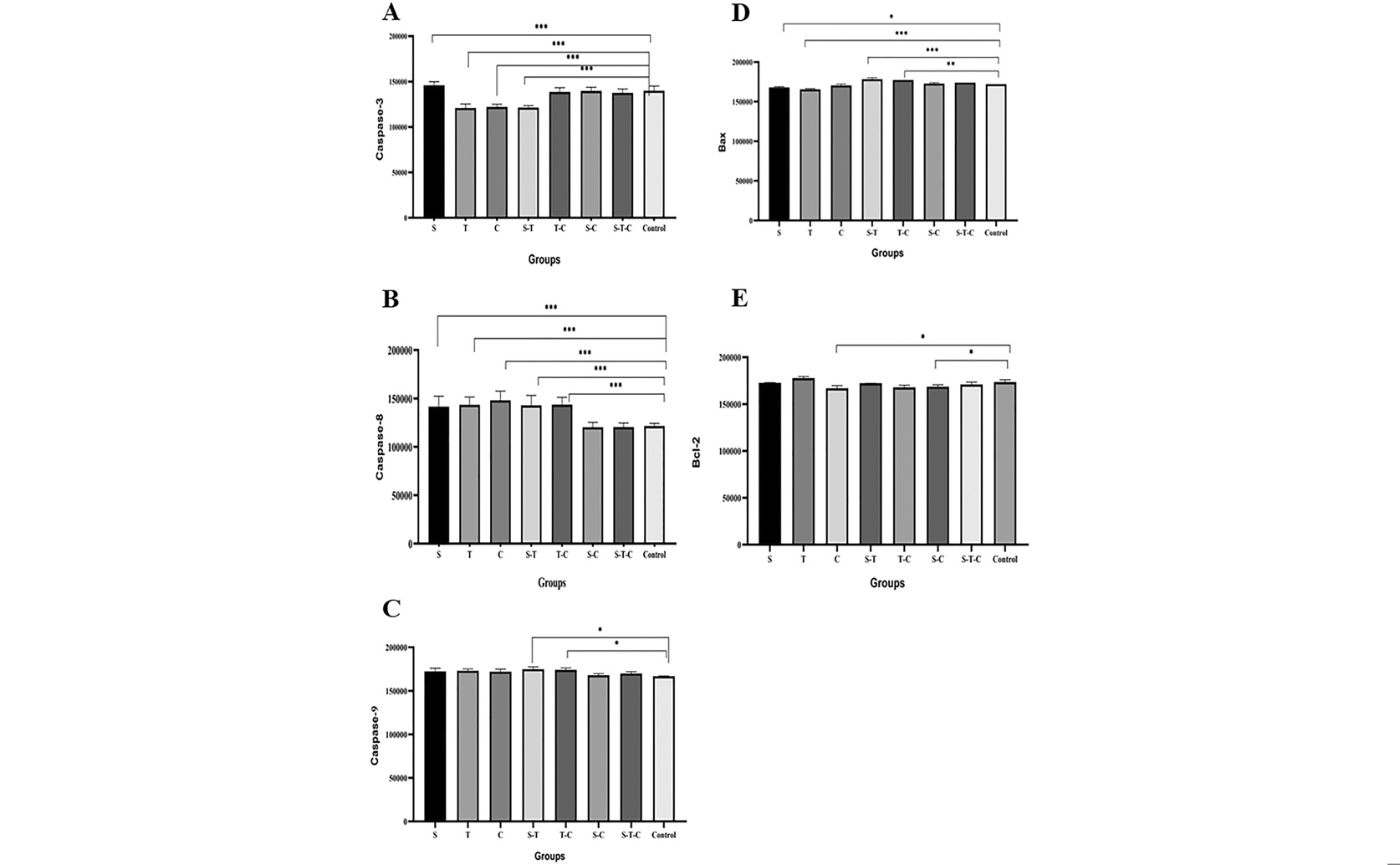
Treatments with sumac, thyme, and cumin extracts promote programmed cell death in liver cancer cells by altering the expression of key regulatory proteins, including caspases (a–c), the pro-apoptotic protein Bax (d), and the anti-apoptotic protein bcl-2 (e).

Image adapted from: Firat et al. / CC BY (Source)

Key Findings

  • Researchers at Erciyes University in Türkiye found that extracts from sumac, thyme, and cumin can kill liver cancer cells
  • Thyme and cumin influenced proteins that control cell death, while sumac increased a key protein called caspase-3
  • Combining sumac and cumin made their cancer-fighting effects stronger, suggesting potential for use in treatments
Liver cancer, particularly hepatocellular carcinoma, remains a significant health challenge globally, driving researchers to seek new treatment avenues. A recent study conducted by Erciyes University in Kayseri, Türkiye[1] explored the effects of natural plant extracts—sumac, thyme, and cumin—on liver cancer cells to assess their potential in promoting cell death. Sumac (Rhus coriaria) is well-regarded for its antioxidant and therapeutic properties[2], while thyme (Thymus vulgaris) has been noted for its anticancer activities[3]. Cumin, another commonly used spice, also possesses medicinal benefits. The researchers utilized HepG2 cells, a type of liver cancer cell line, to examine how these extracts influence apoptosis and paraptosis, two distinct forms of programmed cell death. Apoptosis is a controlled process where cells orderly die, essential for eliminating damaged or unnecessary cells. Paraptosis, in contrast, involves cell death without the typical features of apoptosis, such as DNA fragmentation. The study focused on several proteins associated with these processes, including mTOR, caspase-8, caspase-9, Bax, bcl-2, and caspase-3. The findings revealed that thyme and cumin extracts significantly affected the expression of proteins like mTOR, caspase-8, caspase-9, Bax, and bcl-2, which play crucial roles in the apoptotic pathway. Specifically, sumac extract was found to increase the expression of caspase-3, a key protein involved in the execution phase of apoptosis. Additionally, the levels of GRP78/Bip and DDIT3/Chop proteins, which are indicators of paraptosis, did not show significant changes across the different extracts. This suggests that the cell death induced by these extracts was primarily through apoptosis rather than paraptosis. The study also examined the interactions between these extracts when used in combination. The combination of sumac and thyme exhibited an additive effect, meaning their combined impact on inducing cell death was equal to the sum of their individual effects. Conversely, the combination of thyme and cumin showed an antagonistic effect, where their combined use reduced the overall efficacy in promoting cell death. Notably, combinations involving sumac and cumin demonstrated a synergistic effect, enhancing each other's anticancer properties. This synergistic interaction was also observed when all three extracts—sumac, thyme, and cumin—were used together. These results indicate that sumac, thyme, and cumin extracts can effectively induce apoptosis in liver cancer cells through different protein pathways. The additive and synergistic interactions between these extracts highlight their potential as complementary treatments in managing hepatocellular carcinoma. By building on the antioxidant and anticancer properties previously identified[2][3], this study provides a foundation for further research into plant-based therapies for cancer. The research underscores the importance of understanding how natural compounds can interact at the molecular level to enhance their therapeutic effects. The specific increase in caspase-3 expression by sumac aligns with its known ability to promote apoptosis[2], while thyme's impact on multiple apoptotic proteins corroborates its established anticancer activities[3]. Cumin's role in these interactions suggests it may enhance or modulate the effects of other extracts, offering a versatile approach to cancer treatment. By focusing on the molecular mechanisms and protein expressions involved, the study provides valuable insights into how these natural extracts can be harnessed to support existing cancer therapies. The synergistic effects observed, particularly with combined use of sumac and cumin, open new avenues for developing more effective treatment protocols that utilize the combined strengths of multiple plant-based compounds. Overall, the study from Erciyes University contributes to the growing body of evidence supporting the use of natural extracts in cancer treatment. The ability of sumac, thyme, and cumin to induce apoptosis in liver cancer cells, especially through synergistic interactions, points to their potential role in future therapeutic strategies against hepatocellular carcinoma.

MedicineHealthSpices

References

Main Study

1) Effects of Thyme, Cumin, and Sumac Extracts on Apoptosis and Paraptosis in Hepatocellular Carcinoma: Synergistic, Antagonistic, or Additive Properties

Published 24th March, 2025

https://doi.org/10.1002/fsn3.70106


Related Studies

2) Pharmacological and Antioxidant Activities of Rhus coriaria L. (Sumac).

https://doi.org/10.3390/antiox10010073


3) New insights into the cytotoxic effects of Thymus vulgaris essential oil on the human triple-negative breast cancer cell line MDA-MB-231.

https://doi.org/10.1016/j.tiv.2023.105705


Related Articles

An unhandled error has occurred. Reload 🗙