How a Receptor Helps Cinnamon Repel Pests

Jenn Hoskins
18th March, 2025

How a Receptor Helps Cinnamon Repel Pests

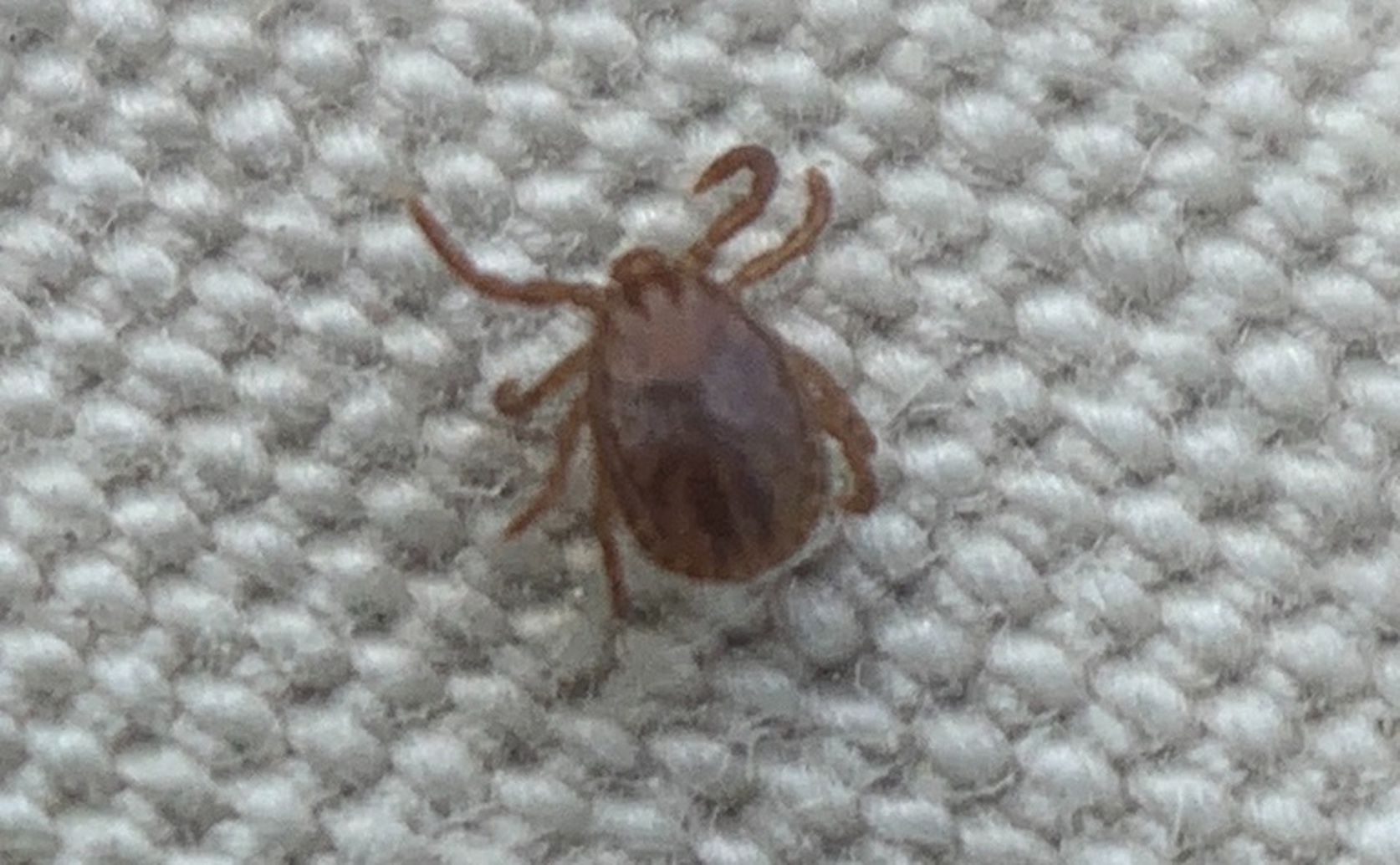
Asian Longhorned Tick (Haemaphysalis longicornis)

Photo adapted from: Carrie Seltzer / CC BY (Source)

Key Findings

  • Scientists in China and Kenya discovered that cinnamaldehyde, a natural compound from cinnamon, effectively repels harmful ticks
  • Cinnamaldehyde blocks ticks' sensory organs, making it harder for them to find hosts and reducing their ability to transmit diseases
  • The research identified specific tick receptors targeted by cinnamaldehyde, offering a safe and eco-friendly alternative to traditional chemical repellents
Arthropod-borne diseases like Lyme disease, Dengue fever, and Zika virus pose significant health risks globally, leading to over a million deaths each year. Controlling these vectors, which include ticks and mosquitoes, is crucial in reducing disease transmission. Traditional chemical repellents, such as DEET, have been widely used[2]. However, concerns about toxicity, environmental impact, and the development of resistance have driven researchers to explore natural alternatives. A recent study by researchers at the Chinese Academy of Agricultural Sciences and Egerton University, Kenya[1], investigates cinnamaldehyde, a compound found in cinnamon oil, as a potential eco-friendly repellent against ticks. Ticks rely heavily on their sensory organs to locate hosts, mates, and suitable environments. These sensory systems are finely tuned through evolution to detect specific volatile organic compounds (VOCs) that guide their behavior[3]. Understanding how repellents interact with these sensory mechanisms can lead to more effective and sustainable control strategies. The study focused on Haemaphysalis longicornis, a parthenogenetic tick known for spreading various diseases. Cinnamaldehyde demonstrated strong repellent effects against these ticks. To uncover how it works, the researchers examined its impact on the ticks' Haller’s organs, specialized sensory structures used for detecting environmental cues. Electrophysiological recordings revealed that cinnamaldehyde altered the electrical responses of these organs, indicating that it interferes with the ticks' ability to process sensory information. Further analysis through transcriptome sequencing identified the involvement of ionotropic receptors (HL-IR) in the ticks' response to cinnamaldehyde. These receptors are crucial for detecting chemical signals and initiating behavioral responses. The study found that HL-IRs were expressed across various tissues and developmental stages of the ticks, with particularly high expression in the Haller’s organs. This widespread expression suggests that HL-IRs play a fundamental role in the tick's sensory perception. To confirm the role of HL-IRs in repellent behavior, the researchers used a technique called RNA interference to reduce the expression of HL-IR genes in the ticks. Ticks with lowered HL-IR levels showed a significant decrease in repellency when exposed to cinnamaldehyde. Additionally, their electrophysiological responses in the Haller’s organs were diminished, reinforcing the connection between HL-IRs and the repellent effect. The study also explored the binding interaction between cinnamaldehyde and HL-IRs. Using competitive fluorescence binding assays and identifying mutation sites, the researchers discovered that the amino acid residue 218ASN is critical for cinnamaldehyde binding to HL-IRs. This specific binding is essential for triggering the repellent behavior in ticks, highlighting a targeted mechanism through which cinnamaldehyde acts. Integrating these findings with previous research, it becomes clear that targeting the chemosensory systems of arthropods is a promising strategy for developing new repellents[3]. Unlike traditional repellents that often have broad and sometimes harmful effects, cinnamaldehyde offers a more specific and environmentally friendly alternative. Its natural origin also addresses the growing consumer demand for safer and more sustainable pest control options[2]. The implications of this study are significant for public health and agricultural practices. By leveraging natural compounds like cinnamaldehyde, it is possible to develop effective repellents that minimize environmental impact and reduce the risk of resistance development. This approach aligns with the ongoing efforts to enhance the safety and efficacy of vector control methods[2]. Moreover, understanding the molecular mechanisms behind repellent action opens avenues for the design of even more potent compounds. Future research could focus on identifying other natural substances that interact with HL-IRs or similar receptors in different arthropod species. This could lead to a broader range of repellents tailored to specific vectors, enhancing the overall strategy for disease prevention. In conclusion, the study by the Chinese Academy of Agricultural Sciences and Egerton University provides valuable insights into the repellent properties of cinnamaldehyde against ticks. By elucidating the role of HL-IRs in mediating this effect, the research paves the way for the development of natural, effective, and sustainable repellents. This advancement not only supports public health initiatives but also contributes to environmentally responsible pest management practices.

GeneticsSpicesAnimal Science

References

Main Study

1) HL-IR mediates cinnamaldehyde repellency behavior in parthenogenetic Haemaphysalis longicornis

Published 17th March, 2025

https://doi.org/10.1371/journal.pntd.0012877


Related Studies

2) Insect repellents: An updated review for the clinician.

https://doi.org/10.1016/j.jaad.2018.10.053


3) Chemical ecology and olfaction in arthropod vectors of diseases.

https://doi.org/10.1016/j.cois.2015.04.011


Related Articles

An unhandled error has occurred. Reload 🗙