Calming and Anesthetic Effects of Essential Oils from Native Plants in Fish.

Jenn Hoskins
5th December, 2024

Calming and Anesthetic Effects of Essential Oils from Native Plants in Fish.

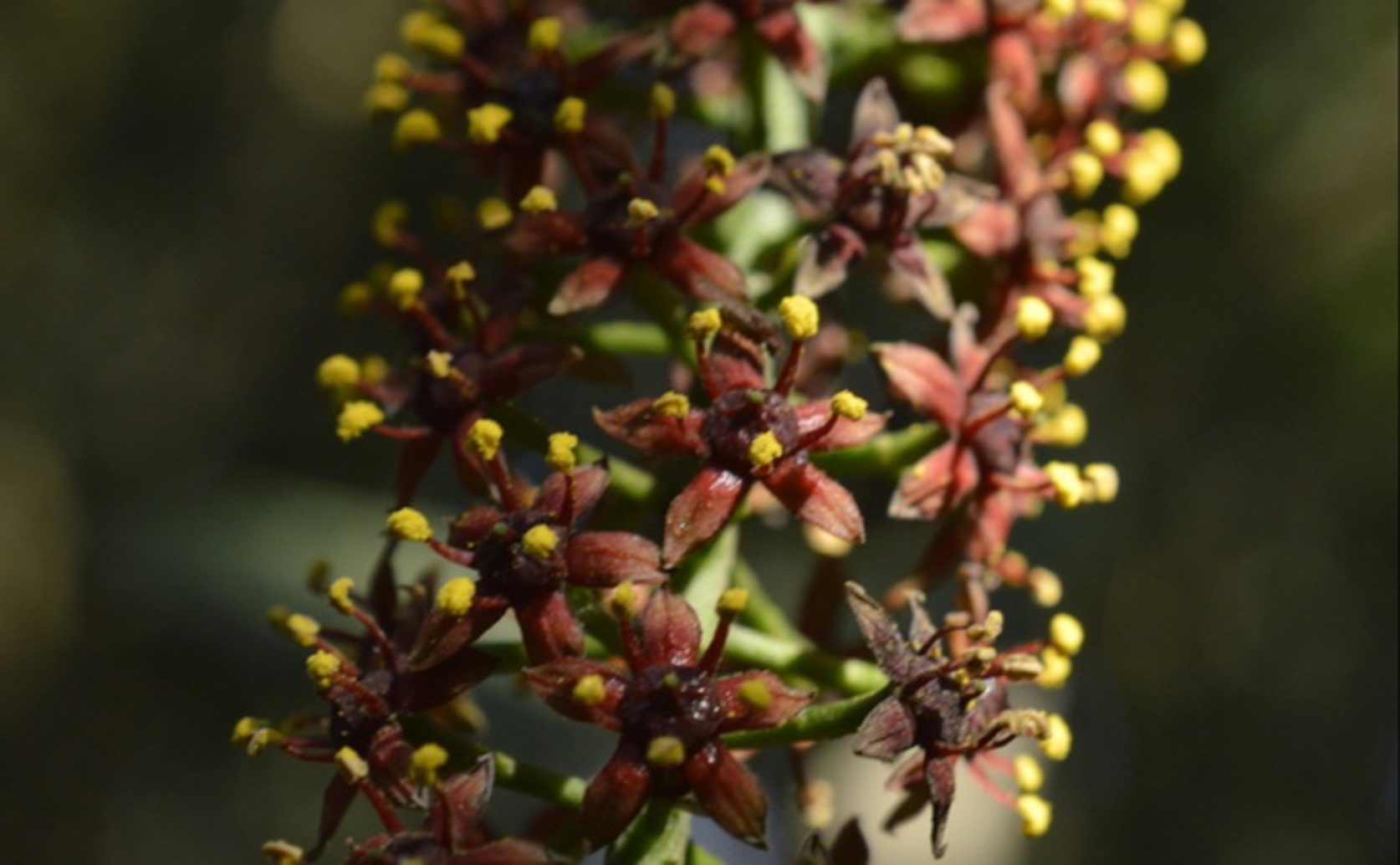
Pilocarpus pennatifolius

Photo adapted from: E Santos Ortega / CC BY (Source)

Key Findings

  • Researchers at the Universidade Federal de Santa Maria studied the effects of essential oils from Pilocarpus pennatifolius (PPOL) and Cordia verbenacea (CVOL) on juvenile Nile tilapia
  • PPOL effectively sedated the fish at concentrations between 2 and 80 mg L-1, with faster sedation at higher concentrations, and did not cause stress
  • CVOL also sedated the fish but increased stress at higher concentrations, as indicated by elevated glucose levels
The use of essential oils (EOs) as sedatives and anesthetics in aquaculture has gained considerable interest due to their potential to reduce stress in fish during handling and transport. A recent study conducted by researchers at the Universidade Federal de Santa Maria evaluated the effectiveness of EOs from Pilocarpus pennatifolius (PPOL) and Cordia verbenacea (CVOL) on juvenile Nile tilapia (Oreochromis niloticus)[1]. The study aimed to determine the sedative and anesthetic properties of these EOs and their impact on stress responses in the fish. The main constituents of PPOL were identified as 2-undecanone (57.2%) and 2-tridecanone (28.3%), while α-pinene (34.8%) was the primary component of CVOL. These compounds were determined using gas chromatography, a method that separates and analyzes compounds that can be vaporized without decomposition. The study found that PPOL induced sedation in juvenile Nile tilapia at concentrations ranging from 2 to 80 mg L-1, with the time to sedation decreasing as the concentration increased. Specifically, sedation times ranged from 703.8 seconds at 2 mg L-1 to 163.5 seconds at 80 mg L-1. Similarly, CVOL also induced sedation at these concentrations, with sedation times ranging from 504.9 seconds at 2 mg L-1 to 113.8 seconds at 50 mg L-1. However, at 80 mg L-1, the sedation time increased slightly to 135.6 seconds. Both EOs were effective in inducing deep anesthesia at a concentration of 200 mg L-1, with PPOL achieving this within 507.5 seconds and CVOL within 1267.7 seconds. The study also evaluated the stress responses of the fish during anesthetic recovery and long-term exposure. PPOL did not cause significant changes in behavior or glucose levels, suggesting it did not induce stress. In contrast, CVOL increased glucose levels at higher concentrations (80 and 200 mg L-1), indicating a stress response. These findings build upon previous research on the use of EOs in fish transport and handling. For instance, a study investigating the EO of Lippia alba found that it reduced stress in silver catfish during transport by maintaining ionoregulatory balance and reducing blood parameter fluctuations[2]. Another study evaluated the EO of Hesperozygis ringens and found it effective in mitigating stress during transport of Nile tilapia, although it did not alleviate stress from biometric handling[3]. The current study on PPOL and CVOL expands this body of knowledge by identifying new EOs that can be used as sedatives and anesthetics, with PPOL showing particular promise due to its lack of stress induction. The research highlights the potential of PPOL as a safe and effective sedative and anesthetic for juvenile Nile tilapia, which could be beneficial in aquaculture practices to reduce stress during handling and transport. The findings also underscore the importance of evaluating the stress responses associated with different EOs, as not all EOs have the same effects on fish physiology. In conclusion, the study conducted by the Universidade Federal de Santa Maria provides valuable insights into the use of EOs from Pilocarpus pennatifolius and Cordia verbenacea as sedatives and anesthetics in aquaculture. The effectiveness of PPOL in inducing sedation and anesthesia without causing stress makes it a promising candidate for improving fish welfare during handling and transport. This research contributes to the growing body of evidence supporting the use of natural compounds in aquaculture to enhance fish health and reduce stress.

BiochemPlant ScienceAnimal Science

References

Main Study

1) Sedative and anesthetic efficacy of the essential oils from the Brazilian native plants Pilocarpus pennatifolius and Cordia verbenacea in Nile Tilapia.

Published 4th December, 2024

https://doi.org/10.1590/0001-3765202420240235


Related Studies

2) Transportation of silver catfish, Rhamdia quelen, in water with eugenol and the essential oil of Lippia alba.

https://doi.org/10.1007/s10695-011-9562-4


3) Anesthetic and sedative efficacy of essential oil of Hesperozygis ringens and the physiological responses of Oreochromis niloticus after biometric handling and simulated transport.

https://doi.org/10.1007/s10695-022-01109-w


Related Articles

An unhandled error has occurred. Reload 🗙