Tomato Plant Immunity Levels Linked to Resistance Against Bacterial Wilt Disease

Greg Howard
27th November, 2024

Tomato Plant Immunity Levels Linked to Resistance Against Bacterial Wilt Disease
Image Source: © Natural Science News. This image is an artistic rendition.

Key Findings

  • The study from National Taiwan University focused on bacterial wilt (BW) resistance in tomatoes
  • BW-resistant and moderate-resistant tomato cultivars showed higher levels of pattern-triggered immunity (PTI) in roots and stembases compared to susceptible cultivars
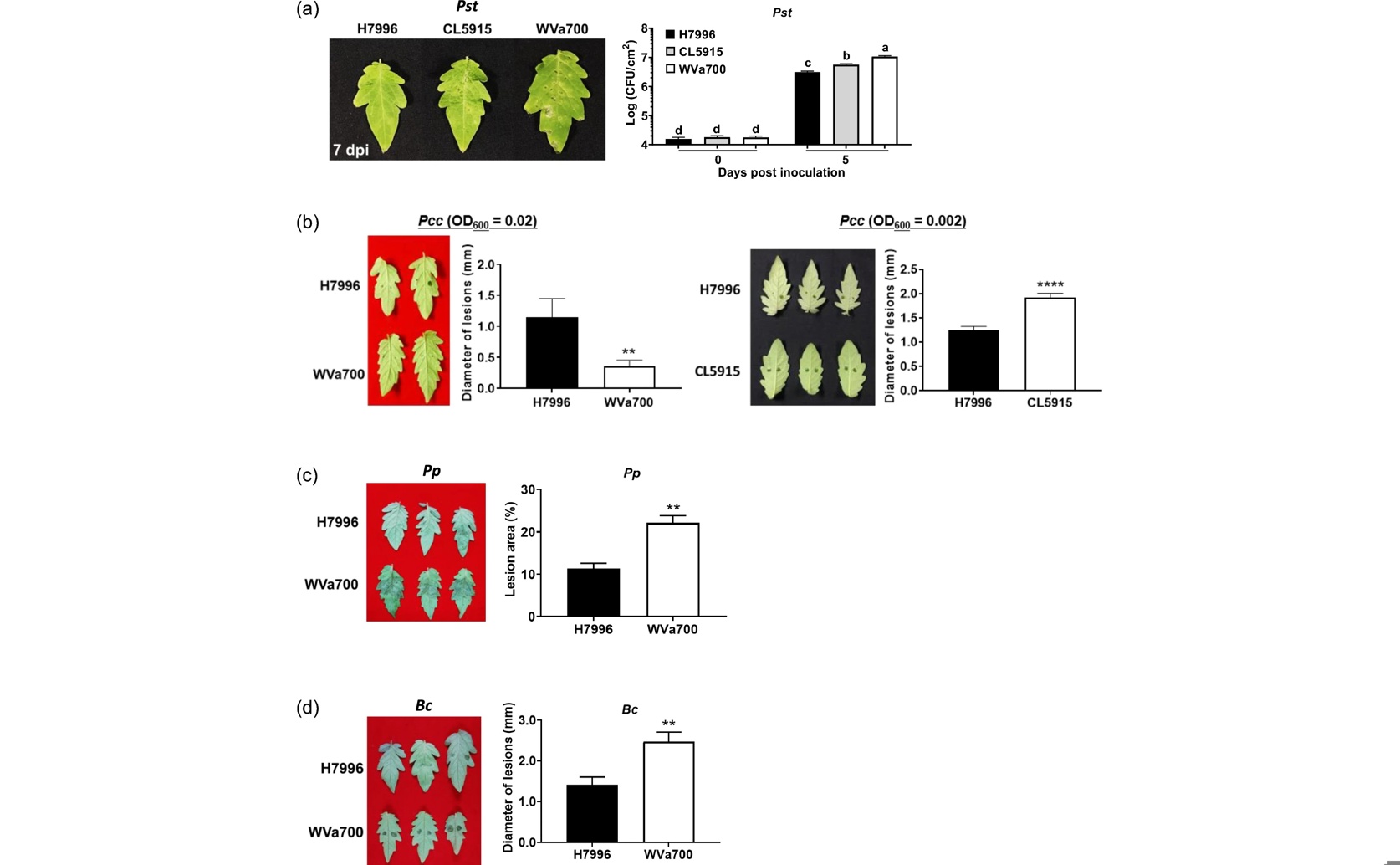
  • The resistant cultivar Hawaii 7996 demonstrated high tolerance to multiple leaf pathogens, suggesting broad-spectrum resistance mechanisms
Bacterial wilt (BW), caused by the pathogen Ralstonia solanacearum (Rs), is a severe disease affecting numerous crops worldwide. The infection process involves complex interactions between the plant and the pathogen, making BW challenging to manage. Crop breeding has emerged as the most effective strategy for controlling this disease, focusing on resistance associated with quantitative trait loci (QTLs) which activate multiple defense mechanisms simultaneously. A recent study from National Taiwan University aimed to clarify the nature of BW resistance and explore the role of pattern-triggered immunity (PTI) in this resistance[1]. The study found that PTI could be triggered in tomato roots and stembases by an Rs hrpG- mutant and by a cell wall extract (PiCWE) from the root-infected beneficial fungus Piriformospora indica (Pi). PTI is a plant's innate immune response that detects pathogen-associated molecular patterns (PAMPs) and initiates defense mechanisms. Among tomato plants with varying resistance levels to Rs, BW-resistant (BWR) and moderate-resistant (BWMR) cultivars exhibited higher levels of PTI in roots and stembases compared to BW-susceptible (BWS) cultivars when exposed to Rs hrpG- inoculation and PiCWE treatment. Additionally, these resistant cultivars showed enhanced leaf PTI after inoculation with a Pseudomonas syringae pv. tomato (Pst) hrcC- mutant, indicating a broad-spectrum resistance mechanism. The BWR cultivar Hawaii 7996 (H7996) demonstrated high tolerance to several leaf pathogens, suggesting that the mechanisms conferring resistance to Rs also provide protection against other diseases. This aligns with previous findings where Hawaii 7996 showed delayed and restricted root colonization by Rs, contributing to its resistance[2]. The study also confirmed that resistance to Rs in tomato is associated with multiple QTLs, which are influenced by environmental factors[3]. The research from National Taiwan University established efficient systems for analyzing PTI responses in tomato roots, stembases, and leaves in response to patterns derived from pathogenic and beneficial microorganisms. The positive correlation between PTI levels and BW resistance highlights the importance of PTI in the plant's defense strategy. This study provides valuable insights into the nature of BW resistance and offers critical information for tomato breeding programs aimed at enhancing resistance to Rs. In summary, the study from National Taiwan University reveals that PTI plays a significant role in BW resistance in tomatoes. By demonstrating that BWR and BWMR cultivars exhibit higher PTI levels in response to specific inoculations, the research provides a clearer understanding of the plant's immune response mechanisms. These findings are crucial for developing resistant tomato cultivars and improving disease management strategies for BW and other related pathogens.

AgricultureBiochemPlant Science

References

Main Study

1) The levels of pattern-triggered immunity in the root and stembase of tomato cultivars positively correlate with the resistance to Ralstonia solanacearum.

Published 26th November, 2024

https://doi.org/10.1186/s40529-024-00441-z


Related Studies

2) Ralstonia solanacearum Differentially Colonizes Roots of Resistant and Susceptible Tomato Plants.

https://doi.org/10.1094/PHYTO-09-16-0353-R


3) Identification of QTLs for Ralstonia solanacearum race 3-phylotype II resistance in tomato.

Journal: TAG. Theoretical and applied genetics. Theoretische und angewandte Genetik, Issue: Vol 113, Issue 1, Jun 2006


Related Articles

An unhandled error has occurred. Reload 🗙