Understanding How Plant-Based Diets Affect Our Metabolism Using Plant Nutrients

Jenn Hoskins
1st December, 2024

Understanding How Plant-Based Diets Affect Our Metabolism Using Plant Nutrients

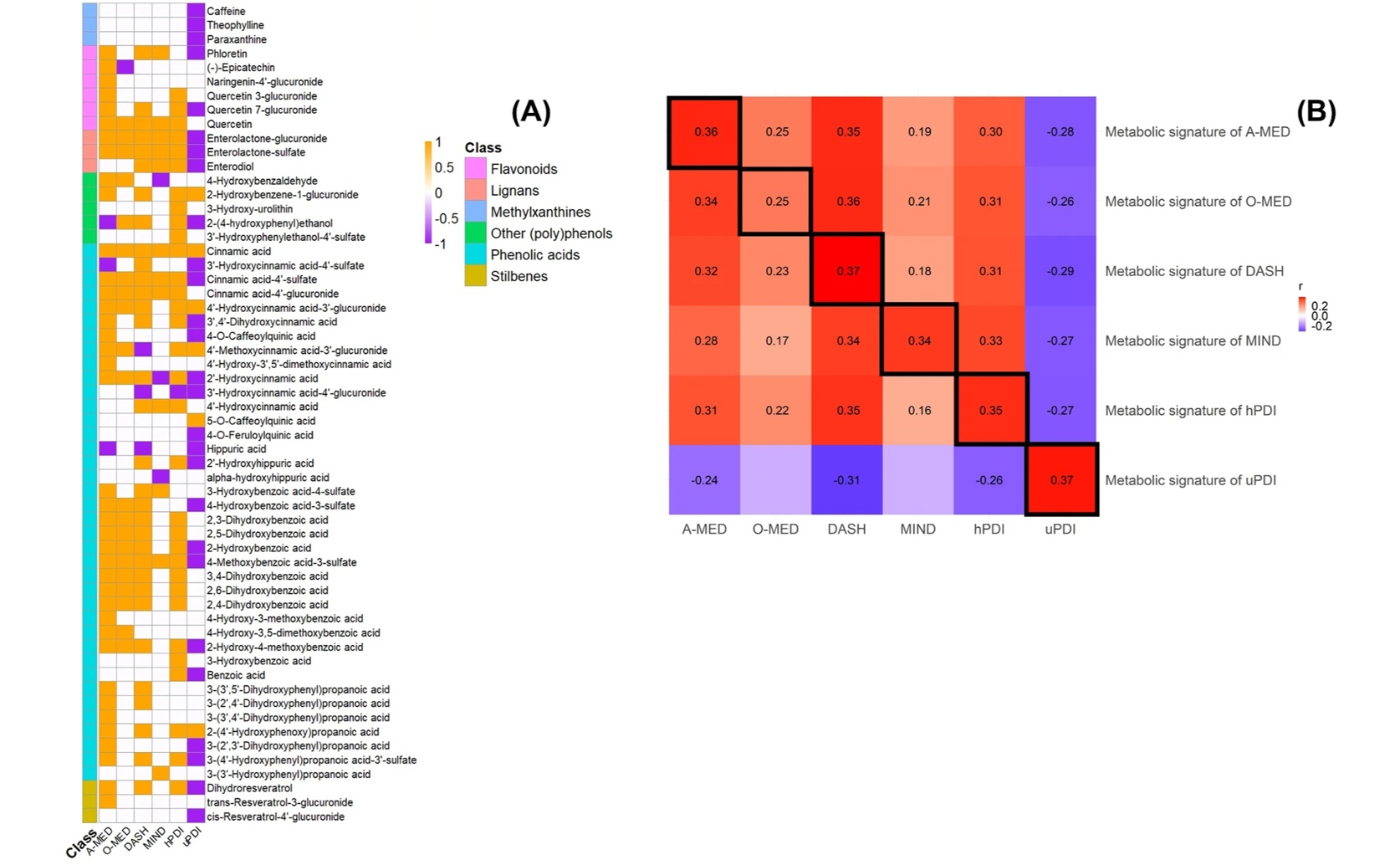
Metabolic signatures composed of distinct sets of plant-derived metabolites for each dietary pattern (A) significantly correlate with their corresponding self-reported dietary scores, confirming their potential as objective markers of adherence to plant-rich diets (B).

Image adapted from: Li et al. / CC BY (Source)

Key Findings

  • Researchers at King's College London developed a method to objectively assess adherence to plant-rich diets using metabolic signatures
  • They identified specific metabolites in urine and plasma that are linked to various plant-rich dietary patterns
  • This new method could improve dietary assessments and support personalized nutrition recommendations
Diet plays a crucial role in human health, and plant-rich dietary patterns have been linked to a lower risk of non-communicable diseases in various studies. Despite this, objectively assessing plant-rich dietary exposure in nutritional epidemiology has been challenging. A recent study conducted by King's College London aimed to address this by developing and evaluating metabolic signatures of the most widely used plant-rich dietary patterns using a targeted metabolomics method[1]. The study included 218 healthy participants with an average age of 51.5 years. Researchers collected 24-hour urine samples and analyzed them using ultra-high-performance liquid chromatography-mass spectrometry. The validation dataset included three sample types—24-hour urine, plasma, and spot urine—to test the robustness of the metabolic signatures. Adherence to plant-rich diets was assessed using Food Frequency Questionnaires, and the researchers identified metabolic signatures by analyzing the relationship between specific metabolites and dietary patterns. The study found metabolic signatures consisting of 42, 22, 35, 15, 33, and 33 predictive metabolites associated with adherence to the Amended Mediterranean Score (A-MED), Original Mediterranean Diet (O-MED), Dietary Approaches to Stop Hypertension (DASH), Mediterranean-DASH Intervention for Neurodegenerative Delay (MIND), healthy Plant-based Diet Index (hPDI), and unhealthy Plant-based Diet Index (uDPI), respectively. These signatures predominantly included phenolic acids, such as cinnamic acids and hydroxybenzoic acids. Six metabolites were common across all signatures, including two lignans (enterolactone-glucuronide and enterolactone-sulfate) and four phenolic acids (cinnamic acid, cinnamic acid-4'-sulfate, 2'-hydroxycinnamic acid, and 4-methoxybenzoic acid-3-sulfate). The findings of this study align with previous research that highlights the benefits of plant-based diets on cardiovascular health. For instance, a review of plant-based diets found that they are associated with lower risk of cardiovascular outcomes and intermediate risk factors[2]. Another study emphasized the beneficial role of plant-based diets in managing dyslipidemia and reducing cardiovascular disease (CVD) risk[3]. These diets, including the Mediterranean and DASH diets, have been shown to lower blood LDL cholesterol and contribute to environmental sustainability. The current study expands on these findings by providing an objective assessment method for adherence to plant-rich diets through metabolic signatures. By identifying specific metabolites linked to dietary patterns, the study offers a more accurate way to evaluate diet quality and its health impacts. This approach could improve dietary assessments in epidemiological studies and support personalized nutrition recommendations. The study's use of advanced metabolomics techniques and rigorous validation methods enhances the reliability of its findings. Linear regression analysis was used to select metabolites significantly associated with dietary patterns, while ridge regression estimated the penalized weights of each candidate metabolite. The correlation between metabolic signatures and dietary patterns was assessed using Spearman analysis, ensuring robust and statistically significant results. In conclusion, the development of metabolic signatures reflecting adherence to plant-rich dietary patterns represents a significant advancement in nutritional epidemiology. This study provides a valuable tool for objectively assessing diet quality and its health impacts, potentially leading to more effective dietary interventions and personalized nutrition recommendations. The research conducted by King's College London underscores the importance of plant-rich diets for health and offers a novel method for evaluating dietary adherence in free-living populations.

NutritionBiochemPlant Science

References

Main Study

1) Development of metabolic signatures of plant-rich dietary patterns using plant-derived metabolites.

Published 28th November, 2024

https://doi.org/10.1007/s00394-024-03511-x


Related Studies

2) Plant-based diets and cardiovascular health.

https://doi.org/10.1016/j.tcm.2018.02.004


3) The Role of Specific Components of a Plant-Based Diet in Management of Dyslipidemia and the Impact on Cardiovascular Risk.

https://doi.org/10.3390/nu12092671


Related Articles

An unhandled error has occurred. Reload 🗙