
Boosting Heart Healing by Enhancing Blood Vessel Activity and Reducing Scarring
Jim Crocker
2nd December, 2024


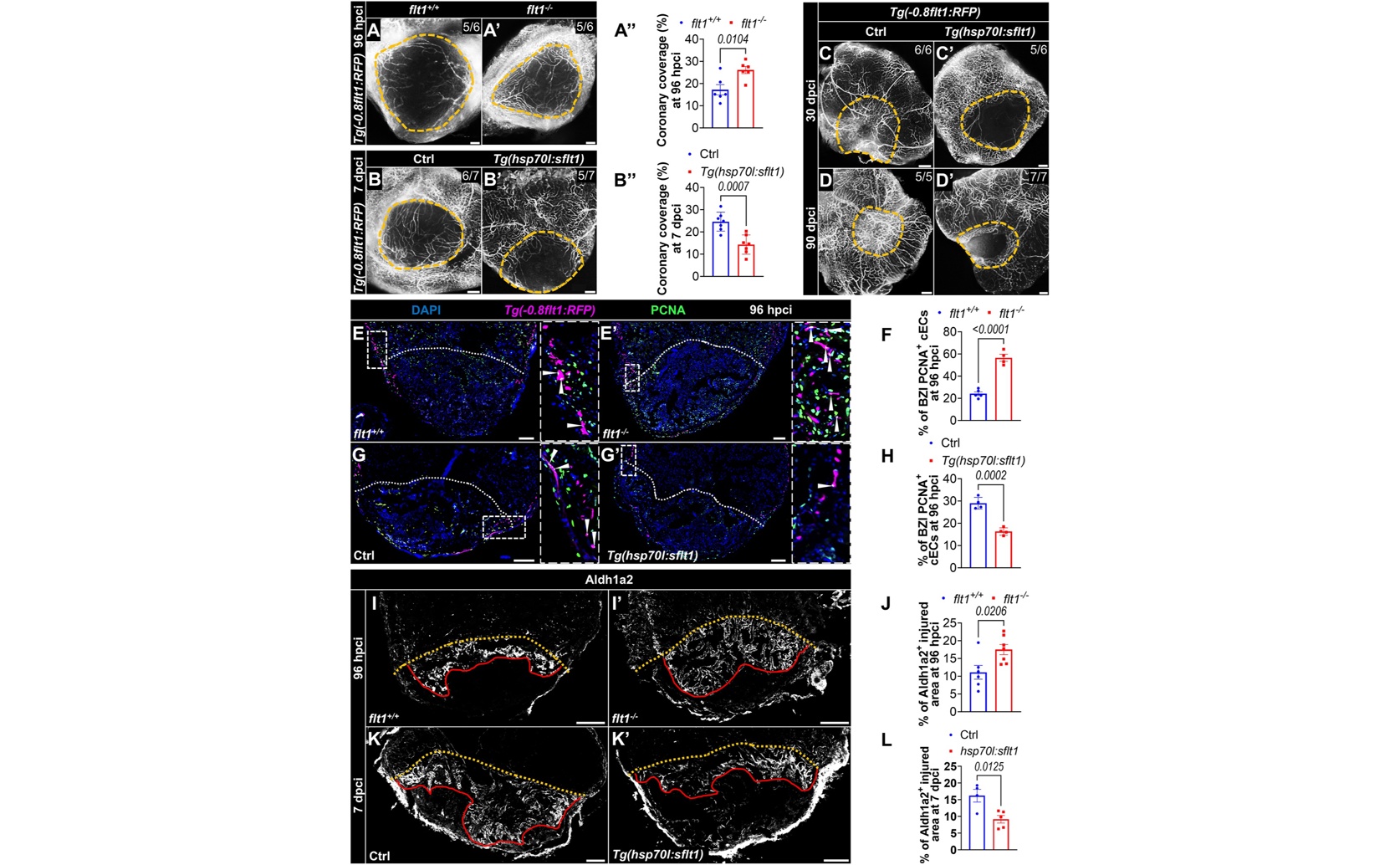
Inactivation of the Vegfa decoy receptor flt1 enhances endothelial regeneration after heart injury in zebrafish, a key step in promoting overall cardiac repair, by increasing coronary revascularization (a–d′), endothelial cell proliferation (e–h), and endocardial expansion (i–l).
Key Findings
- The study from the Max Planck Institute found that deleting the VEGFR1 gene in zebrafish hearts significantly improved heart regeneration after injury
- Zebrafish hearts without the VEGFR1 gene showed better blood vessel growth, increased heart cell proliferation, and less scarring
- The beneficial effects of VEGFR1 deletion were dependent on VEGFA signaling, highlighting its crucial role in heart repair
References
Main Study
1) flt1 inactivation promotes zebrafish cardiac regeneration by enhancing endothelial activity and limiting the fibrotic response.
Published 1st December, 2024
https://doi.org/10.1242/dev.203028
Related Studies
2) Interleukin-11 signaling promotes cellular reprogramming and limits fibrotic scarring during tissue regeneration.
3) The extracellular matrix protein agrin promotes heart regeneration in mice.
4) Specific macrophage populations promote both cardiac scar deposition and subsequent resolution in adult zebrafish.
Related Articles
 3rd August, 2024 | Greg Howard