
Weather Patterns Affecting Household Date Palm Sap Consumption, 2013-2016
Greg Howard
22nd November, 2024


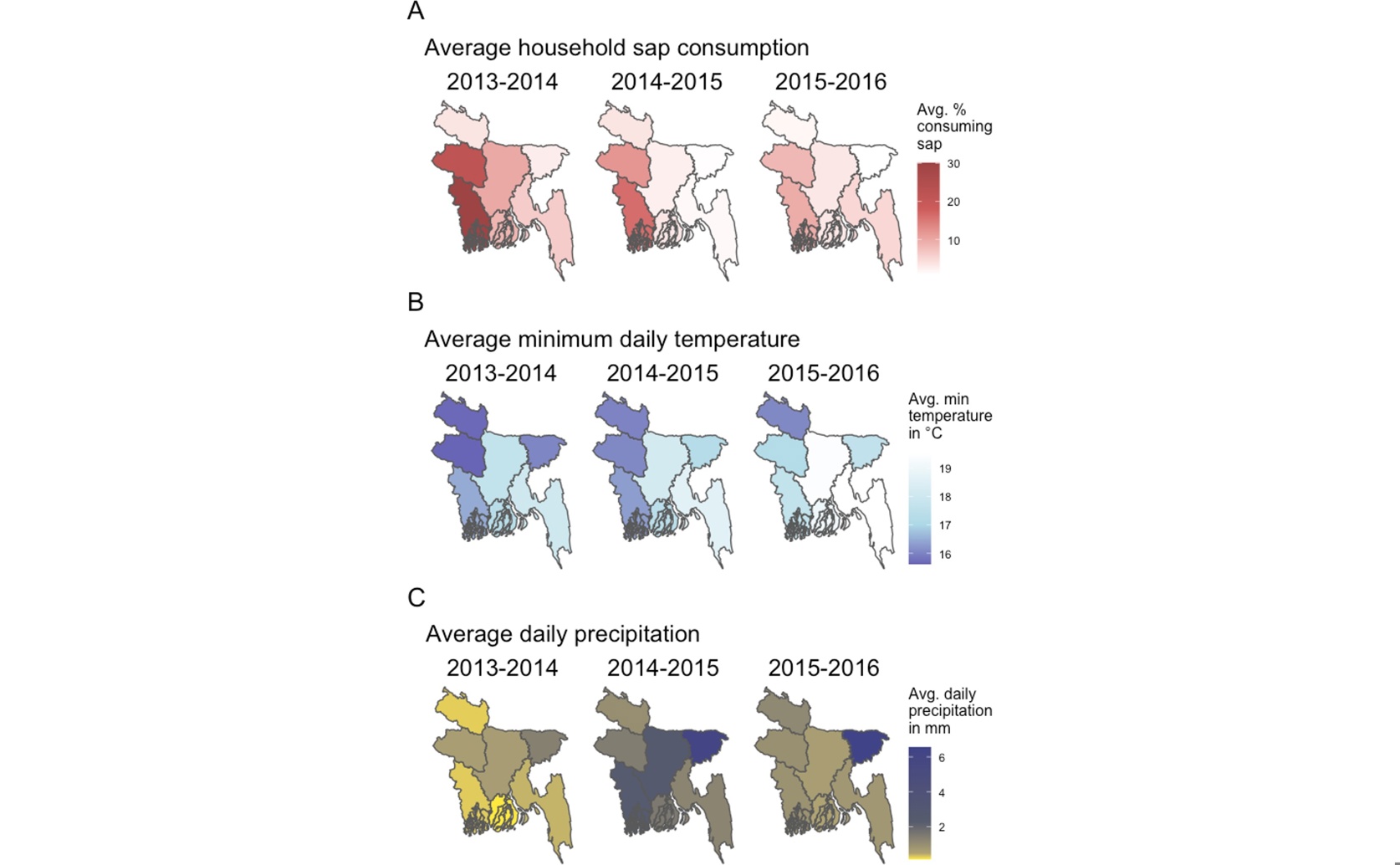
Across Bangladesh, household date palm sap consumption was highest (a) during the winter season that correspondingly had the lowest minimum temperatures (b) and least precipitation (c), supporting the study's conclusion that colder, drier weather increases behaviors linked to Nipah virus risk.
Key Findings
- The study took place in Bangladesh and analyzed data from 2013 to 2016 on date palm sap consumption and weather patterns
- Colder and drier winter conditions significantly increased the consumption of date palm sap
- Increased sap consumption during these conditions elevated the risk of Nipah virus spillover from bats to humans
AgricultureEnvironmentNutrition
References
Main Study
1) Identifying weather patterns affecting household date palm sap consumption in Bangladesh, 2013-2016.
Published 20th November, 2024
https://doi.org/10.1371/journal.pone.0313904
Related Studies
2) Foodborne transmission of Nipah virus, Bangladesh.
Journal: Emerging infectious diseases, Issue: Vol 12, Issue 12, Dec 2006
3) Date palm sap linked to Nipah virus outbreak in Bangladesh, 2008.
4) The pandemic potential of Nipah virus.
5) Use of infrared camera to understand bats' access to date palm sap: implications for preventing Nipah virus transmission.
Related Articles
 3rd October, 2024 | Greg Howard