Understanding How Pesticides Affect Honey Bee Colony Health and Productivity

Greg Howard
24th October, 2024

Understanding How Pesticides Affect Honey Bee Colony Health and Productivity

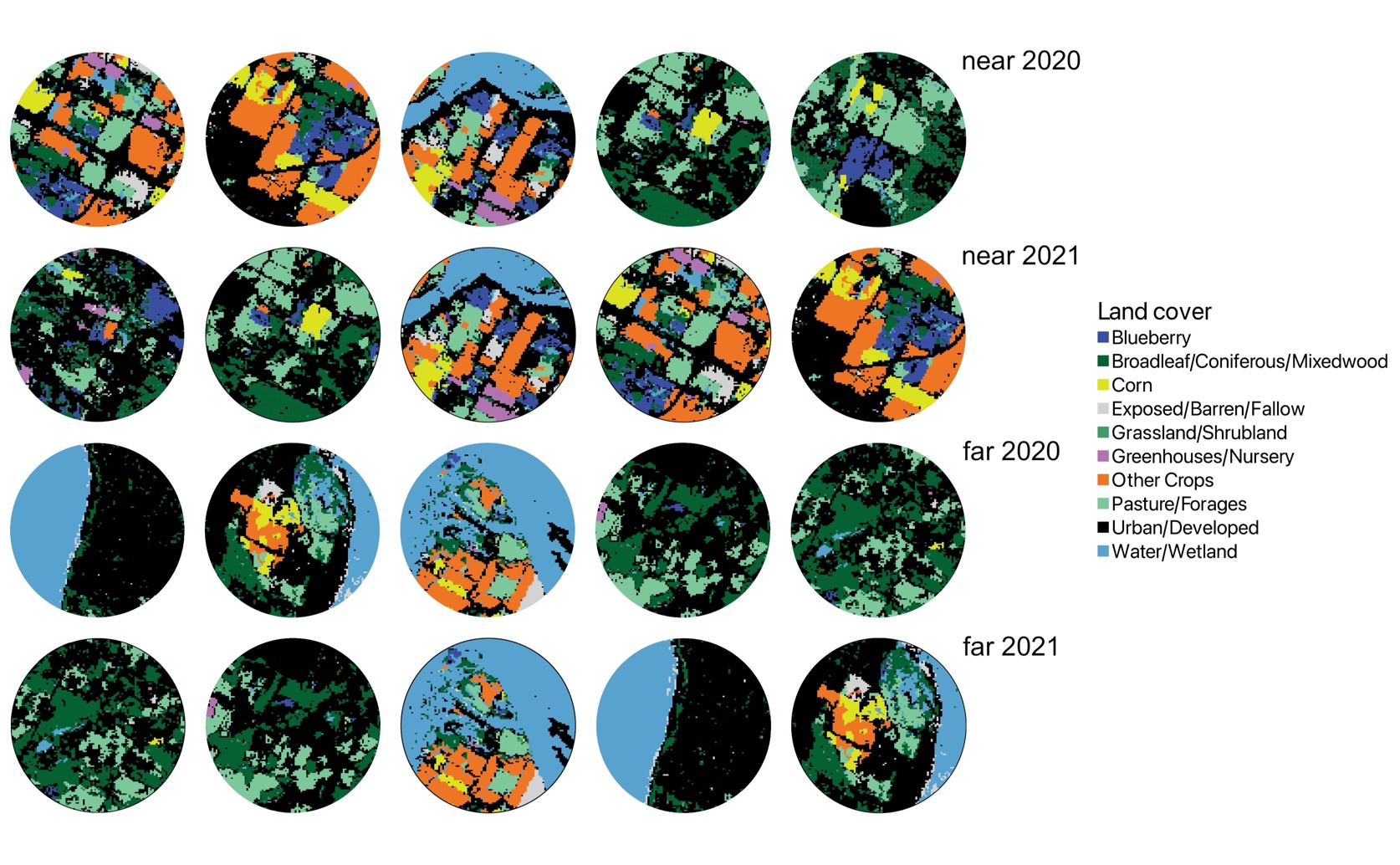
The diverse agricultural mosaic surrounding honey bee (Apis mellifera) colonies, whether near or far from highbush blueberry (Vaccinum corymbosum) fields, illustrates the widespread potential for pesticide exposure from numerous crop sources throughout the region.

Image adapted from: Bixby et al. / CC BY (Source)

Key Findings

  • The study in British Columbia found that neonicotinoid pesticide risk to honey bee colonies is widespread, regardless of proximity to blueberry fields
  • High levels of clothianidin and thiamethoxam were detected, posing significant health risks to bees
  • Economic analysis showed that colonies exposed to these pesticides faced increased mortality and reduced honey production, making local bee management more profitable than relying on imported bees
The European honey bee, Apis mellifera, plays a crucial role in the pollination of many crops, including highbush blueberries (Vaccinum corymbosum). However, the impact of agrochemicals, particularly neonicotinoids, on these essential pollinators has raised significant concerns. A recent study by the University of British Columbia[1] sought to understand this impact by conducting a field study during the blueberry blooms of 2020 and 2021 in British Columbia (B.C.). The study involved 40 experimental honey bee colonies placed in the Fraser Valley. Half of these colonies were located within 1.5 km of highbush blueberry fields ("near" colonies), while the other half were more than 1.5 km away ("far" colonies). The researchers calculated risk quotients for neonicotinoid compounds using their chronic lethal dietary dose (LDD50) and median lethal concentration (LC50). Surprisingly, they found that pesticide risk was similar between colonies located near and far from blueberry forage, indicating that toxicity risks are regionally widespread. Two systemic neonicotinoid insecticides, clothianidin and thiamethoxam, were detected at levels exceeding chronic international concern thresholds. This finding is alarming as it suggests that these chemicals pose a significant risk to bee health, regardless of proximity to blueberry fields. To assess the economic impact, the researchers developed a profit model for a pollinating beekeeper in B.C., incorporating detected pesticide levels, lethal and sublethal bee health effects, and economic data. They found that colonies exposed to neonicotinoids, both near and far from blueberry fields, experienced economic consequences due to increased colony mortality and sublethal effects, such as reduced honey production and compromised colony health. Moreover, the study highlighted that replacing dead colonies with local bees was more profitable than using imported packages, emphasizing the economic benefits of selecting local management options. This study ties together several earlier findings. For instance, the increased winter losses of honey bee colonies in North America and Europe have been attributed to multifactorial causes, including exposure to pesticides[2]. The current study's findings on neonicotinoid exposure align with this understanding and underscore the need for better management practices to mitigate these risks. Moreover, the reliance on imported bees, particularly queens from warmer climates, due to Canada's short queen rearing season, has been a significant issue[3]. The current study's economic analysis supports the idea that increasing local queen production could enhance the sustainability of the beekeeping industry by reducing dependency on foreign bees. This aligns with previous research suggesting that increasing domestic queen production and exploring overwintering strategies could provide greater agricultural stability and food security[3]. The COVID-19 pandemic further exposed vulnerabilities within Canada's beekeeping industry, stemming from its dependency on imported labor and bees[4]. Disruptions in the arrival of bees and foreign workers led to fewer colonies and less colony management, resulting in higher costs and lower productivity. The current study's emphasis on the economic benefits of using local bees reinforces the need to strengthen domestic supply chains to minimize future risks. In summary, the University of British Columbia's study highlights the pervasive risk of neonicotinoid exposure to honey bee colonies in B.C. and its significant economic consequences. By demonstrating the profitability of using local bees over imported ones, the study provides a compelling argument for enhancing local queen production and management practices to ensure the sustainability of the beekeeping industry. These findings build on previous research and offer practical solutions to some of the industry's most pressing challenges.

AgricultureEnvironmentAnimal Science

References

Main Study

1) Identifying and modeling the impact of neonicotinoid exposure on honey bee colony profit.

Published 22nd October, 2024

https://doi.org/10.1093/jee/toae227


Related Studies

2) A Bio-Economic Case Study of Canadian Honey Bee (Hymenoptera: Apidae) Colonies: Marker-Assisted Selection (MAS) in Queen Breeding Affects Beekeeper Profits.

https://doi.org/10.1093/jee/tox077


3) Honey Bee Queen Production: Canadian Costing Case Study and Profitability Analysis.

https://doi.org/10.1093/jee/toaa102


4) Impacts of COVID-19 on Canadian Beekeeping: Survey Results and a Profitability Analysis.

https://doi.org/10.1093/jee/toab180


Related Articles

An unhandled error has occurred. Reload 🗙