Organic Fertilizers Boost Helpful Mite Populations in Apple Orchards

Jenn Hoskins
13th July, 2024

Organic Fertilizers Boost Helpful Mite Populations in Apple Orchards

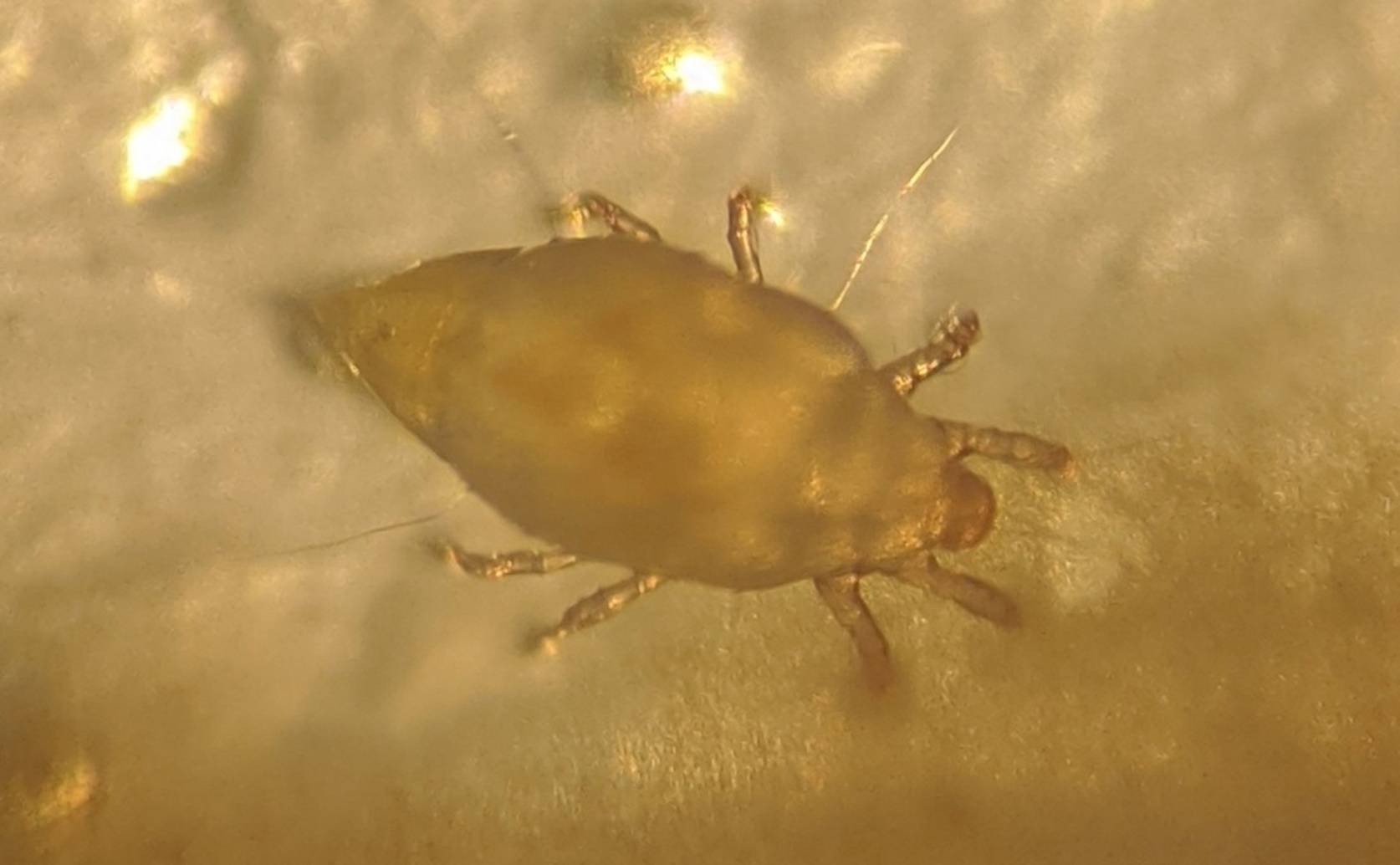
The mite Tyrophagus putrescentiae serves as a key alternative prey that can be multiplied with organic fertilizers to support beneficial predatory phytoseiid mites and improve biological pest control.

Public Domain Photograph

Key Findings

  • The study was conducted in apple orchards at the Miyagi Prefectural Agriculture and Horticulture Research Center in Japan
  • Organic fertilizers and coconut husks significantly increased the population of Tyrophagus mites, which are alternative prey for predatory phytoseiid mites
  • The increased population of Tyrophagus mites led to a more than doubling of phytoseiid mite density on apple leaves, enhancing natural pest control against spider mites
Sustainable agricultural practices are crucial for maintaining long-term productivity and ecological balance. One promising approach involves using organic materials to enhance the population of native predatory mites, which can naturally control pest populations like spider mites in apple orchards. This study, conducted by the Miyagi Prefectural Agriculture and Horticulture Research Center, investigates how organic fertilizers and coconut husks can boost the density of phytoseiid mites, which are effective predators of spider mites[1]. Spider mites are significant pests in apple production, causing extensive damage to crops. Phytoseiid mites, a group of predatory mites, have been identified as natural enemies of spider mites. However, maintaining a stable population of phytoseiid mites in apple orchards has been challenging. This study aims to address this problem by exploring how organic materials can promote the proliferation of Tyrophagus mites, which serve as alternative prey for phytoseiid mites. The researchers conducted their study using sticky traps at the Miyagi Prefectural Agriculture and Horticulture Research Center in Japan. Over two years, they observed a significant correlation between the occurrence of Tyrophagus mites and phytoseiid mites. Laboratory experiments showed that organic fertilizers could increase the density of Tyrophagus mites by 83 times within four weeks. Phytoseiid mites were found to lay between 0.25 and 1.03 eggs per day per female when preying on Tyrophagus larvae. A two-year field survey further revealed that the use of organic fertilizers more than doubled the density of phytoseiid mites on apple leaves, likely due to the proliferation of Tyrophagus mites on the ground. This study builds on previous research that has explored various factors influencing the population dynamics of mites in agricultural settings. For instance, earlier studies have shown that the nutritional quality of food sources can significantly impact mite populations. Tyrophagus putrescentiae, a generalist feeder, demonstrated higher population growth on high-fat, high-protein diets compared to high-carbohydrate diets[2]. This finding aligns with the current study's use of organic fertilizers to boost Tyrophagus mite populations, indirectly supporting phytoseiid mites. Moreover, the influence of mowing on mite populations has been documented. In apple orchards, mowing was found to reduce the population of generalist phytoseiid mites and increase the density of spider mites[3]. Conversely, conservation plots that avoided mowing and used selective chemical spraying had significantly fewer spider mites and more phytoseiid mites[4]. These findings underscore the importance of habitat management in supporting natural enemies of pests. The current study expands on these insights by demonstrating that organic fertilizers can serve a dual purpose: enhancing soil nutrients and promoting the proliferation of prey mites, which in turn supports predatory mite populations. This approach not only boosts phytoseiid mite populations but also contributes to more sustainable apple production by reducing the reliance on chemical pesticides. In summary, the research conducted by the Miyagi Prefectural Agriculture and Horticulture Research Center highlights the potential of organic fertilizers to enhance the density of native predatory mites in apple orchards. By promoting the proliferation of Tyrophagus mites, organic fertilizers indirectly support phytoseiid mites, which are effective biological control agents against spider mites. This study provides valuable insights for developing sustainable agricultural practices that leverage natural predator-prey relationships to manage pest populations.

AgricultureEnvironmentAnimal Science

References

Main Study

1) Phytoseiid mites benefited from organic fertilization by increasing the population of Tyrophagus mites in apple orchards

Published 12th July, 2024

https://doi.org/10.1007/s10493-024-00948-x


Related Studies

2) Population Growth of the Generalist Mite Tyrophagus putrescentiae (Acari: Acaridida) Following Adaptation to High- or Low-Fat and High- or Low-Protein Diets and the Effect of Dietary Switch.

https://doi.org/10.1093/ee/nvv129


3) Influence of mowing on dynamics of native phytoseiid mites and Tetranychus urticae in apple orchards in northern Japan.

https://doi.org/10.1007/s10493-016-0064-z


4) Management of apple orchards to conserve generalist phytoseiid mites suppresses two-spotted spider mite, Tetranychus urticae (Acari: Tetranychidae).

https://doi.org/10.1007/s10493-014-9850-7


Related Articles

An unhandled error has occurred. Reload 🗙