Soil characteristics influence where wild orchids grow

Jim Crocker
20th February, 2026

Soil characteristics influence where wild orchids grow

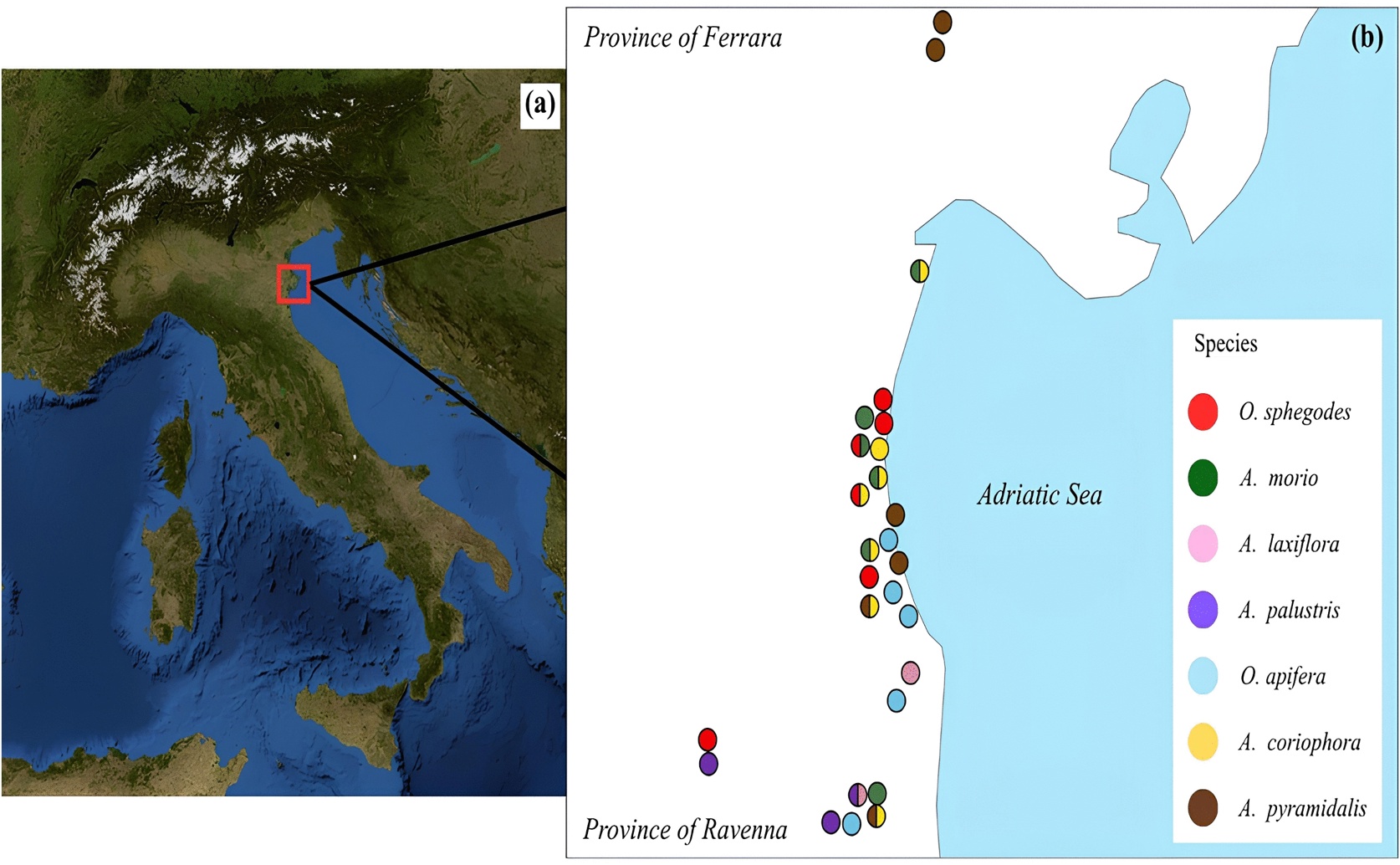
The ecological niches of seven wild orchid species were investigated across sampling sites (b) within the Po Delta Regional Park in Northern Italy (a), a biodiversity hotspot subject to significant human alteration.

Image adapted from: Scramoncin et al. / CC BY (Source)

Key Findings

  • In the Po Delta Regional Park, Italy, soil moisture and salinity are the main factors determining where orchid species grow
  • Some orchid species, like Anacamptis laxiflora, are highly specialized, thriving only in very specific wet and saline conditions, making them vulnerable
  • Maintaining a variety of habitats is crucial for orchid conservation, allowing both adaptable and specialized species to survive in changing environments
European terrestrial orchids, a diverse group of flowering plants, are facing increasing threats due to habitat loss and climate change. Understanding their specific environmental requirements is crucial for effective conservation, particularly as many species inhabit landscapes heavily modified by human activity. A recent study by researchers at the University of Ferrara and National Cheng Kung University[1] investigated the ecological preferences of seven orchid species in the Po Delta Regional Park, Italy, to determine how soil conditions influence their distribution and survival. The research focused on identifying the environmental gradients – variations in factors like soil moisture, salinity (salt content), pH (acidity or alkalinity), and nutrient levels – that best explain where each orchid species is found. This is important because orchids often have very specific needs, and changes to their environment can quickly make a habitat unsuitable. The study aimed to pinpoint which soil characteristics are most important for each species and whether they are highly specialized (requiring a narrow range of conditions) or more adaptable. To achieve this, the researchers surveyed vegetation at 27 different sites within the Po Delta Regional Park and meticulously measured the soil properties at each location. They then used several statistical techniques to analyze the data. Multivariate Analysis of Variance (MANOVA) helped determine if there were significant differences in soil conditions between the sites where different orchid species were found. Principal Component Analysis (PCA) visually represented the relationships between the species and the environmental variables, allowing the researchers to see which factors were most strongly associated with each orchid. The Outlying Mean Index (OMI) was used to quantify how specialized each species was – a high OMI score indicated a narrow niche, meaning the species was only found in very specific conditions, while a low score suggested a broader tolerance. The results clearly showed that moisture and salinity were the most important drivers of orchid distribution in the Po Delta. Two species, Anacamptis laxiflora and Anacamptis palustris, were consistently found in wet, saline soils, while Anacamptis pyramidalis and Anacamptis coriophora preferred drier, nutrient-poor soils. Interestingly, Anacamptis laxiflora stood out as the most specialized species, with the narrowest niche breadth and highest marginality – meaning it was rarely found outside of very specific, wet and saline environments. Conversely, Ophrys apifera exhibited the opposite pattern, demonstrating a high tolerance to a wide range of soil conditions and a generalist strategy. To further validate their findings, the researchers compared the species’ environmental preferences, as indicated by established ‘Ellenberg Indicator Values’ (EIVs) – a standardized system for assigning values to plants based on their tolerance to different environmental conditions – with the actual soil measurements they collected in the field. The EIVs for moisture and salinity closely matched the field data, confirming the importance of these factors. However, the EIVs for nutrients and pH were less reliable predictors. These findings build upon earlier research highlighting the importance of glacial refugia and postglacial recolonization in shaping orchid genetic structure[2]. While that study focused on the broader genetic consequences of past environmental changes, the current research delves into the specific environmental conditions that support orchid populations today. The fact that Anacamptis laxiflora is highly specialized suggests it may be particularly vulnerable to changes in water levels or salinity, and conservation efforts may need to focus on protecting these specific habitats. Furthermore, the study’s emphasis on environmental heterogeneity – the variety of different habitats within a landscape – aligns with broader conservation principles, particularly in the context of climate change[3][4]. The Po Delta, a human-dominated ecosystem, demonstrates that even modified landscapes can support a diverse orchid flora if a range of environmental conditions are maintained. Protecting this variety is crucial, as it allows both specialist and generalist species to thrive. The research underscores the need for integrated conservation approaches that consider the specific ecological needs of each species, especially in regions facing rapid environmental change, and highlights the potential for assisted migration strategies where species are artificially moved to more suitable locations[4].

EnvironmentEcologyPlant Science

References

Main Study

1) Environmental drivers of wild orchid distribution: Soil properties shape habitat preferences in the Po Delta Regional Park (Italy)

Published 18th February, 2026

https://doi.org/10.1371/journal.pone.0340676


Related Studies

2) Historical biogeography and local adaptation explain population genetic structure in a widespread terrestrial orchid.

https://doi.org/10.1093/aob/mcad010


3) Determinants of geographic range size in plants.

https://doi.org/10.1111/nph.16406


4) Terrestrial orchid conservation in the age of extinction.

https://doi.org/10.1093/aob/mcp025


Related Articles

An unhandled error has occurred. Reload 🗙