
How Forests Change With Nature and Human Activity
Greg Howard
24th September, 2025


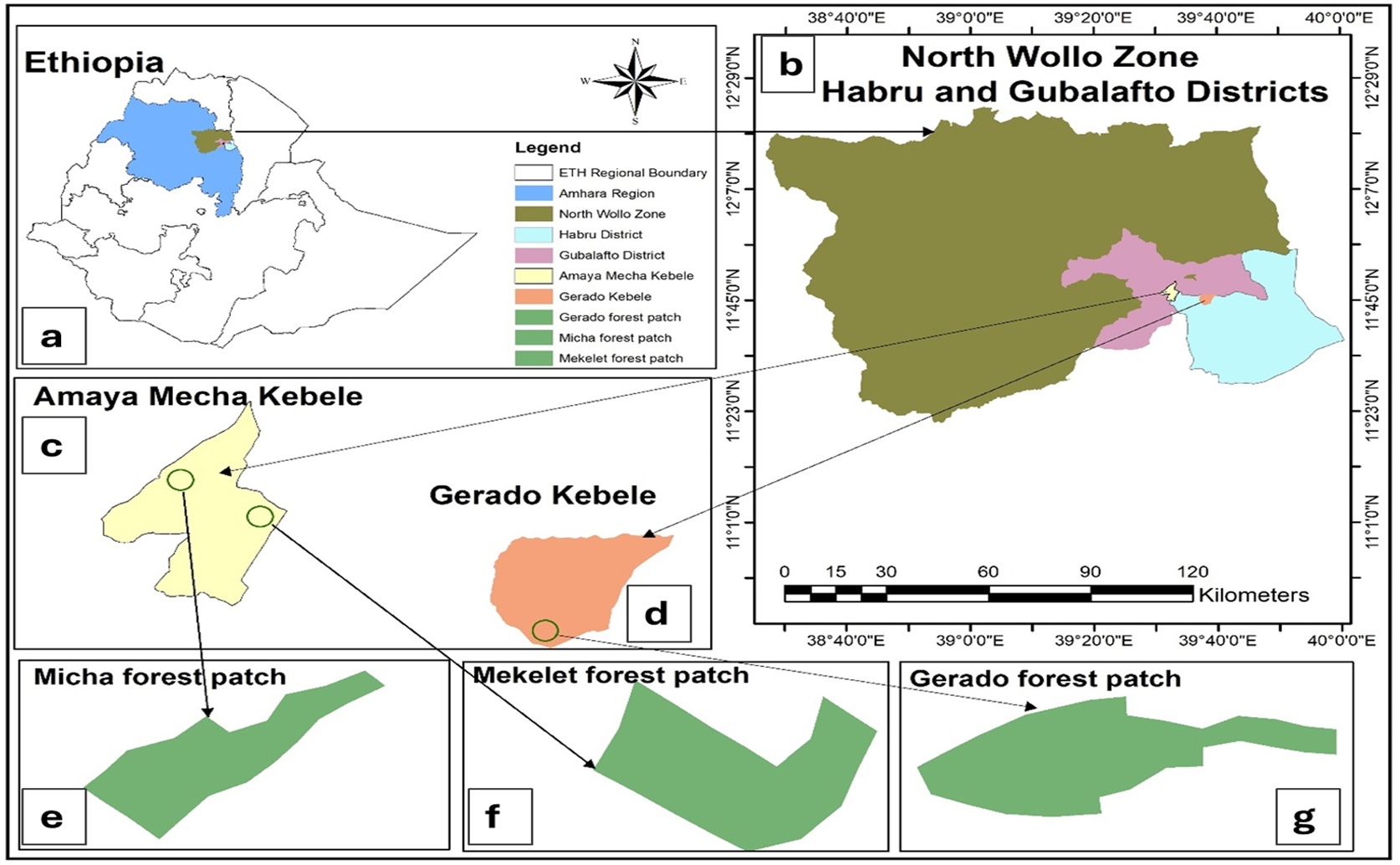
This map delineates the geographical setting of the study within the North Wollo Zone of Ethiopia (a–b), pinpointing the locations of the fragmented Gerado, Micha, and Mekelet forest patches (e–g) selected for the comparative analysis of vegetation structure and anthropogenic disturbance.
Key Findings
- This study, conducted in three forest areas of North Wollo, Ethiopia, identified 55 woody plant species, with the highest diversity found in the Gerado forest
- Four distinct plant communities were identified, significantly influenced by altitude, slope, and the extent of tree cutting, indicating human activity alters forest composition
- Tree cutting for firewood and charcoal, alongside agricultural expansion, were major factors impacting forest structure, particularly in the Mekelet forest patch, leading to reduced species richness
EnvironmentEcologyPlant Science
References
Main Study
1) Influence of environmental and anthropogenic factors on forest patch composition and structure in North Wollo Zone, Amhara region, Ethiopia
Published 23rd September, 2025
https://doi.org/10.1371/journal.pone.0332831
Related Studies
2) Tropical forests are home to over half of the world's vertebrate species.
3) Ethiopian vegetation types, climate and topography.
4) Vegetation dynamics, and land use and land cover change in the Bale Mountains, Ethiopia.
5) Ethnobotanical study of traditional medicinal plants used by the local people in Habru District, North Wollo Zone, Ethiopia.
Related Articles
 27th August, 2025 | Greg Howard