How Environmental Factors Shape Forest Groupings in the Huangshan Mountains

Greg Howard
27th August, 2025

How Environmental Factors Shape Forest Groupings in the Huangshan Mountains

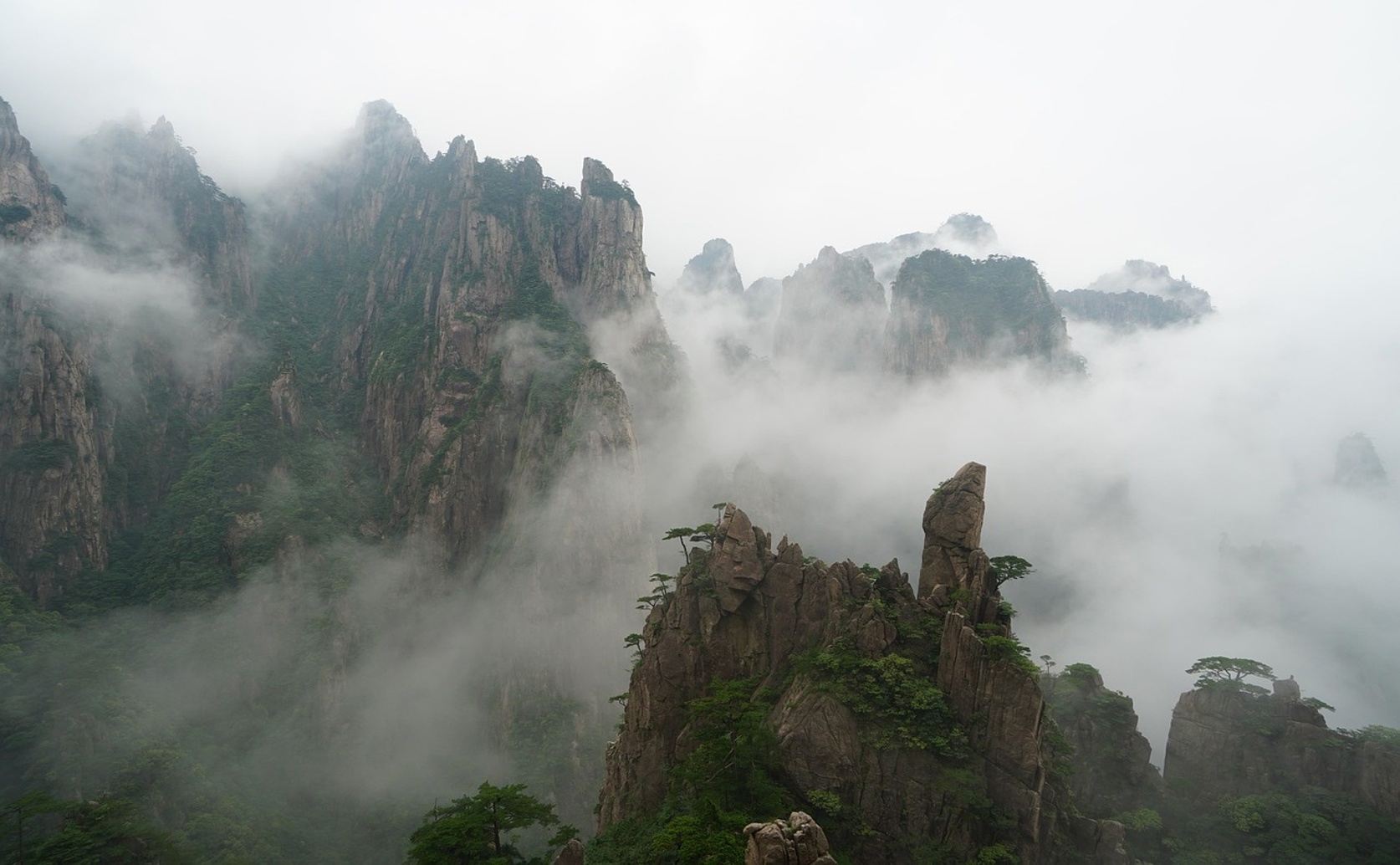
Huangshan Mountains

Pixabay

Key Findings

  • In the Greater Huangshan Region of China, ecological space levels generally improved from 2018 to 2023, though the overall ecological situation remains concerning
  • Cities within the region showed varying optimization levels, with Anqing leading and Chizhou lagging, likely due to differences in economic development and policy implementation
  • While economic growth positively impacted the environment, pressures from urbanization and tourism still pose significant challenges, requiring continued conservation efforts and proactive policies
The increasing pressure on natural environments from urban expansion and economic development presents a significant challenge globally. Balancing human needs with the preservation of biodiversity and healthy ecosystems is crucial for sustainable development. Many cities struggle to provide adequate green spaces for their populations, leading to concerns about social equity and environmental quality[2]. Recognizing this, researchers are increasingly focused on understanding how to optimize the configuration of ecological spaces within and around urban areas. This is particularly important in regions undergoing rapid change, where planning and governance are critical to prevent further environmental degradation. A recent study conducted by researchers at Anhui Jianzhu University, Anhui Academy of Social Sciences, and Gonbad Kavous University[1] investigated the factors influencing ecological spatial configuration optimization in the Greater Huangshan Region of China. This region, like many others, faces the dual pressures of economic growth and the need to protect its valuable ecological resources. The study aimed to identify the mechanisms driving improvements – or lack thereof – in ecological space, providing a foundation for more effective environmental policies. The researchers utilized a framework known as the DPSIR model – which stands for Drivers, Pressures, State, Impact, and Response – to create a comprehensive index system for evaluating ecological space configuration. This model allows for a holistic assessment, considering the underlying causes of environmental change (Drivers), the stresses placed on ecosystems (Pressures), the current condition of the environment (State), the consequences of these conditions (Impact), and the actions taken to address them (Response). To analyze the data, the Entropy Weight-TOPSIS method was employed. The Entropy Weight method determines the importance of different indicators based on the variability of the data, while TOPSIS (Technique for Order of Preference by Similarity to Ideal Solution) ranks alternatives based on their proximity to an ideal solution and distance from a negative ideal solution. Essentially, this method identifies areas that are performing best and worst in terms of ecological space configuration. The study assessed ecological space configuration over a five-year period, from 2018 to 2023. The results indicated a positive trend, with improvements in ecological space levels (ES) observed throughout the region. However, the researchers emphasized that despite these gains, the overall ecological situation remained “severe,” highlighting the ongoing need for conservation efforts. From a spatial perspective, the study revealed variations in optimization levels among the cities within the Greater Huangshan Region. Anqing demonstrated the highest levels of optimization, followed by Huangshan, Xuancheng, and Chizhou. This suggests that certain cities are more successful than others in managing their ecological spaces. It’s important to note that these differences could be due to a variety of factors, including varying levels of economic development, geographical characteristics, and policy implementation. These findings build upon earlier research that has quantified the accessibility of urban green spaces and identified inequities in their distribution[3]. While the study by[3] focused on the spatial patterns of green space access across China, the current study takes a broader approach, examining the overall configuration of ecological spaces and the factors influencing their optimization. Furthermore, research on multifunctional cultivated land[4] highlights the importance of balancing supply and demand for different ecosystem services, a concept that is relevant to the optimization of ecological spaces in the Greater Huangshan Region. The study[4] emphasizes the need for spatial linkage and differentiated strategies, echoing the call in for comprehensive improvements and policy implementation at multiple scales. The research team also found that economic development had a positive impact on the urban ecological environment, aligning with the observations in[5], which noted improvements in ecological comfort indices alongside economic growth in the Hefei-Nanjing-Hangzhou Region. However,[5] also cautioned that urban expansion can negatively impact local environments, a point reinforced by 's finding that the ecological situation remains severe despite recent improvements. The study concludes that accelerating socioeconomic development alongside proactive ecological protection policies is crucial for promoting high-quality development in the Greater Huangshan Region. This requires a comprehensive approach that considers the specific needs and challenges of each city, and strengthens the spatial linkage between different scales of governance.

EnvironmentEcologyPlant Science

References

Main Study

1) Study on the influencing factors of ecological spatial grouping optimization in the huangshan region based on entropy weight topsis

Published 26th August, 2025

https://doi.org/10.1371/journal.pone.0329956


Related Studies

2) Ecosystem services in urban landscapes: practical applications and governance implications.

https://doi.org/10.1007/s13280-014-0503-1


3) Spatiotemporal patterns and inequity of urban green space accessibility and its relationship with urban spatial expansion in China during rapid urbanization period.

https://doi.org/10.1016/j.scitotenv.2021.151123


4) Multiscale research on spatial supply-demand mismatches and synergic strategies of multifunctional cultivated land.

https://doi.org/10.1016/j.jenvman.2021.113605


5) Combing remote sensing information entropy and machine learning for ecological environment assessment of Hefei-Nanjing-Hangzhou region, China.

https://doi.org/10.1016/j.jenvman.2022.116533


Related Articles

An unhandled error has occurred. Reload 🗙