Garden Cress Seeds as a Tool for Environmental Toxicity Testing

Jenn Hoskins
26th September, 2025

Garden Cress Seeds as a Tool for Environmental Toxicity Testing

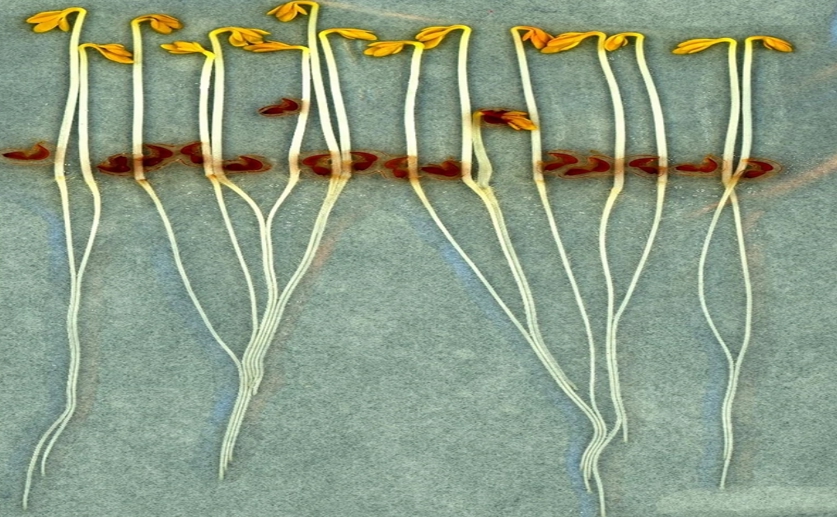
Healthy 5-day-old cress seedlings, serving as the baseline for toxicity tests.

Image adapted from Fig. 1 in the research article by Schulz et al. (licensed under CC BY)

Key Findings

  • Researchers at the University of Witten/Herdecke developed a simple bioassay using garden cress to quickly assess the toxicity of water-soluble substances
  • The study found copper was the most toxic heavy metal tested to cress seedlings, followed by cadmium, iron, lead, zinc, and manganese
  • Measuring root and shoot length digitally provided a precise way to determine toxicity levels, with root growth being more sensitive to the metals than shoot growth
Heavy metals are a pervasive environmental concern, stemming from industrial activities and impacting ecosystems and human health. While essential in trace amounts, many heavy metals become toxic at higher concentrations, accumulating in the environment and potentially entering the food chain. Determining the impact of these metals requires robust and efficient testing methods. Traditional ecotoxicological analyses can be time-consuming and resource-intensive. Researchers at the University of Witten/Herdecke have developed a streamlined bioassay utilizing garden cress (Lepidium sativum L.) to address this need[1]. The core problem this study tackles is the efficient assessment of water-soluble substances for their toxic effects on plants, specifically focusing on heavy metals. Existing methods often lack the speed and simplicity needed for widespread environmental monitoring. The new bioassay aims to provide a quick and reliable way to gauge the potential harm of these contaminants. The study involved growing cress seedlings in a simple setup – hanging plastic bags with chromatography paper acting as a growth medium, soaked in solutions containing varying concentrations of heavy metal compounds. These compounds included cadmium nitrate, copper sulphate, iron sulphate, lead nitrate, manganese chloride, and zinc chloride, alongside sodium chloride as a control. The researchers then digitally measured the seedlings’ growth – germination rate, shoot length, root length, and the ratio of root length to shoot length. This digital measurement aspect is key, offering a precise and automated way to quantify the effects of the substances. The resulting data allowed the researchers to calculate the EC50 value for each metal. EC50, or half maximal effective concentration, represents the concentration of a substance needed to cause a 50% reduction in a specific biological effect (in this case, root length, total length, or root-to-shoot ratio). This is a standard measure of toxicity; a lower EC50 indicates higher toxicity. The findings revealed a clear order of toxicity among the tested metals: copper was the most toxic, followed by cadmium, iron, lead, zinc, and finally manganese. This study builds on existing knowledge regarding the detrimental effects of heavy metals on biological systems[2]. Research has consistently shown that manganese, while an essential nutrient, can cause neurological damage at elevated levels, inducing oxidative stress and impacting mitochondrial function. The cress bioassay provides a means to efficiently investigate such effects, potentially linking exposure levels to observable plant responses. Furthermore, the study corroborates observations from broader environmental surveys[3], which identify lead, zinc, copper, and cadmium as common soil pollutants exceeding regulatory limits. Interestingly, the study also touches upon the potential for heavy metals to indirectly contribute to other environmental issues, such as antimicrobial resistance. While not directly investigated in this bioassay, research has demonstrated that heavy metal contamination can enrich for antibiotic resistance genes in soil[4][5]. This occurs through co-selection mechanisms, where bacteria develop resistance to both metals and antibiotics simultaneously. The cress bioassay could be used as a preliminary screening tool to identify soils with elevated heavy metal levels, prompting further investigation into the presence and dissemination of ARGs. The simplicity of the cress bioassay is its greatest strength. The upright growth of the seedlings facilitates easy scanning and digital measurement, reducing the potential for human error and enabling high-throughput analysis. The use of readily available materials and a short growth period further contribute to its efficiency. This makes it a valuable tool for future investigations into the ecotoxicological effects of various water-soluble substances, not just heavy metals.

EnvironmentEcologyPlant Science

References

Main Study

1) A versatile Lepidium sativum bioassay for use in ecotoxicological studies

Published 23rd September, 2025

https://doi.org/10.1038/s41598-025-17215-7


Related Studies

2) Exposure, epidemiology, and mechanism of the environmental toxicant manganese.

https://doi.org/10.1007/s11356-016-6687-0


3) Current status of trace metal pollution in soils affected by industrial activities.

https://doi.org/10.1100/2012/916705


4) Insights into factors driving the transmission of antibiotic resistance from sludge compost-amended soil to vegetables under cadmium stress.

https://doi.org/10.1016/j.scitotenv.2020.138990


5) Co-occurrence of antibiotic, biocide, and heavy metal resistance genes in bacteria from metal and radionuclide contaminated soils at the Savannah River Site.

https://doi.org/10.1111/1751-7915.13578


Related Articles

An unhandled error has occurred. Reload 🗙