Chestnut extract protects steel from acid damage

Jim Crocker
16th February, 2026

Chestnut extract protects steel from acid damage

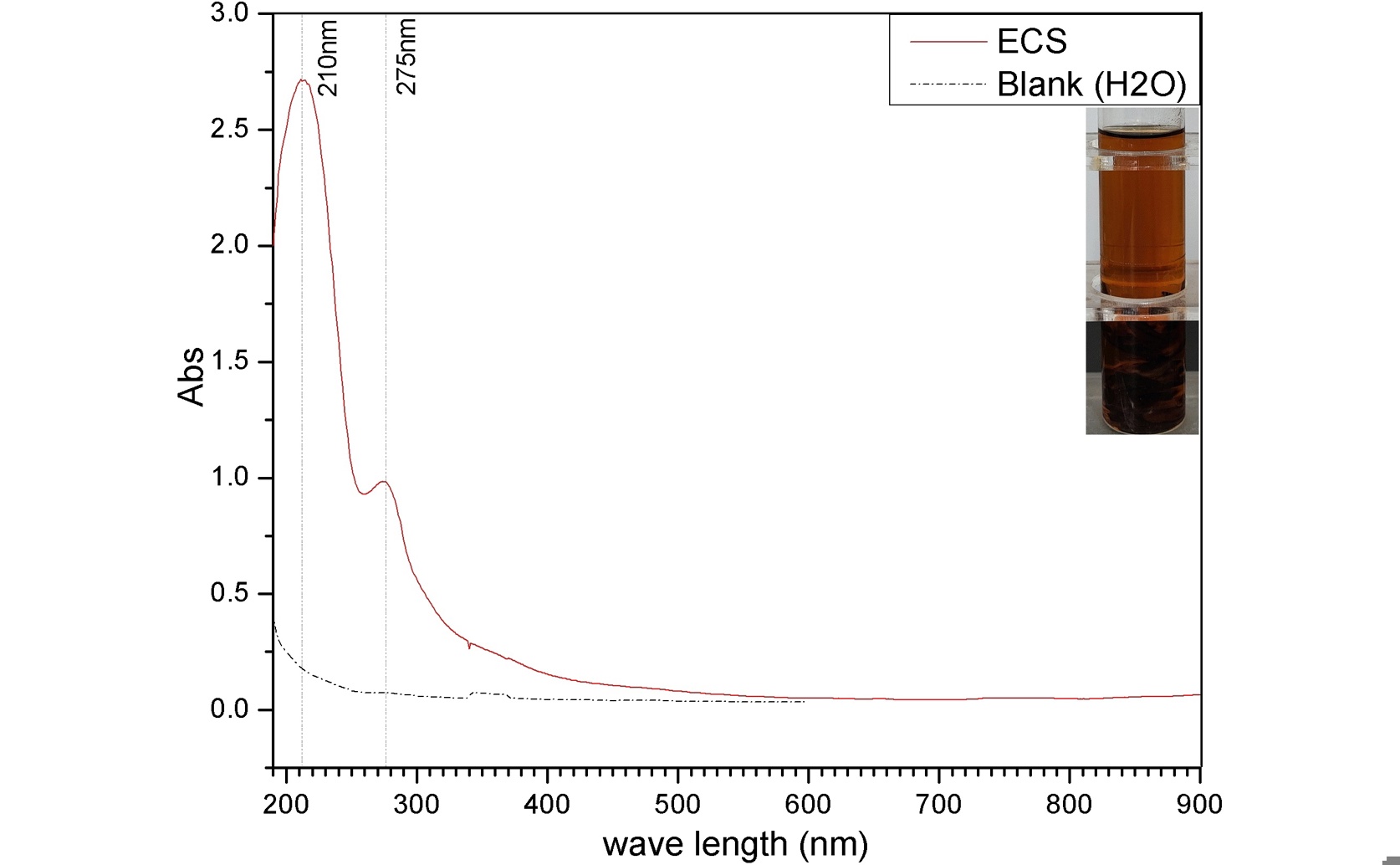
The absorption spectrum of the brownish-yellow chestnut shell extract (inset) confirms the presence of aromatic compounds like flavonoids, which are the key components responsible for its corrosion-inhibiting properties.

Image adapted from: Zhou et al. / CC BY (Source)

Key Findings

  • Chestnut shell extract (ECS) effectively reduces carbon steel corrosion in acidic environments, offering a sustainable alternative to traditional inhibitors
  • ECS achieves approximately 80% corrosion inhibition efficiency at a concentration of 56.6mL/L, lowering the corrosion rate to 1.21mm/year, below the national standard limit
  • ECS protects steel through a mixed adsorption mechanism, forming a protective film on the metal surface via both physical and chemical interactions
Corrosion is a significant industrial problem, causing damage to infrastructure and equipment, leading to costly repairs and potential safety hazards. Traditional corrosion inhibitors often contain toxic substances, prompting research into more environmentally friendly alternatives. Recent work from researchers at Jinling Institute of Technology, Nanjing Tech University[1], investigates the potential of using an extract from chestnut shells as a “green” corrosion inhibitor for carbon steel. Chestnut shells are a common agricultural byproduct, often discarded after food processing. Utilizing such waste materials offers a sustainable solution for resource recycling and reduces environmental impact. Previous studies have already highlighted the valuable chemical components present in chestnut shells, including polyphenols[2][3][4]. Specifically, research has demonstrated the presence of flavonoids like procyanidin B3 and quercetin-3-O-glycoside, alongside steroidal sapogenins, which possess antioxidant and antibacterial properties[3]. This chemical richness suggests the potential for various applications beyond food additives. The study focused on creating an aqueous extract from chestnut shells (ECS) and evaluating its ability to protect carbon steel from corrosion in hydrochloric acid (HCl) – a common corrosive environment. The researchers first optimized the extraction process using a method called an orthogonal array, determining the best combination of chestnut shell dosage (20g/L), ethanol concentration (20% v/v), temperature (50°C), and pH (9) to maximize the extract’s effectiveness. Analysis of the ECS revealed that it absorbs ultraviolet (UV) light in a manner characteristic of isoflavonoids, further supporting the presence of these protective compounds. To assess the ECS’s corrosion inhibition properties, the team employed electrochemical techniques. Tafel curves, which measure the rate of corrosion reactions, showed that ECS acts as a “mixed-type” inhibitor, meaning it slows down both the oxidation and reduction processes involved in corrosion. Electrochemical impedance spectroscopy (EIS) revealed the formation of a protective film on the steel surface when ECS was present, contributing to the inhibition of corrosion. This film acts as a barrier, resisting the flow of ions and slowing down the corrosive attack. Importantly, the ECS achieved an inhibition efficiency of approximately 80% at a concentration of 56.6mL/L. Beyond laboratory measurements, the researchers also conducted weight-loss experiments to simulate real-world corrosion conditions. These experiments demonstrated that ECS reduced the corrosion rate to around 1.21mm/year, which is below the national standard limit of 2.23mm/year, indicating practical applicability. To understand how ECS protects the steel, the researchers investigated the adsorption process – how the extract molecules attach to the metal surface. The results suggest a combination of physical and chemical adsorption, described by the Temkin model. This model predicts a change in standard free energy of adsorption of -27.13kJ/mol, confirming the mixed nature of the adsorption process. This adsorption forms the protective barrier observed in the EIS measurements. Interestingly, prior work has shown that steam explosion pretreatment of chestnut shells can increase their surface area and expose hydroxyl and carboxyl groups, enhancing their ability to bind to metal ions like copper[2]. While this study focused on corrosion inhibition in an acidic environment, it’s plausible that similar surface modifications could further improve the performance of ECS. Furthermore, research demonstrating the strong antibacterial properties of chestnut shell pigments[3] suggests that ECS may also offer protection against microbiologically influenced corrosion, a common issue in certain industrial settings. The findings from highlight the considerable potential of ECS as a sustainable and effective corrosion inhibitor for carbon steel equipment, offering a promising alternative to traditional, potentially harmful chemicals.

AgricultureBiochemPlant Science

References

Main Study

1) Chestnut shell aqueous extract as a green efficient corrosion inhibitor for acid-cleaning carbon steel

Published 13th February, 2026

https://doi.org/10.1371/journal.pone.0340769


Related Studies

2) Equilibrium, kinetics and thermodynamics of Cu(II) biosorption on Chinese chestnut shell pretreated with steam explosion.

https://doi.org/10.2166/wst.2018.359


3) Chemical composition, properties, and antimicrobial activity of the water-soluble pigments from Castanea mollissima shells.

https://doi.org/10.1021/jf4045414


4) Chinese chestnut shell polyphenol extract regulates the JAK2/STAT3 pathway to alleviate high-fat diet-induced, leptin-resistant obesity in mice.

https://doi.org/10.1039/d3fo00604b


Related Articles

An unhandled error has occurred. Reload 🗙