
Radish genes control cadmium absorption and removal from plants
Greg Howard
14th February, 2026


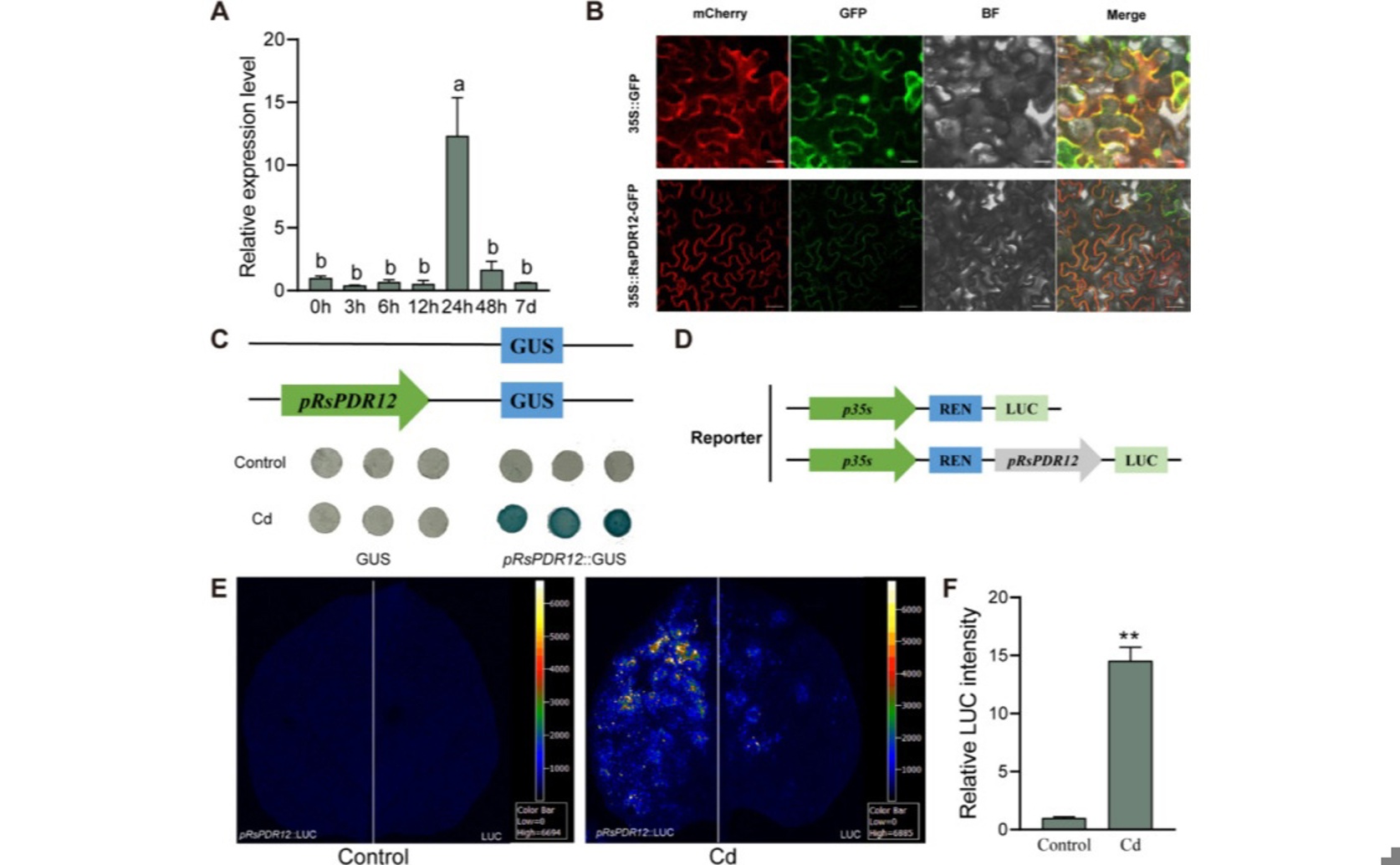
The radish gene RsPDR12 is strongly induced by cadmium (Cd) stress, as shown by increased gene expression in roots (a) and promoter activation in Nicotiana benthamiana leaves (c, e, f), and its protein localizes to the plasma membrane (b), indicating its involvement in the plant's response to heavy metals.
Key Findings
- In radish plants, the RsPDR12 gene’s activity increases when exposed to cadmium, suggesting a role in Cd response
- RsPDR12 actively transports cadmium, reducing its levels in yeast cells and roots of Arabidopsis, indicating it helps remove Cd
- The RsWRKY15 gene directly activates RsPDR12, increasing its expression and ultimately lowering cadmium accumulation in radish
AgricultureBiochemPlant Science
References
Main Study
1) RsWRKY15–RsPDR12 module regulates Cd uptake and accumulation by promoting Cd efflux in radish (Raphanus sativus L.)
Published 12th February, 2026
https://doi.org/10.1186/s43897-025-00195-7
Related Studies
2) Transcription Factor GmWRKY142 Confers Cadmium Resistance by Up-Regulating the Cadmium Tolerance 1-Like Genes.
3) ATP binding cassette proteins ABCG37 and ABCG33 function as potassium-independent cesium uptake carriers in Arabidopsis roots.
4) Physiological response of CmWRKY15-1 to chrysanthemum white rust based on TRV-VIGS.
Related Articles
 22nd October, 2025 | Jim Crocker