Do Grapevine Leaves Adjust to Changing Conditions to Optimize Photosynthesis?

Greg Howard
31st December, 2025

Do Grapevine Leaves Adjust to Changing Conditions to Optimize Photosynthesis?

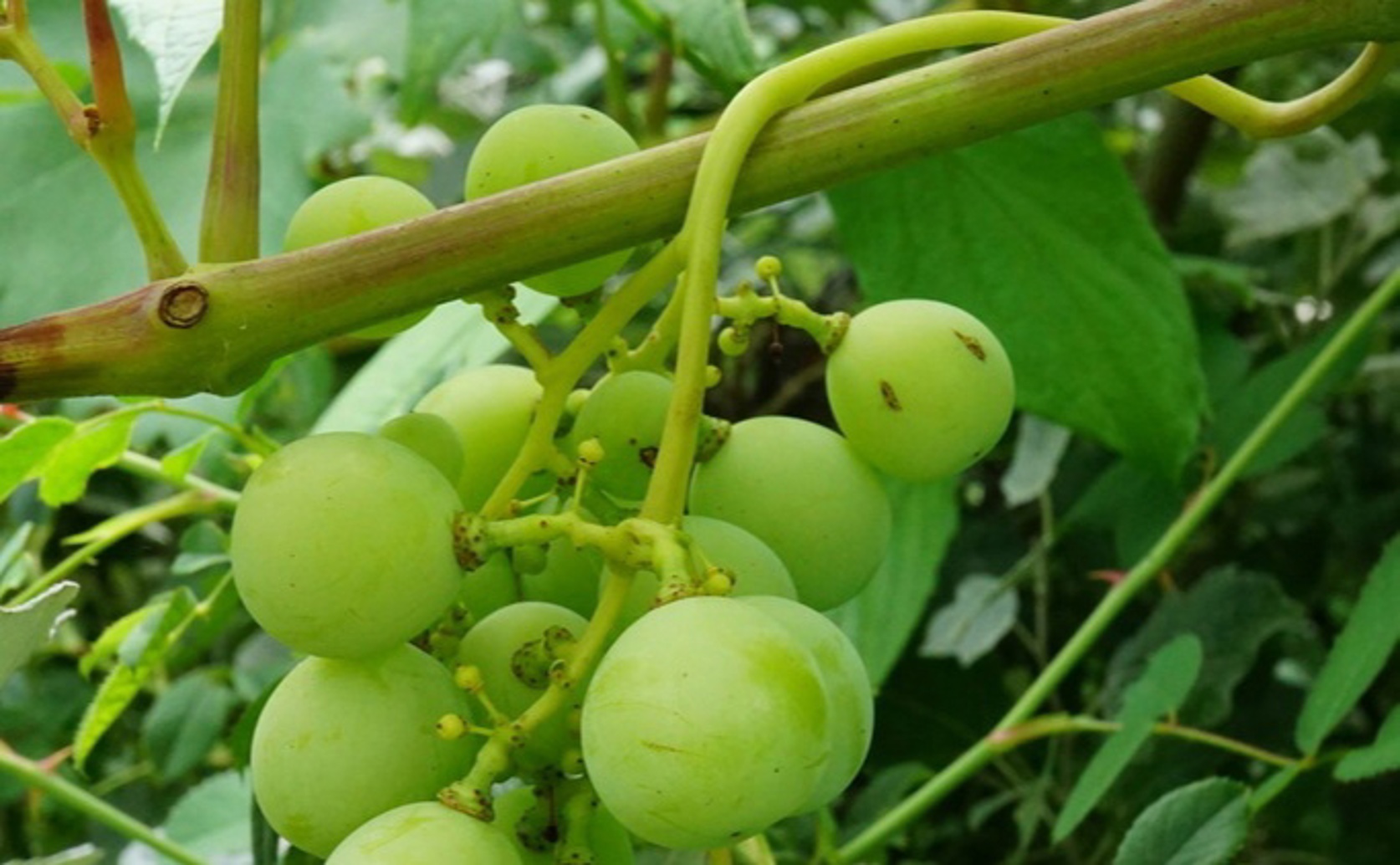
Wine grape (Vitis vinifera)

Photo adapted from: Patrick Hacker / CC BY (Source)

Key Findings

  • In grapevines studied in Israel, daily sugar accumulation helps maintain cell turgor pressure when leaf water levels decrease
  • The importance of these sugars for maintaining turgor diminishes as the growing season progresses and drought stress increases
  • Contrary to some previous research, the study found no evidence that increased sugar levels directly signal the plant to reduce photosynthesis rates
Leaves need to balance water loss with carbon dioxide intake for photosynthesis, a process crucial for plant growth. A key factor in this balance is maintaining sufficient water pressure within leaf cells – known as turgor – even when water is scarce. This study, conducted by researchers at Ben-Gurion University of the Negev[1], investigated how plants manage this balance using non-structural carbohydrates (NSC), essentially sugars and other related compounds stored in leaves. The central question was whether these NSC compounds actively help plants cope with water stress or if their build-up is simply a consequence of overproduction when growth slows down. The research team monitored grapevines throughout two growing seasons, meticulously tracking gas exchange (the intake of carbon dioxide and release of water vapor), leaf water potential (Ψleaf – a measure of water content in the leaf), osmotic potential (a measure of the water-holding capacity within cells), and NSC levels. They compared vines that were regularly irrigated with those experiencing drought conditions. The findings revealed a significant role for soluble sugars in maintaining turgor pressure during the day. Approximately 50% of the daily osmotic adjustment – the process of regulating water content within cells – was achieved through the accumulation of these sugars. This means that as water potential decreased, the sugars increased, helping the vines keep their cells firm enough to allow stomata (tiny pores on the leaf surface) to remain open for gas exchange. This aligns with earlier work on maize and sorghum[2], which demonstrated that increased solute concentrations, including sugars, helped maintain turgor pressure despite low leaf water potential, and that shading leaves eliminated this sugar build-up. However, the importance of NSC as osmolytes – compounds that contribute to osmotic adjustment – diminished as the growing season progressed. When water was deliberately withheld from the vines, NSC levels did not play a significant role in osmotic adjustment. This suggests the sugars are most important early in the season when plants are actively growing and water stress is less severe. Interestingly, the study also found no evidence that high NSC levels acted as a signal to reduce photosynthesis. There was no negative correlation between NSC concentration and gas exchange rates. This contradicts the idea that a build-up of sugars automatically triggers a slowdown in carbon dioxide uptake. Previous research on wheat stems and flag leaves[3] highlighted the dynamic nature of water-soluble carbohydrates, showing diurnal patterns in their levels, but didn't directly address their role as a feedback signal for photosynthesis. The Ben-Gurion University research builds upon these earlier findings by demonstrating a clear, time-dependent role for NSC in osmotic adjustment. While sugars are crucial for maintaining turgor during daily fluctuations in water potential, their importance lessens as the season progresses and drought stress intensifies. Furthermore, the study challenges the notion that NSC accumulation is simply a byproduct of excess carbon assimilation, suggesting it doesn't directly regulate photosynthetic activity. The research team also addressed the methodology used to calculate solute concentrations. They noted that measurements were taken on non-rehydrated leaves, acknowledging that seasonal changes in water content could theoretically influence results. However, they concluded this effect was marginal, as the seasonal osmotic patterns were consistent even in well-irrigated plants. This reinforces their finding that the role of sugars in turgor maintenance is distinct from their response to drought stress.

AgricultureBiochemPlant Science

References

Main Study

1) Do Daily and Seasonal Changes in Non‐Structural Carbohydrates in Grapevine Leaves Contribute to Osmotic Adjustment and Regulation of Photosynthesis?

Published 29th December, 2025

https://doi.org/10.1111/ppl.70683


Related Studies

2) Diurnal growth trends, water potential, and osmotic adjustment of maize and sorghum leaves in the field.

Journal: Plant physiology, Issue: Vol 64, Issue 3, Sep 1979


3) Diurnal Changes in Water Soluble Carbohydrate Components in Leaves and Sucrose Associated TaSUT1 Gene Expression during Grain Development in Wheat.

https://doi.org/10.3390/ijms21218276


4) Apoplastic water fraction and rehydration techniques introduce significant errors in measurements of relative water content and osmotic potential in plant leaves.

https://doi.org/10.1111/ppl.12380


Related Articles

An unhandled error has occurred. Reload 🗙