Nanoparticles boost lettuce’s defenses against a common root disease

Jenn Hoskins
16th October, 2025

Nanoparticles boost lettuce’s defenses against a common root disease

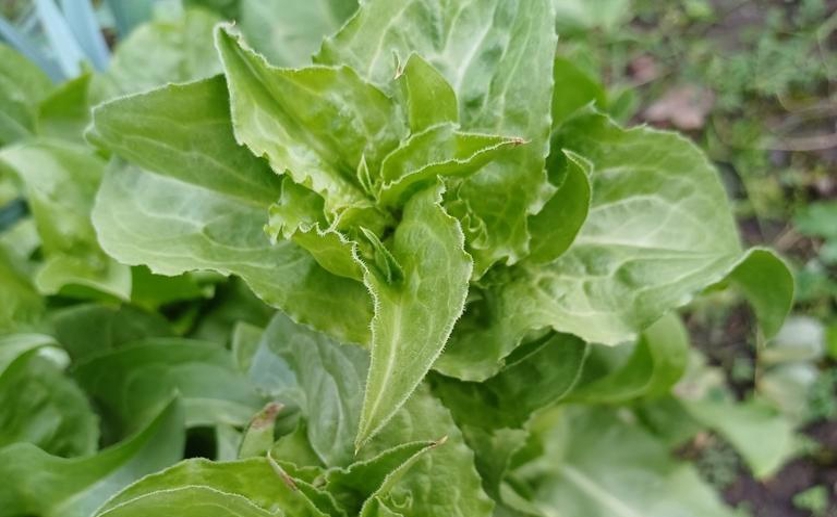
Lettuce (Lactuca sativa)

Photo: Gleb Barmashenko / CC BY (Source)

Key Findings

  • In Egypt, researchers found that applying silicon dioxide, copper oxide, and gamma iron oxide nanoparticles to lettuce plants significantly reduced root rot caused by the Rhizoctonia solani fungus
  • Nanoparticle treatments boosted lettuce plant health by increasing levels of proteins and chlorophyll, essential for photosynthesis
  • These nanoparticles activated the plant’s immune system at a genetic level, triggering the expression of defense genes (PR1, PR3, PR4, ERT1, and FHL) and priming it to fight off infection
Root rot is a significant problem for lettuce crops, caused by the fungus Rhizoctonia solani. Traditional methods of controlling this disease often rely on chemical fungicides, but these can have drawbacks, including the development of fungal resistance[2]. The Pant Pathology Research Institute, Soils, Water & Environment Research Institute, RUDN University, Tanta University, and University of Agriculture Faisalabad recently conducted a study[1] investigating whether nanoparticles could offer a more sustainable solution by boosting the plant’s own defenses. The research focused on three types of nanoparticles: silicon dioxide (SiO2), copper oxide (CuO), and gamma iron oxide (γFe2O3). These are all extremely small particles – much smaller than the width of a human hair – and possess unique properties due to their size[3]. The study aimed to determine if applying these nanoparticles to lettuce plants could trigger what’s known as systemic resistance (SR). Systemic resistance is a state where a plant, after being exposed to a harmless trigger, becomes more resistant to a wide range of diseases. The researchers found that all three nanoparticles significantly reduced the severity of root rot symptoms in lettuce. They measured this by tracking how much disease developed over time, using a metric called the Area Under the Disease Progress Curve (AUDPC). Plants treated with nanoparticles showed less disease progression compared to untreated plants. Furthermore, the treated plants exhibited improved overall health, with higher levels of proteins and chlorophyll – the green pigment essential for photosynthesis. A key aspect of the study was investigating how the nanoparticles were providing protection. The researchers discovered that infection with R. solani causes oxidative stress in the lettuce plants, leading to an accumulation of damaging molecules like malondialdehyde (MDA) and hydrogen peroxide (H2O2). While all three nanoparticles helped to mitigate this oxidative stress, SiO2 and γFe2O3 were particularly effective. They also observed that all nanoparticles increased the levels of carotenoids and the activity of antioxidant enzymes – superoxide dismutase, catalase, and ascorbate peroxidase – which help to neutralize harmful free radicals. Perhaps the most important finding was that the nanoparticles triggered changes at the genetic level. The researchers examined the expression of several genes known to be involved in plant defense. They found that the nanoparticles activated genes coding for PR1, PR3, and PR4 proteins – these are “pathogenesis-related” proteins that play a crucial role in fighting off infections. They also observed increased expression of ERT1, a gene involved in regulating plant responses to stress. This upregulation of defense genes correlated with the reduced disease symptoms and improved plant health, suggesting that the nanoparticles were essentially “priming” the plant’s immune system. Notably, the study was the first to demonstrate that copper oxide, gamma iron oxide, and silicon dioxide nanoparticles could activate the fatty acid hydroperoxide lyase (FHL) gene in lettuce when challenged with R. solani. FHL is involved in plant defense against fungal pathogens. This research builds on the growing understanding of how nanoparticles interact with plants[4]. Nanoparticles can enter plant tissues through various routes, including through small pores in the leaves or via the roots[4]. Once inside, they can be transported throughout the plant, delivering their beneficial effects. The findings suggest that nanoparticles could be a valuable tool for managing R. solani in lettuce, offering a potential alternative to traditional fungicides and helping to address the issue of fungicide resistance[2]. The approach could be applicable in both greenhouse and field settings.

AgricultureBiochemPlant Science

References

Main Study

1) Stimulation of resistance genes and antioxidant enzymes in lettuce by nano metal oxides against root rot caused by Rhizoctonia solani

Published 14th October, 2025

https://doi.org/10.1371/journal.pone.0334506


Related Studies

2) The rising threat of fungicide resistance in plant pathogenic fungi: Botrytis as a case study.

https://doi.org/10.1007/s12154-014-0113-1


3) Nanoparticle classification, physicochemical properties, characterization, and applications: a comprehensive review for biologists.

https://doi.org/10.1186/s12951-022-01477-8


4) Role of nanoparticles in crop improvement and abiotic stress management.

https://doi.org/10.1016/j.jbiotec.2021.06.022


Related Articles

An unhandled error has occurred. Reload 🗙