Tree Type And Stimulation Time For Better Precious Agarwood

Jenn Hoskins
4th July, 2025

Tree Type And Stimulation Time For Better Precious Agarwood

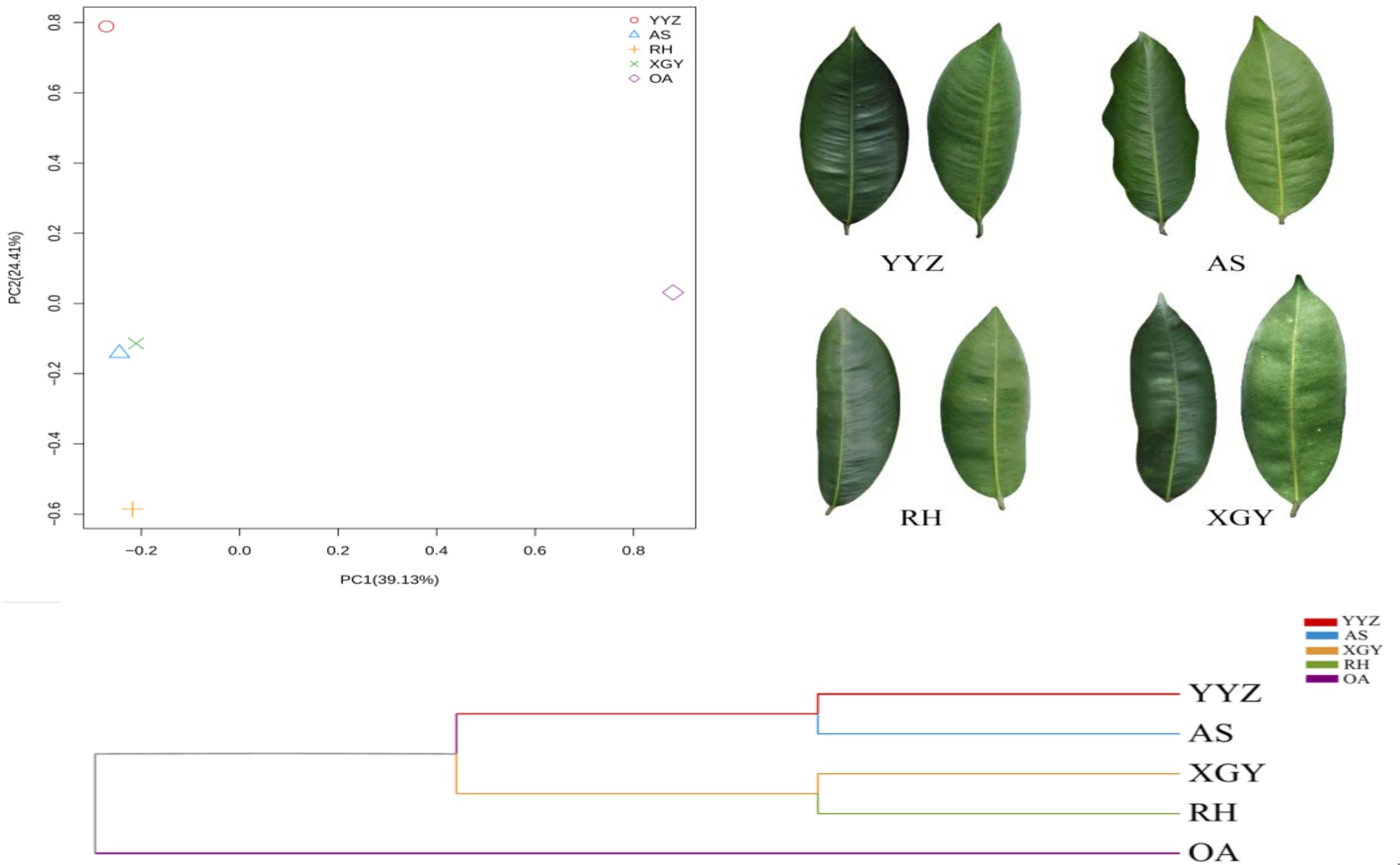
Morphological and genetic analyses demonstrate that the four grafted Qi-Nan clones are biologically distinct from each other and from ordinary Aquilaria sinensis, establishing the biological variation that underlies the clone-specific differences in agarwood quality reported in the study.

Image adapted from: Li et al. / CC BY (Source)

Key Findings

  • A study in Dianbai, China, found that both the specific tree type (clone) and the time allowed for resin formation significantly affect agarwood quality
  • Crucially, longer resin formation time does not always guarantee better quality; some tree types peaked at one year, while others needed two
  • This means agarwood cultivation should be tailored to each tree type for efficient and sustainable production of this valuable resource
Agarwood, a rare and highly prized resinous wood, has been revered for centuries in various traditional medicine systems, including Ayurvedic and Traditional Chinese Medicine[2][3]. It's formed when trees of the Aquilaria species are injured, responding by producing a dark, fragrant resin within their wood. This natural process is slow and inconsistent, leading to the scarcity of wild agarwood. Given its historical use for conditions ranging from joint pain and inflammation to its role as a stimulant or sedative, and its demonstrated properties like anti-allergic, anti-inflammatory, and antimicrobial effects, there's a significant drive to cultivate agarwood sustainably[2]. A particular type of agarwood, known as Qi-Nan, is highly valued for its quality and ability to form resin more readily, often with a shorter induction time – the period allowed for the resin to develop after injury. Qi-Nan is characterized by its substantial resin content, particularly its levels of specific chemical compounds like 2-(2-phenylethyl)chromones and other chromones[1]. Previous research has highlighted that 2-(2-phenylethyl)chromones are key active components in agarwood, with studies isolating various derivatives and demonstrating their inhibitory effects against bacteria like Staphylococcus aureus and Ralstonia solanacearum, as well as their activity against acetylcholinesterase, an enzyme involved in nerve function[4]. Other studies have also shown that high-quality agarwood, such as Grafted Kynam (a type of Qi-Nan), boasts higher concentrations of these 2-(2-phenylethyl)chromones, linking them to important biological activities like the activation of the AMP-activated protein kinase (AMPK) pathway, which plays a role in cellular energy regulation[3]. While these compounds are known to be crucial for agarwood's quality and therapeutic properties, a challenge in cultivation has been understanding how to consistently produce high-quality Qi-Nan. Specifically, it's unclear how factors like the duration of the inducing period and the genetic variety (or 'clone') of the tree affect the final quality of the agarwood. Optimizing these factors is critical for efficient and sustainable production, addressing the concerns about wild agarwood being critically endangered[2]. To tackle this, a recent study conducted by researchers at the Chinese Academy of Forestry and Central Uni. Punjab developed a precise method to quantify key quality indicators in Qi-Nan agarwood. These indicators included agarotetrol (another important, though often low-content, marker), the two aforementioned chromones, and the overall ethanol extract content, which serves as a measure of the resin content. The study aimed to explore how different inducing times (half a year, one year, and two years) and various tree clones (YYZ, AS, RH, and XGY) influenced the quality of the agarwood produced. The findings revealed that both the specific tree clone and the inducing time significantly impact the final agarwood quality. Importantly, the research demonstrated that a longer inducing time does not automatically guarantee better agarwood quality. For instance, clones YYZ, AS, and RH achieved their best quality after two years of induction, with ethanol extract content ranging from 46.82% to 48.59%, and the two key chromones reaching between 10.57% and 14.05%. However, a different pattern emerged for the XGY clone: its agarwood quality was superior after just one year of induction compared to two years. At the one-year mark, XGY produced the highest ethanol extract content (51.49%) and robust levels of the two chromones (12.43% and 12.91%). This research builds upon the extensive knowledge of agarwood's chemical composition and pharmacological activities[2][3][4] by providing practical, data-driven insights for its cultivation. By precisely quantifying the compounds known to be responsible for agarwood's beneficial effects, the study helps bridge the gap between understanding the plant's traditional uses and developing modern, sustainable agricultural practices. The results have significant implications for the cultivation and industrial development of Qi-Nan agarwood, suggesting that harvesting should be tailored to the specific clone and its optimal induction period. This personalized approach to cultivation can lead to more efficient production of high-quality agarwood, ensuring a sustainable supply of this valuable resource while preserving wild populations.

AgricultureBiochemPlant Science

References

Main Study

1) Effects of different clones and inducing time on agarwood quality in grafted Qi-Nan Aquilaria sinensis (Lour.) spreng

Published 3rd July, 2025

https://doi.org/10.1371/journal.pone.0327514


Related Studies

2) Aquilaria spp. (agarwood) as source of health beneficial compounds: A review of traditional use, phytochemistry and pharmacology.

https://doi.org/10.1016/j.jep.2016.06.055


3) Comprehensive Comparisons between Grafted Kynam Agarwood and Normal Agarwood on Traits, Composition, and In Vitro Activation of AMPK.

https://doi.org/10.3390/molecules28041667


4) 2-(2-phenylethyl)chromone derivatives from Chinese agarwood induced by artificial holing.

https://doi.org/10.1016/j.fitote.2014.07.011


Related Articles

An unhandled error has occurred. Reload 🗙