Licorice Root Extract and Melatonin Boost Bean Growth in Polluted Salty Soil

Greg Howard
9th January, 2025

Licorice Root Extract and Melatonin Boost Bean Growth in Polluted Salty Soil

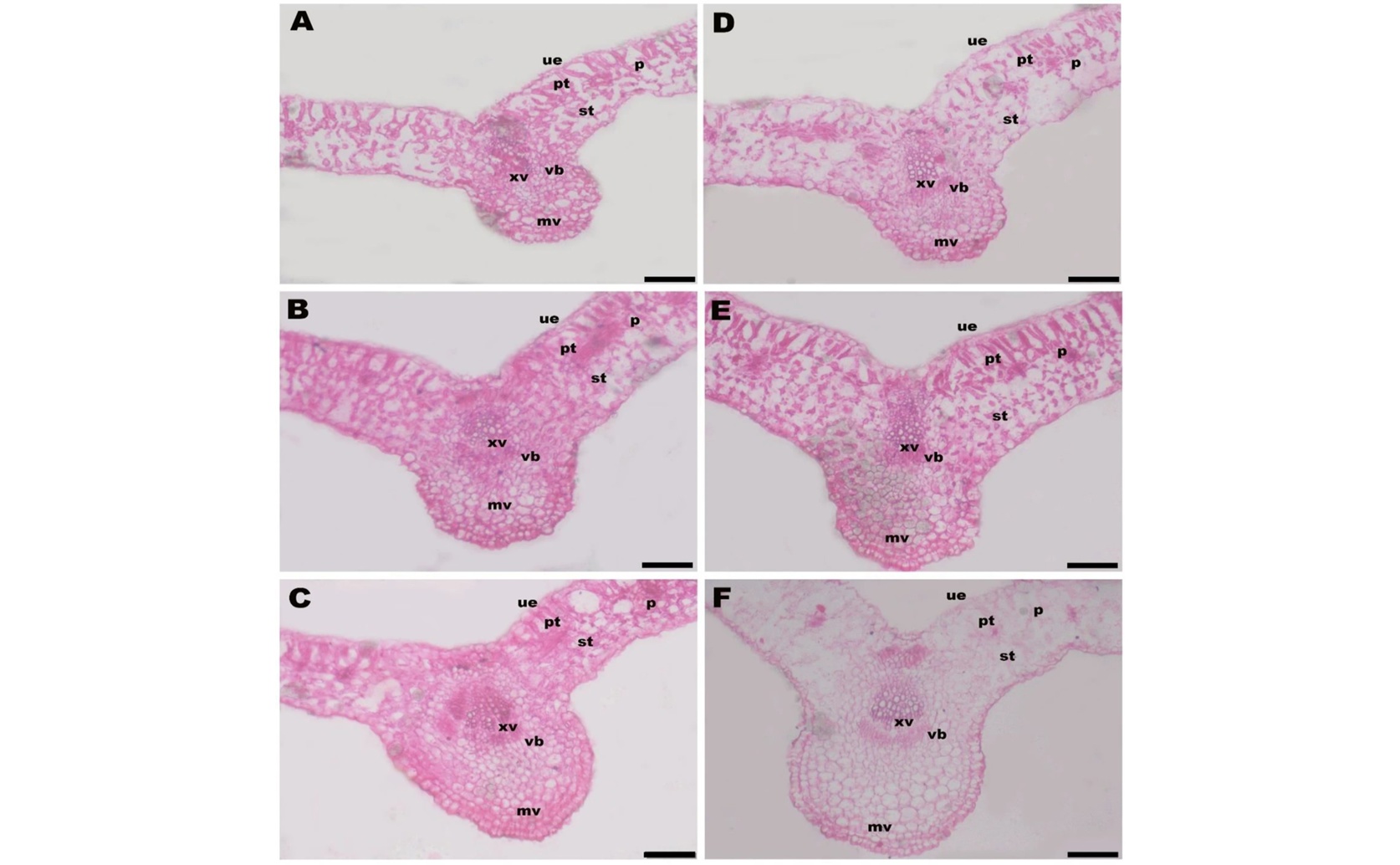
Anatomical cross-sections of Faba bean (Vicia faba) leaves reveal that the combined application of licorice root extract and melatonin significantly improved leaf tissue thickness and vascular structure (f) compared to the untreated control (a), contributing to the overall enhanced plant growth under cadmium and salinity stress.

Image adapted from: Mageed et al. / CC BY (Source)

Key Findings

  • Researchers from Fayoum University found that salinity and cadmium stress severely damage faba bean plants, affecting their growth and biochemical health
  • Applying melatonin and licorice root extract significantly reduced the negative effects of these stressors, improving plant health and yield
  • The treatment also decreased cadmium accumulation in the plants, enhancing food safety and promoting sustainable agriculture
Salinity and cadmium (Cd) contamination are significant threats to global crop productivity, leading to reduced plant growth and development through osmotic stress and ionic cytotoxicity. Addressing these challenges is crucial for sustainable agriculture. Researchers from Fayoum University have conducted a study to explore the potential of melatonin (Mt) and licorice root extract (LRE) as biostimulants to mitigate the adverse effects of salinity and Cd stress on faba bean (Vicia faba L.) plants[1]. Salinity affects crop productivity by causing osmotic stress and ionic toxicity, which limit plant growth and yield[2]. Similarly, Cd contamination, often resulting from anthropogenic activities, disrupts plant metabolism, reduces nutrient uptake, and causes oxidative damage[3]. The combination of these stressors can be particularly detrimental to crops. The study aimed to test the efficacy of Mt and LRE in enhancing the plant's defense mechanisms against these stressors. In the study, faba bean plants were grown in soil contaminated with Cd and high salinity (Cd = 4.71 mg kg-1 soil and ECe = 7.84 dS m-1). The plants were treated with different concentrations of Mt (0, 50, and 100 mM) and LRE (0.0 and 3%) through foliar sprays. The experimental design included a control group sprayed with water. The researchers assessed various growth characteristics, photosynthetic pigments, nutrient uptake, physiological and metabolic responses, anatomical features, and yield. The results showed that Cd and salinity stress significantly impaired leaf integrity, photosynthetic efficiency, and various biochemical parameters, including total soluble sugars (TSS), free proline (FPro), total phenolic compounds, and total soluble proteins (TSP). These stressors also increased oxidative damage markers such as hydrogen peroxide (H2O2) and lipid peroxidation. However, the application of LRE and Mt, particularly at higher concentrations, significantly alleviated these negative effects. The combined application of LRE and Mt (LRE + Mt) enhanced the activity of reactive oxygen species (ROS) scavenging enzymes, such as superoxide dismutase, catalase, ascorbate peroxidase, and glutathione reductase. These enzymes play crucial roles in mitigating oxidative stress by neutralizing ROS. The treatment also increased the content of ascorbate and reducing glutathione, which are important antioxidants. These findings align with previous studies that highlight the importance of enhancing antioxidant defense mechanisms to cope with environmental stressors[4]. Moreover, the application of LRE + Mt increased osmolyte content, including FPro, TSS, and total phenols, which are known to help plants tolerate osmotic stress. This improvement in osmolyte levels is crucial for maintaining cellular homeostasis and protecting plant cells from stress-induced damage. The treatment also significantly reduced Cd accumulation in leaves and seeds, which is essential for reducing Cd toxicity and ensuring food safety. The study's findings suggest that the combined use of LRE and Mt can significantly improve the morphological, physiological, and biochemical properties of faba bean plants under Cd and salinity stress. This approach not only enhances plant growth and yield but also promotes sustainable agricultural practices by reducing the reliance on chemical inputs. In conclusion, the research conducted by Fayoum University demonstrates that the exogenous application of LRE and Mt can effectively mitigate the adverse effects of Cd and salinity stress on faba bean plants. This study builds on previous research by providing a practical and cost-effective solution for enhancing crop resilience to environmental stressors, contributing to sustainable agriculture and food security.

AgricultureBiochemPlant Science

References

Main Study

1) Integrative application of licorice root extract and melatonin improves faba bean growth and production in Cd-contaminated saline soil.

Published 8th January, 2025

https://doi.org/10.1186/s12870-024-05954-0


Related Studies

2) Soil salinity: A serious environmental issue and plant growth promoting bacteria as one of the tools for its alleviation.

https://doi.org/10.1016/j.sjbs.2014.12.001


3) Cadmium toxicity in plants: Impacts and remediation strategies.

https://doi.org/10.1016/j.ecoenv.2020.111887


Related Articles

An unhandled error has occurred. Reload 🗙