Piperine disrupts bacterial films and metabolism in a tough infection

Jim Crocker
25th January, 2026

Piperine disrupts bacterial films and metabolism in a tough infection

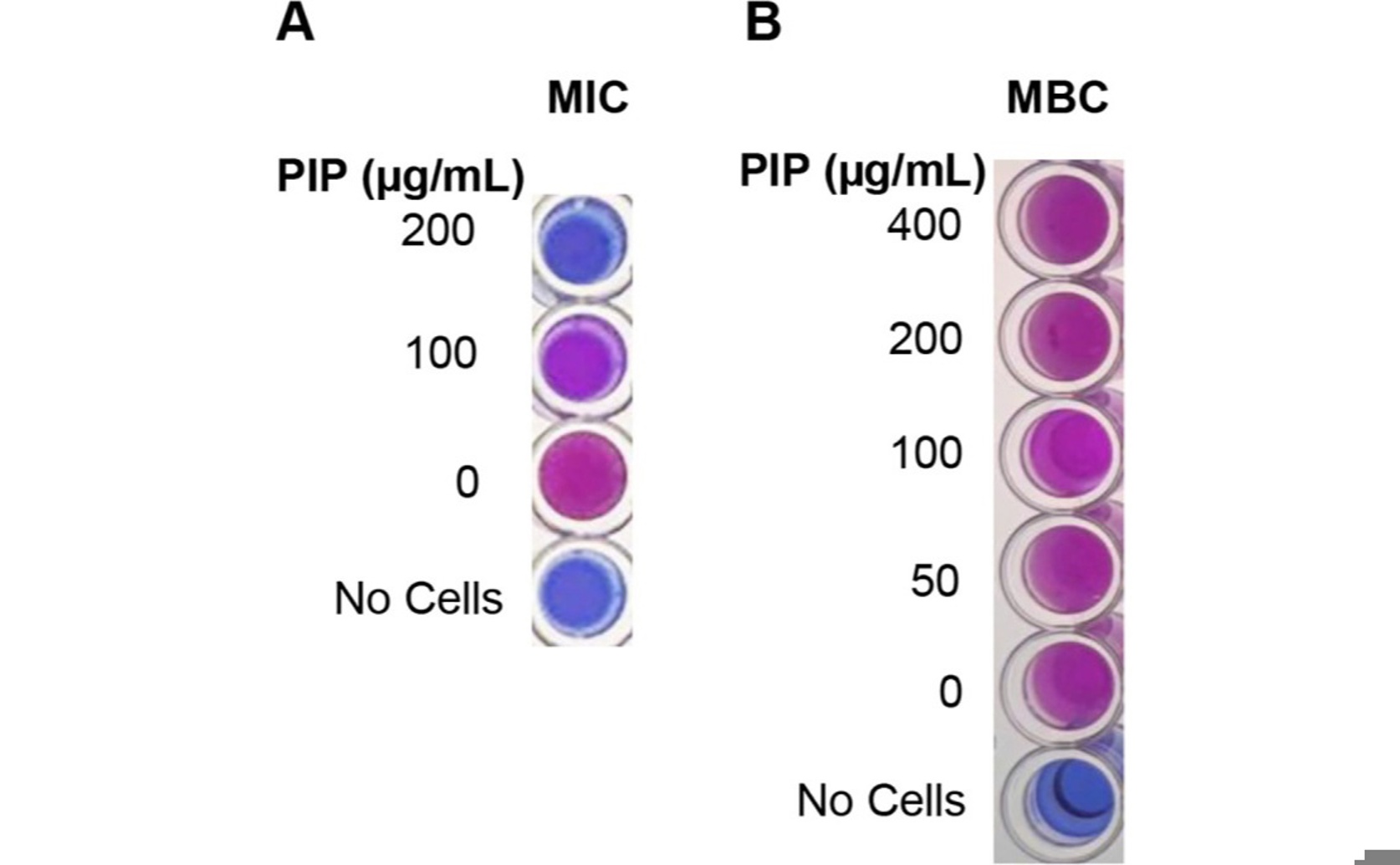
Study found that piperine inhibits the metabolic activity of Mycobacterium abscessus at a minimum inhibitory concentration of 200 µg/mL (a), but this effect is bacteriostatic rather than bactericidal, as the bacteria resume growth after its removal (b).

Image adapted from: Htay et al. / CC BY (Source)

Key Findings

  • In laboratory studies, piperine significantly reduced M. abscessus biofilm formation by over 90%
  • Piperine disrupts lipid production in M. abscessus biofilms, specifically decreasing triacylglycerol and trehalose monomycolate levels
  • Piperine enhances the effectiveness of common antibiotics like clarithromycin, amikacin, and ciprofloxacin against M. abscessus
Nontuberculous mycobacteria (NTM) represent a growing clinical challenge, causing persistent infections, particularly in the lungs, and are often resistant to standard antibiotic treatments[2]. These bacteria are widespread in the environment, only becoming problematic in individuals with weakened immune systems or pre-existing lung conditions. Mycobacterium abscessus is a particularly troublesome species, known for its rapid growth and high levels of antibiotic resistance[3]. Treatment failures are common, highlighting the urgent need for new therapeutic strategies. Researchers at Purdue University Fort Wayne and the University of Nebraska Medical Center recently investigated the potential of piperine, a naturally occurring compound found in black pepper, to combat M. abscessus infections[1]. Their work focused on how piperine affects the bacterium’s ability to form biofilms, a key factor in its resistance to antibiotics, and its overall metabolic processes. Biofilms are communities of bacteria encased in a protective matrix, making them significantly more tolerant to antibiotics and the host’s immune defenses[4]. M. abscessus is known to readily form biofilms in the lungs and other tissues. The study demonstrated that piperine, even at concentrations below those needed to directly kill the bacteria (sub-minimum inhibitory concentration levels), dramatically reduced biofilm formation – by over 90%. To understand how piperine achieves this, the researchers examined lipid biosynthesis within the bacteria. Lipids are essential components of cell membranes and biofilms, and M. abscessus actively produces them. They used radiolabeled palmitic acid – a fatty acid – to track how the bacteria incorporate lipids into different cellular components during both normal growth and biofilm formation. The results showed that piperine significantly disrupted lipid production during biofilm formation. Specifically, it nearly eliminated the synthesis of triacylglycerol, a neutral storage lipid, and halved the production of trehalose monomycolate, a crucial polar lipid. Interestingly, piperine increased the production of phosphatidylethanolamine, another polar lipid. This suggests that piperine doesn’t simply halt all lipid production, but rather alters the balance of different lipid types, ultimately hindering biofilm development. Another important aspect of M. abscessus resistance is the presence of efflux pumps. These pumps actively remove antibiotics from the bacterial cell, reducing their effectiveness[3]. The study found that piperine inhibited the activity of these efflux pumps by nearly 70%, meaning that antibiotics were able to accumulate to higher concentrations within the bacteria. Crucially, the researchers also tested whether piperine could enhance the efficacy of existing antibiotics. They found that it did, significantly lowering the concentrations of clarithromycin, amikacin, cefoxitin, and ciprofloxacin needed to inhibit bacterial growth. In the case of clarithromycin, piperine reduced the minimum inhibitory concentration – the lowest concentration needed to stop growth – by more than 16-fold. This suggests that combining piperine with standard antibiotics could improve treatment outcomes and potentially reduce the duration of therapy. These findings build upon earlier research highlighting the challenges of treating NTM infections due to their inherent resistance[2][3]. The study identifies a novel mechanism – disruption of lipid biosynthesis and efflux pump activity – by which piperine weakens M. abscessus, and importantly, demonstrates that it can work synergistically with existing drugs. This research suggests piperine holds promise as an adjunct therapy to combat these difficult-to-treat infections.

MedicineBiochem

References

Main Study

1) Piperine inhibits biofilm formation and efflux activity and dysregulates lipid metabolism in Mycobacterium abscessus

Published 22nd January, 2026

https://doi.org/10.1371/journal.pone.0341420


Related Studies

2) A narrative review of nontuberculous mycobacterial pulmonary disease: microbiology, epidemiology, diagnosis, and management challenges.

https://doi.org/10.1080/17476348.2023.2283135


3) Non-tuberculous mycobacteria and the rise of Mycobacterium abscessus.

https://doi.org/10.1038/s41579-020-0331-1


4) The biofilm matrix: multitasking in a shared space.

https://doi.org/10.1038/s41579-022-00791-0


Related Articles

An unhandled error has occurred. Reload 🗙