Mangrove plant shows promise for potential medicinal applications

Greg Howard
24th January, 2026

Mangrove plant shows promise for potential medicinal applications

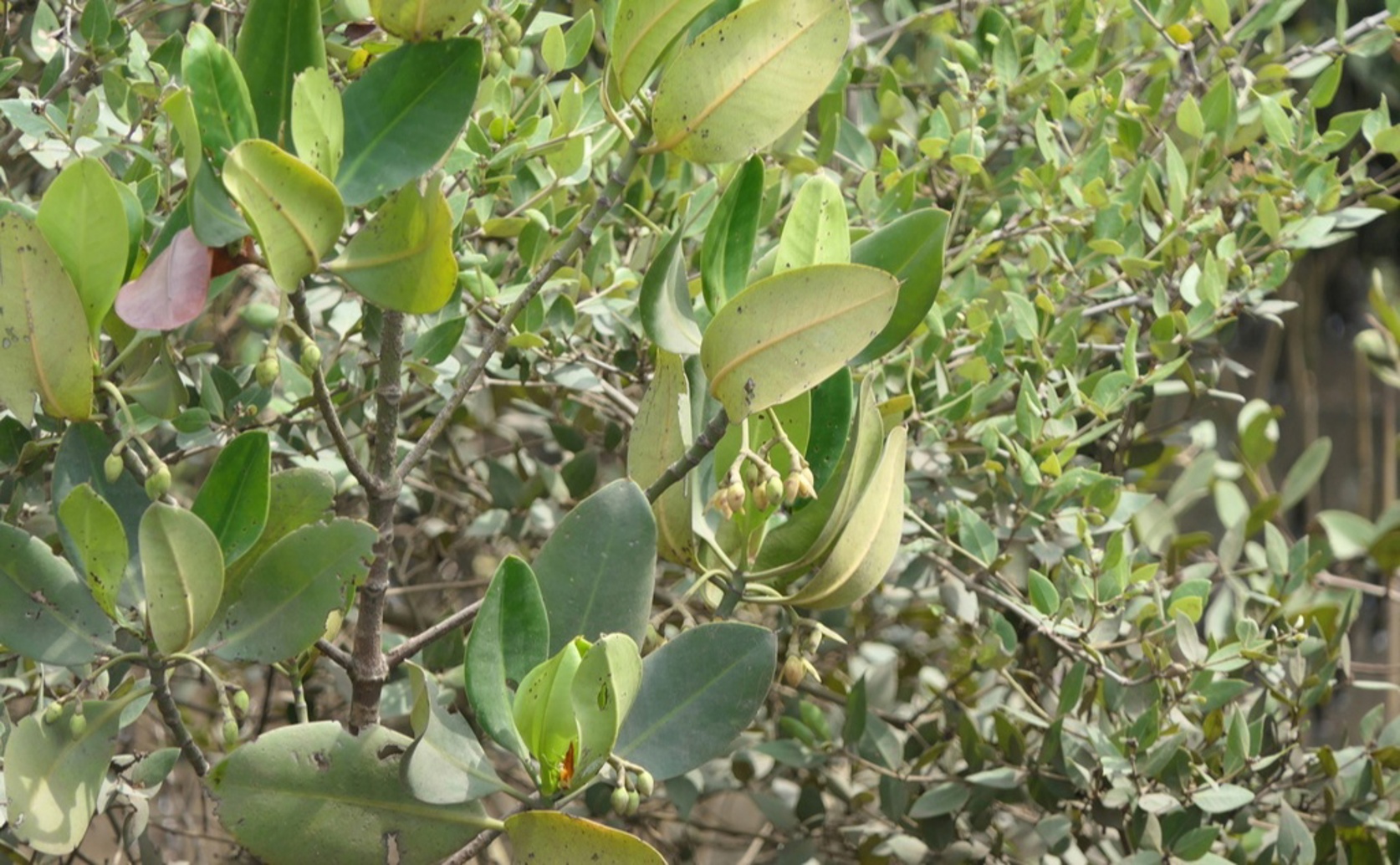
Rhizophora mucronata

Photo adapted from: Dinesh Valke / CC BY SA (Source)

Key Findings

  • Research from Bangladesh identified Rhizophora mucronata leaves as a source of compounds with diverse medicinal properties
  • Ethyl acetate and dichloromethane fractions of the plant demonstrated strong antioxidant and pain-relieving effects, comparable to standard drugs
  • The ethyl acetate fraction showed glucose-lowering and cell-killing activity against cervical cancer cells in laboratory tests, suggesting potential for diabetes and cancer treatment
Rhizophora mucronata, a mangrove plant thriving in coastal Bangladesh, has long been recognised for its traditional medicinal uses. Recent research from the University of Dhaka and University of Rajshahi[1] investigated the plant’s potential as a source of new therapeutic compounds, specifically focusing on antioxidant, analgesic, antidiabetic, antimicrobial, and anticancer properties. Mangroves, as a unique group of plants adapted to harsh coastal environments, often possess distinctive biological activities[2]. This study aimed to identify the specific compounds responsible for these activities within R. mucronata. The research team isolated three compounds from the ethyl acetate fraction of the plant: N-trans-para-caffeoyl-tyramine, β-sitosterol, and rutin. These were identified through detailed analysis of their 1H-NMR spectral data. The study then tested different fractions of the plant for various biological effects. Ethyl acetate and dichloromethane fractions demonstrated strong free radical scavenging abilities, comparable to the antioxidant standard ascorbic acid. Free radicals are unstable molecules that can damage cells, contributing to aging and disease, so scavenging them is a desirable property. Importantly, all three fractions exhibited notable analgesic (pain-relieving) effects in mice, performing similarly to the standard drug diclofenac sodium. This builds on earlier findings that mangrove plants generally possess antinociceptive properties[2], suggesting R. mucronata contributes to this trend. The dichloromethane and ethyl acetate fractions also showed significant glucose-lowering effects in diabetic mice, performing comparably to the standard drug glibenclamide. This supports traditional use of R. mucronata in diabetes treatment[3], and further investigation into its antidiabetic potential is warranted. The study also assessed the antimicrobial activity of the plant fractions. All fractions were effective against Gram-positive bacteria, exhibiting zones of inhibition ranging from 11.1 to 17.3 mm. However, activity against Gram-negative bacteria was more moderate. In-vitro testing revealed cytotoxic effects (cell-killing ability) of the dichloromethane and ethyl acetate fractions against HeLa cells, a human cervical cancer cell line, with IC50 values of 88.94 µg/ml and 127.6 µg/ml respectively. Further in-vivo testing using Ehrlich ascites carcinoma (EAC) cells showed the ethyl acetate fraction was most effective at inhibiting cell growth (54.61% inhibition), although not as potent as the positive control bleomycin (84.83% inhibition). Interestingly, the anticancer effects observed align with previous research showing methanol extracts of Rhizophora mucronata can inhibit the growth of colon and breast cancer cells[4]. While the earlier study used methanol extracts and measured IC50 values against different cancer cell lines, the current study used ethyl acetate fractions and HeLa cells, demonstrating a broader range of anticancer activity within the plant. The identification of specific compounds like rutin, known for its antioxidant properties, may contribute to these observed effects. The leaves of R. mucronata were also shown to have no cytotoxicity against normal cells[4], a positive finding for potential therapeutic applications. The findings from suggest that the ethyl acetate fraction of R. mucronata holds significant promise for future drug development and traditional medicinal applications, representing a valuable source of natural compounds with diverse biological activities.

MedicineEcologyPlant Science

References

Main Study

1) Pharmacological evaluation of mangrove plant Rhizophora mucronata (Lam.) grown in the coastal area of Sundarbans

Published 23rd January, 2026

https://doi.org/10.1371/journal.pone.0340646


Related Studies

2) Antinociceptive, anti-inflammatory, and antipyretic activity of mangrove plants: a mini review.

https://doi.org/10.1155/2012/576086


3) Antiradical and antidiabetic properties of standardized extract of Sunderban mangrove Rhizophora mucronata.

https://doi.org/10.4103/0973-1296.153094


4) Phytochemistry and Anticancer Effects of Mangrove (Rhizophora mucronata Lam.) Leaves and Stems Extract against Different Cancer Cell Lines.

https://doi.org/10.3390/ph16010004


Related Articles

An unhandled error has occurred. Reload 🗙