How river flow changes impact stress levels in rainbow trout

Jenn Hoskins
20th January, 2026

How river flow changes impact stress levels in rainbow trout

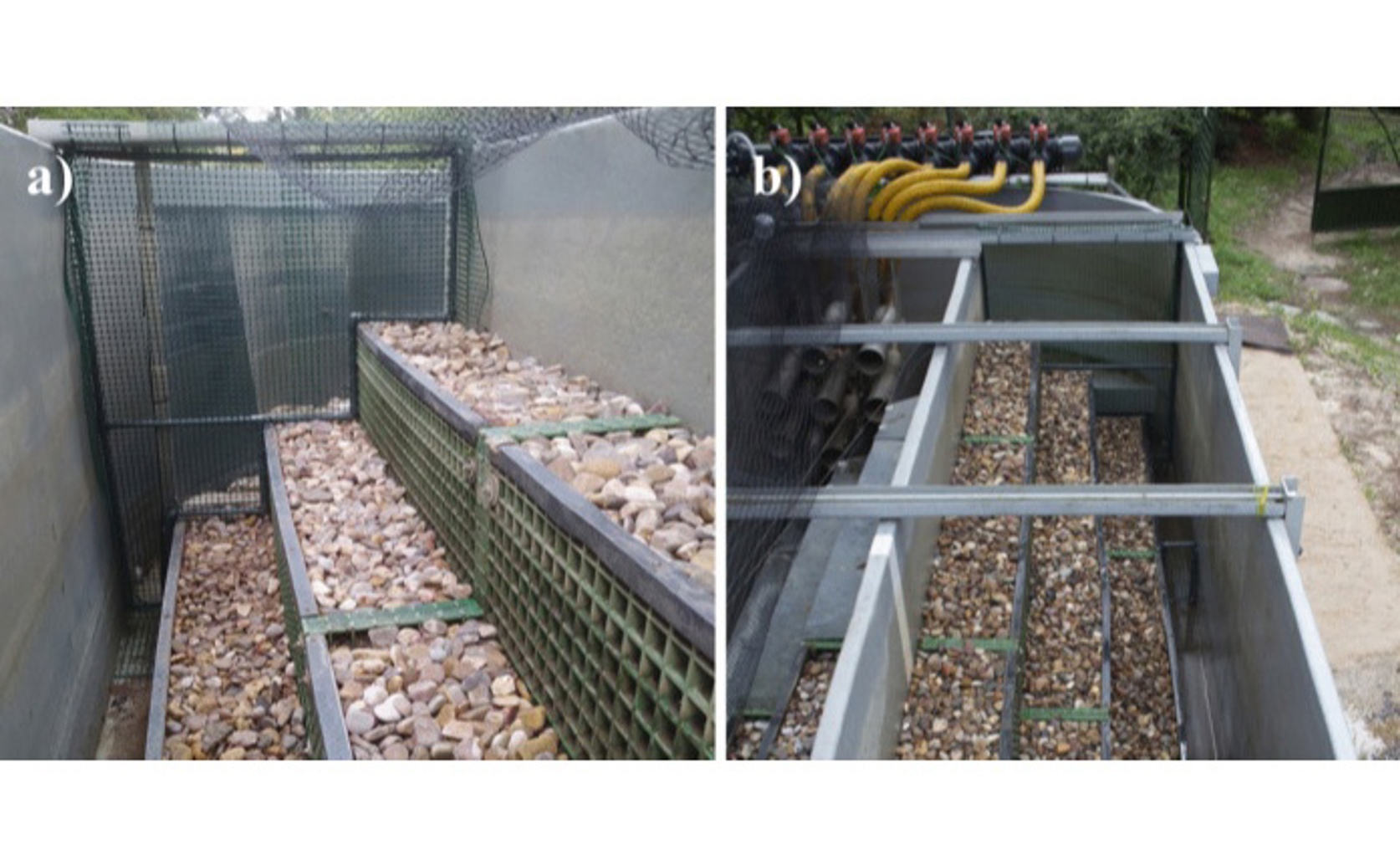
The 'Greenchannel' river mesocosm, featuring recreated salmonid habitat (a) and defined experimental areas (b), enabled controlled hydropeaking simulations that revealed a prolonged physiological stress response in rainbow trout (Oncorhynchus mykiss).

Image adapted from: Hernandez-Marchena et al. / CC BY (Source)

Key Findings

  • This study, conducted in Spain, investigated how rapidly changing river flows due to hydropower (hydropeaking) affect rainbow trout health
  • Higher water velocity and faster water level changes caused increased stress in trout, indicated by changes in blood chemicals like cortisol, lactate, and triglycerides, and paler skin color
  • Changes in these chemicals suggest stress isn’t just a short-term reaction, but lasts longer, potentially harming trout health and survival
Rivers worldwide are increasingly impacted by hydropower, specifically a practice called ‘hydropeaking’ – rapidly changing water flow to meet electricity demands. While the physical effects of hydropeaking on fish, like being stranded or losing spawning grounds, are known, understanding how it affects fish physiologically has been less clear. Researchers at Universidad Politécnica de Madrid addressed this gap in a recent study[1], aiming to define the limits of hydropeaking’s impact on rainbow trout and inform more sustainable river management. The study simulated realistic river conditions, including a natural flow pattern and five different levels of hydropeaking intensity, within a large experimental channel called Greenchannel. These scenarios were defined by factors like water velocity, the speed at which water levels changed, and how often the river was inundated. Alongside these hydraulic variables, water quality aspects like temperature, oxygen levels and turbidity were also monitored. Ninety rainbow trout were divided into groups and exposed to each scenario for 24 hours. At the end of each test, researchers measured several physiological indicators. Cortisol – a hormone released during stress[2] – was a key focus, alongside enzymes like creatine phosphokinase (CPK) and lactate dehydrogenase (LDH) which indicate muscle damage, and metabolites like triglycerides (TGC), lactate, and non-esterified fatty acids (NEFA) which reflect energy use under stress. They also examined changes in the fish’s skin pigmentation. The results showed a clear connection between hydropeaking intensity and physiological stress in the trout. Cortisol levels, lactate, TGC, and skin lightness all increased with higher velocities and faster changes in water levels. Importantly, the changes in metabolites suggested that the stress response wasn’t just a short-term reaction to the fluctuating water; it was prolonged, extending beyond the immediate event. This is significant because chronic stress can have severe consequences for fish health and survival. Interestingly, earlier research has highlighted the limitations of using plasma cortisol as a reliable indicator of chronic stress in fish[2]. While plasma cortisol spikes during acute stress events, it doesn’t necessarily reflect the long-term impact. The Universidad Politécnica de Madrid study reinforces this finding, focusing instead on a broader range of physiological markers to paint a more complete picture of stress. The researchers then developed ‘environment-physiology’ models to identify specific thresholds for rainbow trout. These models indicated that exceeding a velocity of 0.1 m/s or a water level fall rate of 0.13 m/h could lead to irreversible welfare problems for the fish. This provides concrete data for managing hydropower plants. Furthermore, the study builds on previous work demonstrating the impact of hydropeaking on juvenile fish[3]. While that research focused on drift and stranding rates, the Universidad Politécnica de Madrid study expands on this by detailing the physiological mechanisms at play. The research also complements studies showing how vegetation can offer refuge to fish during hydropeaking events[4], suggesting a combined approach of flow management and habitat restoration for optimal river health. By establishing clear physiological thresholds and identifying key stressors, this study provides valuable information for balancing the need for renewable energy with the health of river ecosystems.

EnvironmentEcologyAnimal Science

References

Main Study

1) Physiological stress response to hydropeaking in rainbow trout (Oncorhynchus mykiss)

Published 16th January, 2026

https://doi.org/10.1007/s10695-026-01633-z


Related Studies

2) Scales tell a story on the stress history of fish.

https://doi.org/10.1371/journal.pone.0123411


3) Effects of river bank heterogeneity and time of day on drift and stranding of juvenile European grayling (Thymallus thymallus L.) caused by hydropeaking.

https://doi.org/10.1016/j.scitotenv.2016.10.029


4) Can vegetation provide shelter to cyprinid species under hydropeaking?

https://doi.org/10.1016/j.scitotenv.2021.145339


Related Articles

An unhandled error has occurred. Reload 🗙