Red-eared sliders: health check and potential risks to local wildlife

Greg Howard
7th October, 2025

Red-eared sliders: health check and potential risks to local wildlife

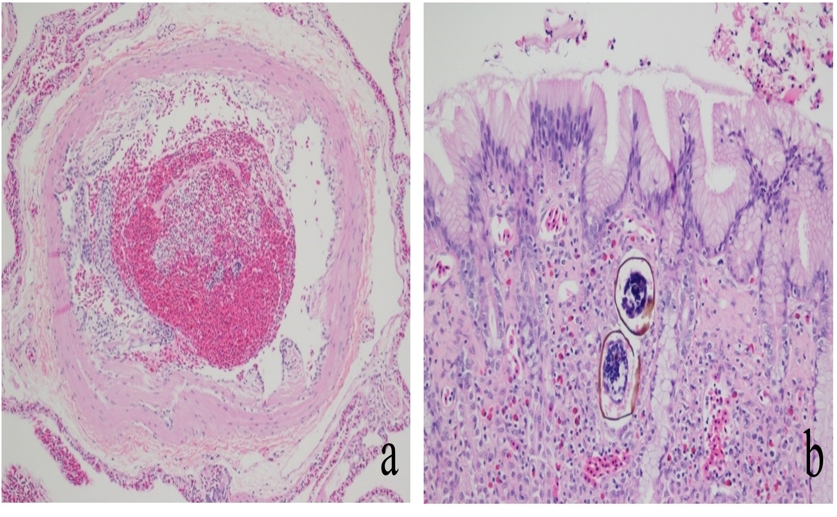
Representative histologic changes associated with Spirorchiidae infestation in red-eared sliders (Trachemys scripta elegans) from Cook County, IL.

Image adapted from: Winter et al. / CC0 1.0 (Source)

Key Findings

  • In Cook County, Illinois, invasive red-eared sliders carry a diverse range of pathogens, including viruses, bacteria, and fungi, without showing obvious signs of illness
  • The prevalence of Mycoplasma bacteria was higher in areas with more turtles, suggesting a link between population density and infection rates
  • Reference intervals for blood tests were established for healthy red-eared sliders, providing a baseline for future health assessments of turtles in the region
Red-eared sliders (RES), a turtle species native to the southeastern United States, have become a widespread invasive species globally, posing threats to native turtle populations. A key concern is their potential role in spreading diseases to other chelonian species. Researchers from the University of Illinois, in collaboration with the Forest Preserve District of Cook County and Brookfield Zoo Chicago, investigated the pathogen load within a population of invasive RES in Cook County, Illinois, and its potential impact on the health of the sympatric Blanding’s turtle[1]. The study focused on understanding what pathogens RES carry and whether these pathogens correlate with observable signs of illness in the turtles themselves. From 2018 to 2022, 242 RES were captured across four locations in Cook County during spring, summer, and fall. Samples were collected for a range of analyses, including quantitative polymerase chain reaction (qPCR) to detect pathogen presence, clinical pathology tests (examining blood and other bodily fluids), and necropsy (animal autopsies) to look for visible signs of disease. qPCR analysis revealed a diverse range of pathogens present in the RES population. These included Mycoplasma species (bacteria), several types of adenoviruses (viruses), Trachemys herpesvirus 1 (TrHV-1 – a herpesvirus), frog virus 3, Leptospira species (bacteria pathogenic to humans), Emydomyces testavorans (a fungal pathogen), and Salmonella typhimurium (a bacterium causing salmonellosis). The prevalence of Mycoplasma was notably higher at one site with a higher turtle density, suggesting potential links between population size and infection rates. Detection of TrHV-1 was seasonal, occurring only in spring and fall. Clinical pathology revealed variations in hematology, plasma biochemistry, and protein levels depending on the year, season, pathogen detection, age, and sex of the turtles. Importantly, the study established population-based reference intervals for these parameters, providing a baseline for future health assessments of RES and other turtles in the region. Necropsy findings were generally mild, with common observations being internal parasites and associated vascular damage. A significant finding was the lack of correlation between pathogen detection and any obvious signs of illness in the RES. Despite carrying multiple pathogens – some of which are known to cause disease in other turtles and even humans – the RES did not exhibit gross or microscopic lesions indicative of clinical disease. This suggests that the invasive RES population in Cook County is acting as a carrier species for these pathogens. These findings build upon previous research highlighting the role of turtles, particularly red-eared sliders, as reservoirs for Salmonella[2]. That study, for example, found a 39% carrying rate of Salmonella Pomona in red-eared sliders in China, raising public health concerns. The current study expands on this by identifying several other pathogens carried by RES, including Leptospira species which can infect humans, and demonstrating that this carrier status extends to a population outside of Asia. Furthermore, the discovery of Emydomyces testavorans is relevant, as this fungus is known to cause shell deformities in turtles. The study also identifies the presence of fungal pathogens Fusarium falciforme and Fusarium keratoplasticum[3], which are known to cause sea turtle egg fusariosis, though the study does not directly link RES to transmission of these pathogens. The detection of Chlamydia species in turtles[4] is also noteworthy, as the study highlighted the need for further characterization of these atypical strains and their potential zoonotic risks. While the current study did not specifically focus on Chlamydia, the broader context of pathogen discovery in turtles underscores the importance of ongoing surveillance. The research team at the University of Missouri contributed to the analytical aspects of the study. The overall conclusion of the study is that invasive RES in Cook County represent a potential source of pathogens for co-occurring turtle species, particularly the conservation-priority Blanding’s turtle. Continued health monitoring of these invasive turtles is crucial to assess the risk of disease transmission and inform conservation efforts.

EnvironmentEcologyAnimal Science

References

Main Study

1) Health assessment of non-native red-eared sliders (Trachemys scripta elegans) and their impact potential on native species

Published 6th October, 2025

https://doi.org/10.1371/journal.pone.0333786


Related Studies

2) Highly pathogenic Salmonella Pomona was first isolated from the exotic red-eared slider (Trachemys scripta elegans) in the wild in China: Implications for public health.

https://doi.org/10.1016/j.scitotenv.2013.08.025


3) The invasive alien red-eared slider turtle, Trachemys scripta, as a carrier of STEF-disease pathogens.

https://doi.org/10.1016/j.funbio.2021.11.003


4) Free-living and captive turtles and tortoises as carriers of new Chlamydia spp.

https://doi.org/10.1371/journal.pone.0185407


Related Articles

An unhandled error has occurred. Reload 🗙