Five Years of High-Frequency Lake Data on Plant Life and Water Quality

Jenn Hoskins
21st April, 2025

Five Years of High-Frequency Lake Data on Plant Life and Water Quality

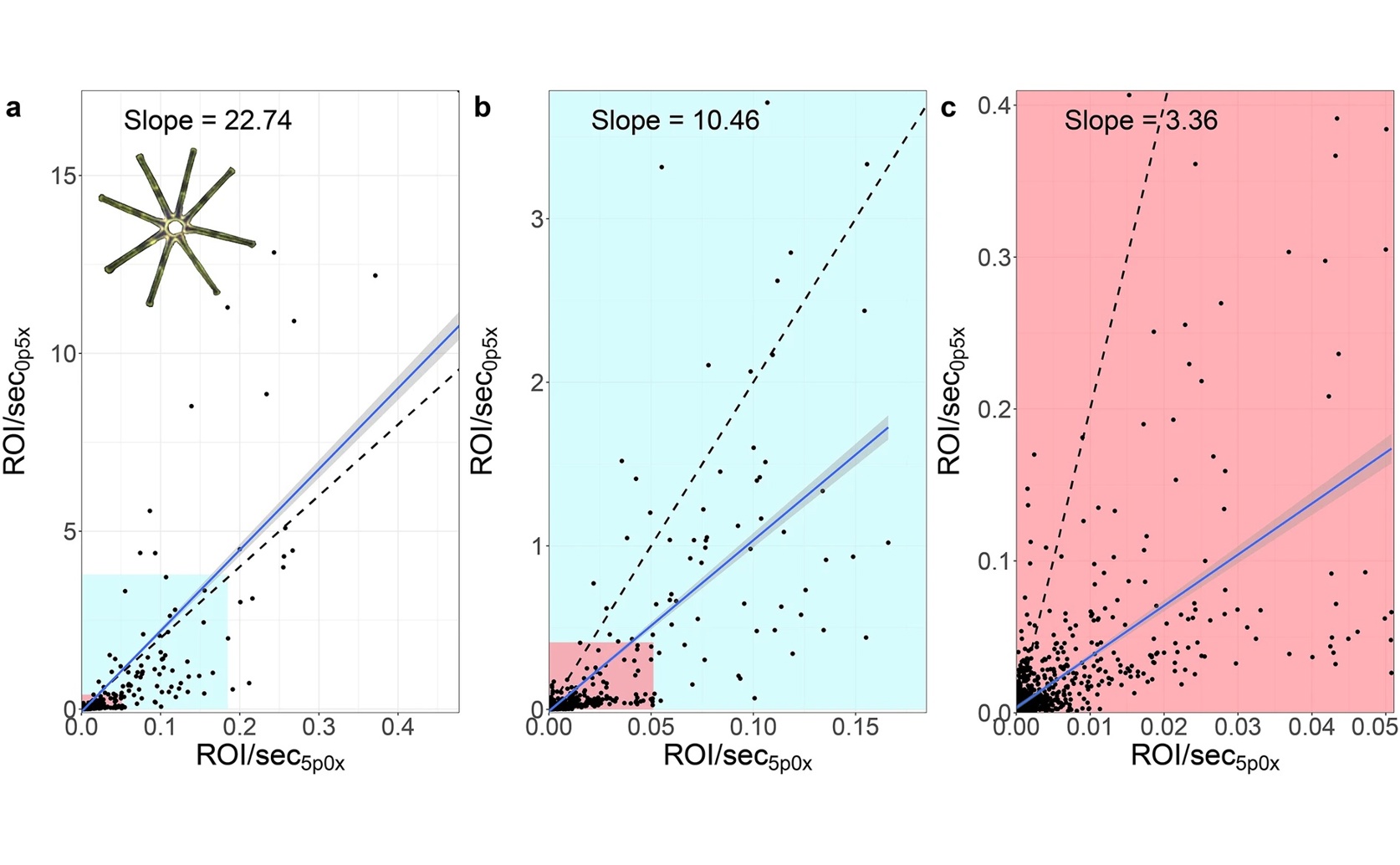
A comparison of Asterionella sp. abundance from the two camera magnifications helps validate the imaging system, showing a linear relationship (a) with a slope close to the theoretical expectation, although this correlation weakens when high-density measurements are excluded (b, c).

Image adapted from: Eyring et al. / CC BY (Source)

Key Findings

  • The study in Lake Greifen, Switzerland, showed that more frequent storms from climate change affect tiny lake plants called plankton
  • Using advanced monitoring, researchers found detailed patterns of plankton blooms and movements during extreme weather
  • These insights help us understand how severe storms impact lake ecosystems and support future environmental predictions
Climate change is leading to more frequent and severe weather events, such as storms, which significantly impact freshwater ecosystems like lakes. These extreme events can alter the physical and chemical properties of lakes through increased runoff, high flow rates, and mixing of the water column. While the effects of storms on lake physics and some biogeochemical processes are well-understood, their impact on phytoplankton communities—microscopic plants that form the base of aquatic food webs—remains less clear[2]. A recent study by researchers at Eawag in Zürich, Switzerland[1], has provided valuable insights into how these plankton communities respond to such disturbances. Between April 2018 and June 2023, the team collected comprehensive data from Lake Greifen using advanced high-frequency automated monitoring systems. This dataset includes meteorological data, nutrient chemistry, water physics profiles, and detailed plankton imaging, allowing for a thorough examination of the lake’s dynamic processes. One of the key tools used in this study was the Dual Scripps Plankton Camera (DSPC), which employs a dual magnification dark-field microscope to capture high-resolution images of plankton at a depth of 3 meters. This technology enabled the researchers to monitor plankton size, shape, and taxonomy on an hourly basis[3]. Additionally, a multiparametric probe measured water temperature, oxygen levels, and other important parameters from 1 to 17 meters depth, while weekly nutrient sampling provided further chemical insights. The integration of these diverse data sources allowed the researchers to observe various temporal processes within the lake. For instance, they were able to track phytoplankton blooms, which are rapid increases in phytoplankton populations, as well as zooplankton vertical migrations, where these small animals move up and down the water column in response to changes in light and temperature. Seasonal shifts in water column stability, influenced by temperature gradients and mixing events, were also documented. This comprehensive monitoring approach builds on previous research that has explored the interactions between different components of aquatic ecosystems. For example, long-term studies using empirical dynamic modeling have shown that trophic interactions, such as those between zooplankton and phytoplankton, vary with nutrient levels and seasonal changes[4]. The current study extends this understanding by providing high-frequency, real-time data that captures these interactions in greater detail. Moreover, the findings from Lake Greifen contribute to addressing gaps identified in earlier research. Prior studies highlighted the need for better mechanistic understanding of how storms affect phytoplankton and overall ecosystem function[2]. By continuously monitoring the lake's physical and biological parameters, the Eawag team was able to observe how storm events interact with lake characteristics and previous conditions to influence phytoplankton community structure and ecological processes. The dataset from this study is particularly valuable for limnology, the study of inland waters, and plankton community ecology. It offers a unique resource for researchers to analyze patterns and relationships that were previously difficult to detect due to the limitations of traditional sampling methods. For instance, the DSPC’s ability to provide continuous, high-resolution data revealed ecological succession patterns and diel (daily) fluctuations that are essential for understanding the complex dynamics of lake ecosystems[3]. Furthermore, the integration of different monitoring technologies demonstrated the effectiveness of a multi-faceted approach in capturing the intricate responses of aquatic ecosystems to environmental changes. This holistic perspective is crucial for developing models that predict how lakes will respond to future climate variations and extreme weather events. The availability of the dataset and the associated processing codes for public access also promotes collaboration and further research. By making this information openly available, the study supports interdisciplinary approaches that can combine insights from various scientific fields to enhance our understanding of freshwater ecosystems. In summary, the Eawag-led study in Lake Greifen provides a detailed and high-frequency view of how storm events and other environmental factors influence the physical and biological dynamics of a lake. By leveraging advanced monitoring technologies and integrating multiple data types, the researchers have advanced our knowledge of plankton ecology and ecosystem responses to climate-induced disturbances. This work not only builds on previous studies by addressing existing knowledge gaps but also sets the stage for future research aimed at safeguarding the health and functionality of freshwater ecosystems in a changing climate.

EnvironmentEcologyAnimal Science

References

Main Study

1) Five years of high-frequency data of phytoplankton zooplankton and limnology from a temperate eutrophic lake

Published 18th April, 2025

https://doi.org/10.1038/s41597-025-04988-9


Related Studies

2) Storm impacts on phytoplankton community dynamics in lakes.

https://doi.org/10.1111/gcb.15033


3) Underwater dual-magnification imaging for automated lake plankton monitoring.

https://doi.org/10.1016/j.watres.2021.117524


4) Trophic control changes with season and nutrient loading in lakes.

https://doi.org/10.1111/ele.13532


Related Articles

An unhandled error has occurred. Reload 🗙