How Fruit Fly Larvae Create Their Own Living Spaces

Greg Howard
20th December, 2024

How Fruit Fly Larvae Create Their Own Living Spaces

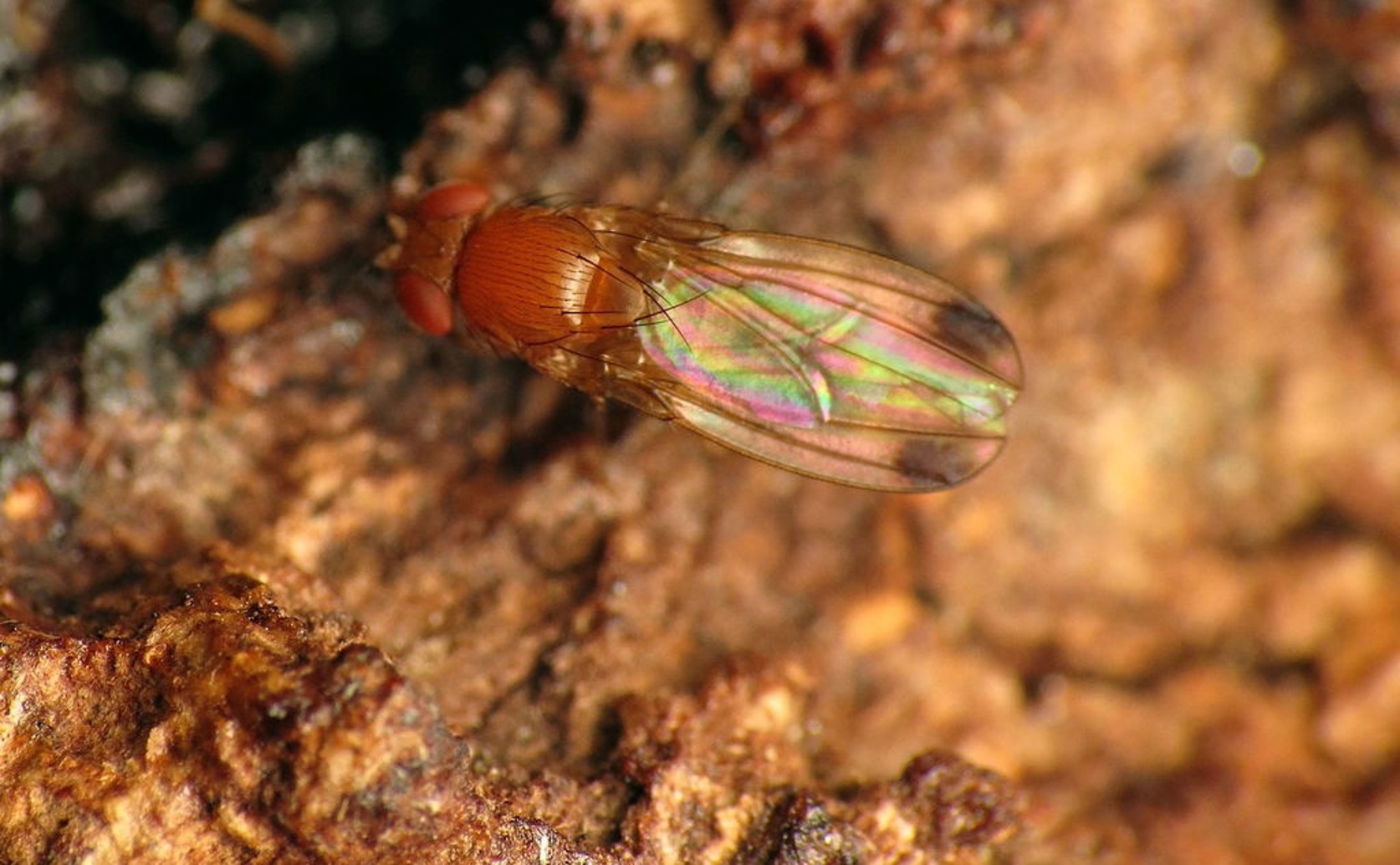
Spotted-winged Drosophila (Drosophila suzukii)

Photo adapted from: Katja Schulz / CC BY (Source)

Key Findings

  • The study by the Max Planck Institute for Chemical Ecology focused on how Drosophila suzukii larvae adapt to ripening fruits, which are low in protein and high in sugars
  • Researchers found that D. suzukii larvae can break down the hard surface of ripening fruits, making them more accessible for feeding
  • This behavior increases the fruit's protein content, improving its nutritional value and supporting the larvae's development in a challenging environment
The study of how organisms adapt and thrive in their environments has long fascinated scientists. One particular area of interest is how insects choose where to lay their eggs, as this decision significantly impacts the survival and development of their offspring. The Max Planck Institute for Chemical Ecology has recently conducted a study on the Drosophila suzukii, a fruit fly species known for its unique oviposition behavior[1]. Drosophila suzukii females have evolved an enlarged, serrated ovipositor, which allows them to lay eggs inside ripening fruits, a niche not commonly used by other Drosophila species. This specialization presents a paradox: ripening fruits are low in protein and high in sugars, which seems suboptimal for larval development. The study aimed to understand how D. suzukii larvae cope with these conditions and whether they modify their environment to better suit their nutritional needs. The researchers discovered that D. suzukii larvae engage in niche construction, a process where organisms modify their environment to improve their survival and development. This concept is not new; previous studies have shown that organisms can alter their niches, influencing their evolutionary trajectories and those of other species sharing the same environment[2]. In this case, D. suzukii larvae exhibit unique physical and behavioral traits that allow them to process the hard-ripening fruit and improve its nutritional composition. The study found that first instar larvae of D. suzukii are capable of breaking down the fruit's hard surface, making it more accessible for feeding. This behavior not only facilitates their own development but also alters the fruit's composition, increasing its protein content and making it more suitable for the larvae's nutritional needs. This finding supports the idea that the larvae's niche construction behavior is a critical adaptation that enables them to thrive in an otherwise challenging environment. This research ties into earlier findings on the importance of environmental conditions in the development and growth of juvenile animals. For instance, it is well-established that the duration of juvenile development can be flexible and responsive to environmental stresses[3]. In the case of D. suzukii, the larvae's ability to modify their environment ensures that they can continue to develop even in suboptimal conditions, highlighting the importance of behavioral adaptations in overcoming environmental challenges. Furthermore, the study's findings align with the preference-performance hypothesis (PPH), which suggests that female insects will choose oviposition sites that maximize the survival and performance of their offspring[4]. By selecting ripening fruits as oviposition sites and relying on their larvae's niche construction abilities, D. suzukii females ensure that their offspring have the best possible chance of survival and development. In conclusion, the study conducted by the Max Planck Institute for Chemical Ecology sheds light on the remarkable adaptations of Drosophila suzukii larvae. Their ability to engage in niche construction and modify their environment to better suit their nutritional needs is a testament to the complex interplay between behavior and development in the natural world. This research not only expands our understanding of insect ecology but also underscores the importance of considering both environmental conditions and behavioral adaptations in the study of developmental biology.

EnvironmentEcologyAnimal Science

References

Main Study

1) Shaping the environment - Drosophila suzukii larvae construct their own niche.

Published 20th December, 2024

https://doi.org/10.1016/j.isci.2024.111341


Related Studies

2) Niche construction initiates the evolution of mutualistic interactions.

https://doi.org/10.1111/ele.12331


3) Coordinating growth and maturation - insights from Drosophila.

https://doi.org/10.1016/j.cub.2011.06.033


4) A meta-analysis of preference-performance relationships in phytophagous insects.

https://doi.org/10.1111/j.1461-0248.2009.01433.x


Related Articles

An unhandled error has occurred. Reload 🗙