
How Habitat Changes Affect Birds' Adaptation to Warming Climate Over Time
Jenn Hoskins
5th December, 2024


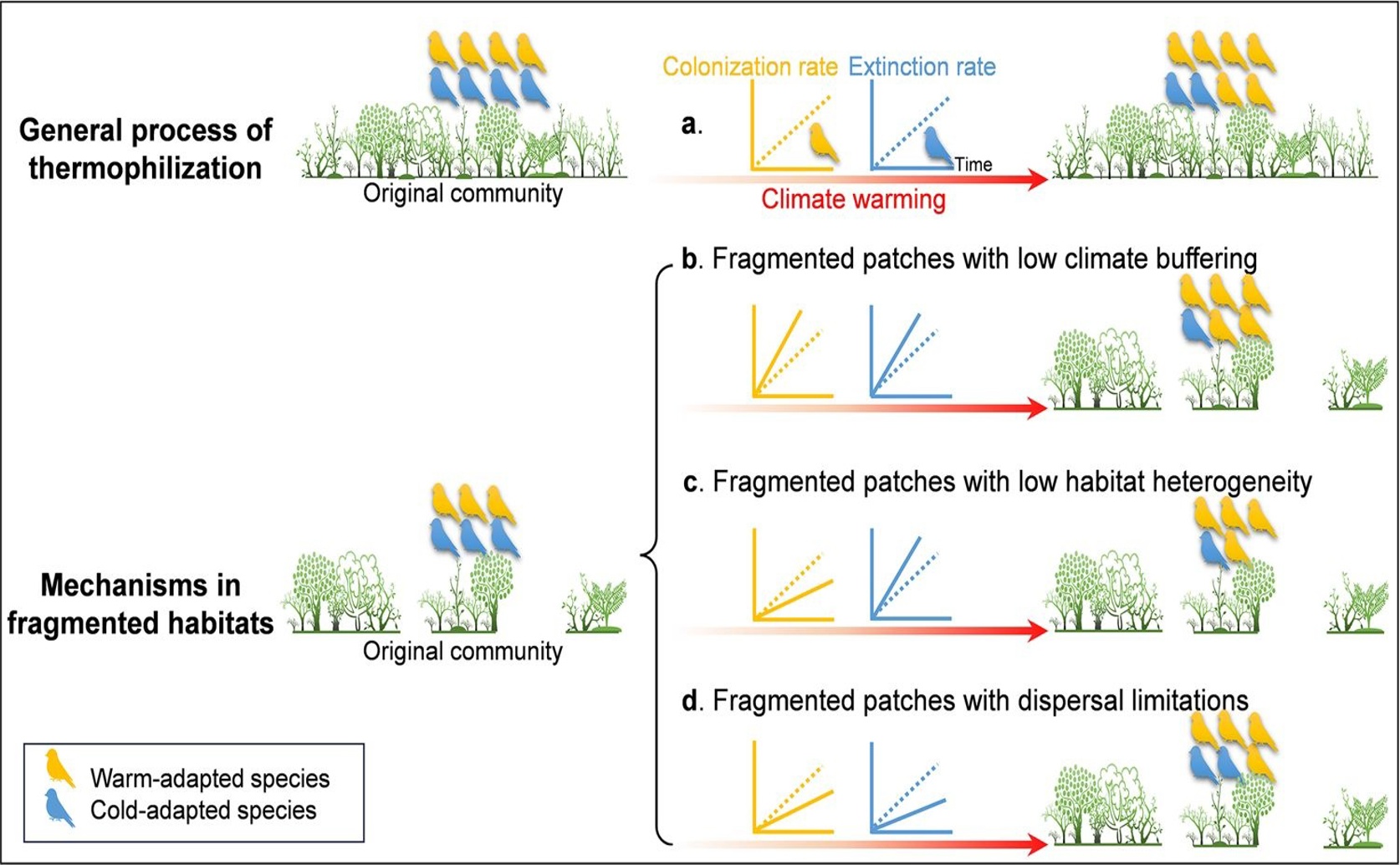
This conceptual framework illustrates how habitat fragmentation is hypothesized to alter thermophilization by affecting the underlying colonization-extinction dynamics of species (a) through mechanisms such as hotter microclimates (b), reduced habitat heterogeneity (c), and increased isolation (d).
Key Findings
- The study from Zhejiang University examined how climate warming and habitat fragmentation affect bird communities on a subtropical island reservoir system over a decade
- Climate warming led to an increase in warm-adapted bird species and a decrease in cold-adapted species
- Smaller or less isolated islands saw faster colonization by warm-adapted species, while closer islands experienced quicker loss of cold-adapted species
EnvironmentEcologyAnimal Science
References
Main Study
1) Habitat fragmentation mediates the mechanisms underlying long-term climate-driven thermophilization in birds.
Published 4th December, 2024
https://doi.org/10.7554/eLife.98056
Related Studies
2) Rapid range shifts of species associated with high levels of climate warming.
3) Climate-related range shifts in Arctic-breeding shorebirds.
4) Biological interactions both facilitate and resist climate-related functional change in temperate reef communities.
Related Articles
 3rd July, 2024 | Greg Howard