
More Urban Roads Linked to Gut Damage in Social Bees
Greg Howard
7th July, 2024


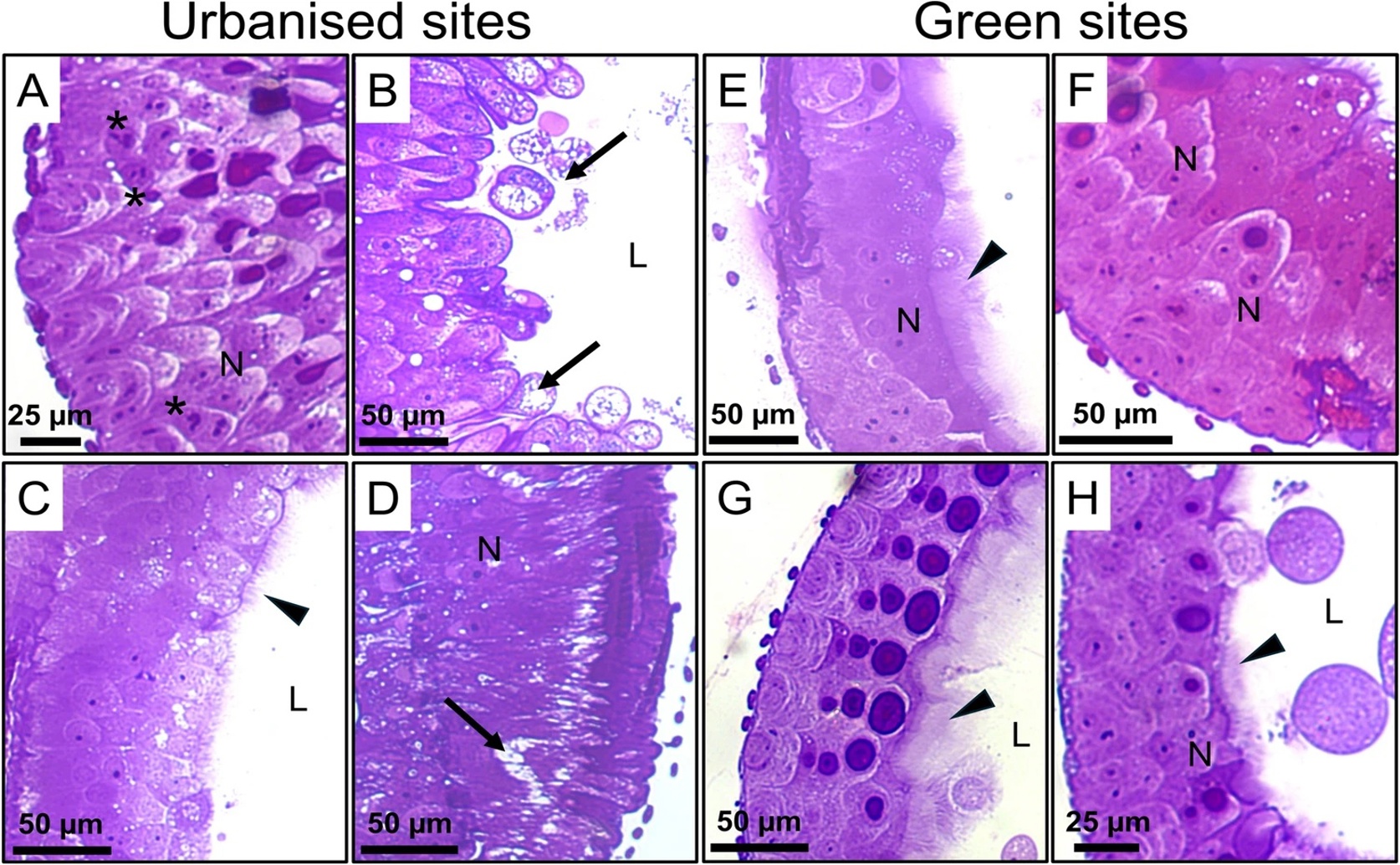
In contrast to the healthy tissue from bees in greener areas (e–h), the midgut epithelium of Halictus scabiosae from urbanized sites shows severe cellular damage, including a high frequency of fragmented, dying nuclei (karyorrhexis) (a), extensive vacuolization (b, d), and a damaged brush border (c).
Key Findings
- The study focused on Halictus scabiosae bees in Milan to examine the impact of urbanisation on their midgut health
- Bees from more urbanised areas showed significant damage to their midgut cells, including disorganisation and cell death
- Higher road cover, indicating more pollution, was linked to increased midgut damage, potentially impairing bees' digestive functions
EnvironmentEcologyAnimal Science
References
Main Study
1) Increasing road cover in urban areas is associated with greater midgut histological damage in a primitively eusocial bee
Published 4th July, 2024
https://doi.org/10.1007/s00040-024-00980-5
Related Studies
2) Phenotypic Plasticity of Common Wasps in an Industrially Polluted Environment in Southwestern Finland.
3) Bumble bees exhibit body size clines across an urban gradient despite low genetic differentiation.
Related Articles
 21st May, 2024 | Jim Crocker