
Specific Organisms Are Key To Leaf Decay In Ponds
Greg Howard
17th August, 2025


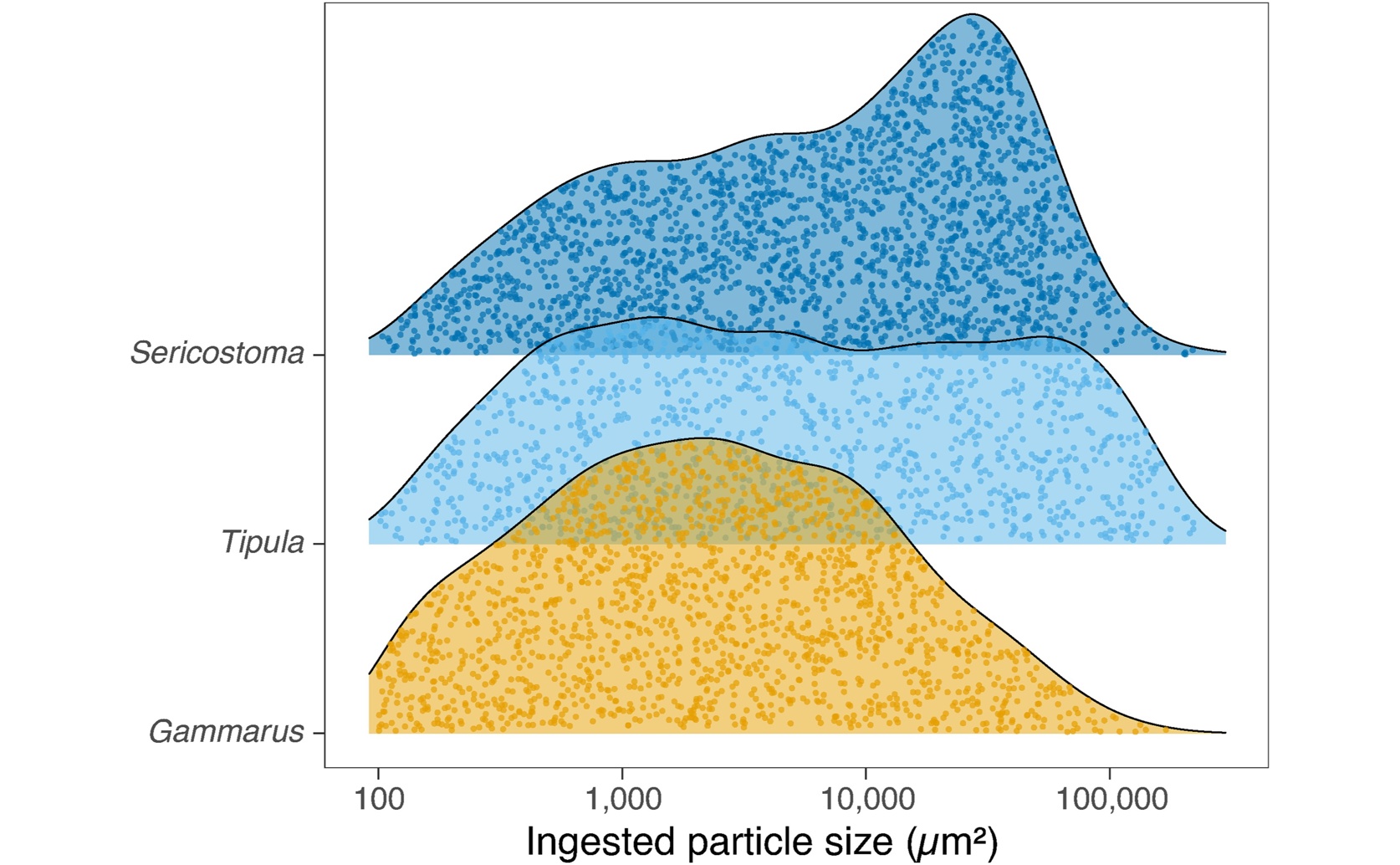
The three shredder species exhibit distinct feeding strategies, with Sericostoma consuming the largest leaf litter particles and Gammarus the smallest, illustrating the species-specific traits that are key to understanding their different impacts on decomposition.
Key Findings
- In a study in a Slovakian pond, researchers found that the number or variety of shredder species did not predict how fast leaf litter broke down
- Instead, one specific shredder, Sericostoma, significantly sped up decomposition due to its unique feeding behavior, including processing large particles and adapting to its density
- This highlights that specific species' traits, especially keystone ones, can be more important than overall diversity for maintaining crucial ecosystem functions
EnvironmentEcologyAnimal Science
References
Main Study
1) Shredder species identity over diversity: Insights into litter decomposition in ponds
Published 14th August, 2025
https://doi.org/10.1371/journal.pone.0327999
Related Studies
2) Diversity meets decomposition.
3) Leaf litter processing and energy flow through macroinvertebrates in a woodland pond (Switzerland).
4) Reciprocal subsidies in ponds: does leaf input increase frog biomass export?
Related Articles
 16th April, 2025 | Greg Howard