From Eggs to Fish: Understanding Water Conditions for Successful Carp Egg Growth

Jim Crocker
23rd April, 2025

From Eggs to Fish: Understanding Water Conditions for Successful Carp Egg Growth

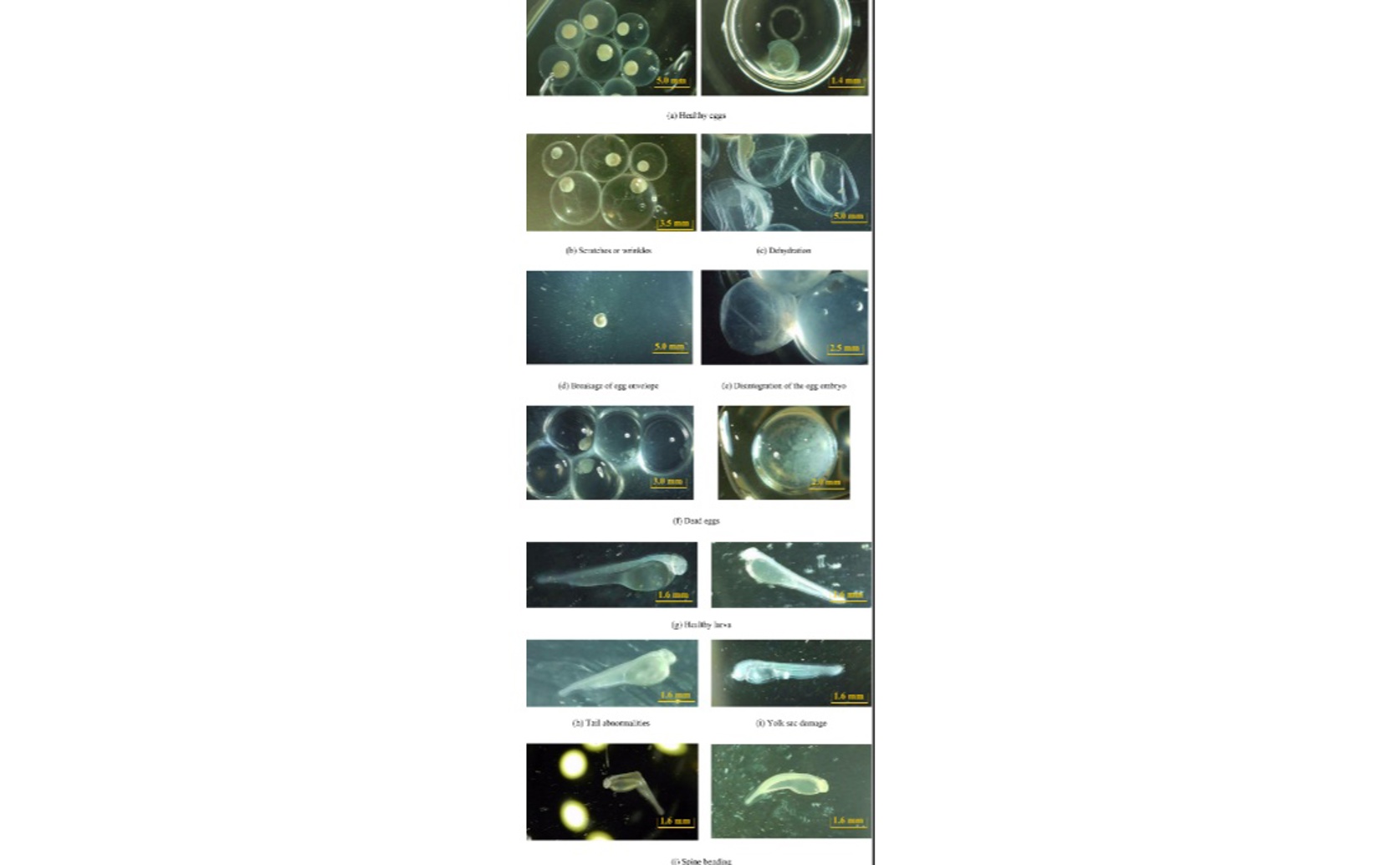
Continuous exposure to high-speed streams and turbulence causes physical damage to silver carp (Hypophthalmichthys molitrix) eggs, such as envelope breakage and dehydration (a–f), leading to severe deformities in hatched larvae (g–j).

Image adapted from: Zhang et al. / CC BY (Source)

Key Findings

  • In Chongqing, researchers found that silver carp eggs hatch best in moderate river flows of around 0.5 m/s
  • High flow speeds above 0.7 m/s greatly reduce egg survival and increase deformities
  • Stable, low-turbulence waters support egg development, while intense turbulence harms hatching success
Invasive species like the silver carp (Hypophthalmichthys molitrix) pose significant threats to freshwater ecosystems, particularly in regions such as the Laurentian Great Lakes. These carps can disrupt local fisheries, outcompete native species, and alter aquatic habitats. Understanding the early life stages of silver carp is crucial for developing effective management and control strategies. A recent study conducted by researchers at Chongqing Jiaotong University[1] delves into how natural river flow conditions affect the survival and development of silver carp eggs, providing valuable insights for ecosystem management. Previous research has highlighted various aspects of carp biology and their interactions with aquatic environments. For instance, study[2] examined the developmental rates and behaviors of both bighead and silver carp under different temperature conditions, revealing how these factors influence their ability to establish populations in new habitats. Another study[3] explored the transport and dispersal patterns of Asian carp eggs using synthetic surrogates, shedding light on how eggs interact with water flow and sediment. Additionally, research on grass carp eggs[4] provided a foundation for understanding how flow velocities and turbulence affect egg survival and larval drift. Building on these findings, the current study aims to deepen our understanding of the specific hydrodynamic conditions that favor the successful development of silver carp eggs. The main study employed an annular flume, a laboratory setup that simulates natural river conditions, to investigate the effects of different flow velocities and turbulence levels on silver carp eggs. Researchers exposed the eggs to varying flow speeds, specifically testing moderate (0.5 meters per second) and high (1.1 meters per second) velocities. Additionally, they manipulated the level of turbulence to observe its impact on egg incubation and larval development. The choice of these parameters was informed by previous studies that demonstrated how flow conditions influence egg suspension and settlement[3][4]. One of the key findings of the study was that moderate flow conditions (0.5 m/s) resulted in optimal hatching rates. Under these conditions, the eggs remained adequately suspended in the water, allowing for proper development and reducing the likelihood of settling prematurely. This aligns with earlier research[2], which indicated that suitable thermal and flow conditions are critical for the successful establishment of carp populations. In contrast, excessive flow velocities (1.1 m/s) led to complete mortality at the Late Blastula stage, a critical phase in embryonic development. High velocities likely caused increased physical stress on the eggs, disrupting normal development and leading to fatal deformities. The study also explored the role of turbulence in egg incubation. Mild turbulence was found to facilitate the incubation process, possibly by enhancing oxygenation and preventing eggs from settling. However, intense turbulence had detrimental effects, reducing hatching success and increasing the rates of larval deformation. These results highlight the delicate balance required in hydrodynamic conditions to support the early life stages of silver carp. Excessive turbulence can undermine developmental processes, leading to lower survival rates and impacting the overall population dynamics. By systematically varying flow conditions in a controlled laboratory environment, the researchers were able to isolate the specific factors that influence egg survival and development. This methodological approach builds on the techniques used in previous studies[3][4], which employed synthetic eggs and flume experiments to mimic natural dispersal and settlement patterns. The use of an annular flume allowed for precise control and measurement of flow velocities and turbulence, providing robust data on how these variables interact with embryonic development. The implications of these findings are significant for river ecosystem management and the design of hydraulic structures. Understanding the optimal flow conditions for silver carp egg survival can inform the placement and operation of dams, weirs, and other structures to minimize favorable habitats for invasive carp. For example, maintaining flow velocities that exceed the threshold for egg mortality could reduce the likelihood of successful spawning and establishment in affected waterways. Additionally, managing turbulence levels around critical spawning areas could further decrease hatching success, providing another layer of control. Furthermore, the study’s insights can aid in the development of targeted control strategies during the early life stages of silver carp. By identifying the specific hydrodynamic conditions that are unfavorable for egg survival, management efforts can focus on altering flow regimes during spawning seasons to disrupt the reproductive cycle of invasive carp. This proactive approach is essential for preventing the establishment and spread of silver carp populations in new environments, thereby protecting native fisheries and maintaining ecological balance. Incorporating the findings from this study with previous research[2][3][4] creates a more comprehensive understanding of the factors that influence the invasiveness of silver carp. While earlier studies provided foundational knowledge on developmental rates, egg transport, and larval behavior, the current research elucidates the critical role of hydrodynamic conditions in embryo survival. This integrated perspective enhances the ability to predict and mitigate the impacts of invasive carp, contributing to more effective conservation and management practices. Overall, the study conducted by Chongqing Jiaotong University advances our knowledge of how flow velocities and turbulence affect the early life stages of silver carp. By identifying optimal and detrimental hydrodynamic conditions, the research offers practical solutions for managing invasive carp populations and protecting freshwater ecosystems. As invasive species continue to challenge aquatic biodiversity, such scientific advancements are essential for developing informed and effective management strategies.

EnvironmentEcologyAnimal Science

References

Main Study

1) From spawn to survival: decoding the hydraulic conditions for successful silver carp egg incubation

Published 22nd April, 2025

https://doi.org/10.1371/journal.pone.0320798


Related Studies

2) Aspects of embryonic and larval development in bighead carp Hypophthalmichthys nobilis and silver carp Hypophthalmichthys molitrix.

https://doi.org/10.1371/journal.pone.0073829


3) A Laboratory Investigation of the Suspension, Transport, and Settling of Silver Carp Eggs Using Synthetic Surrogates.

https://doi.org/10.1371/journal.pone.0145775


4) Survival and drifting patterns of grass carp eggs and larvae in response to interactions with flow and sediment in a laboratory flume.

https://doi.org/10.1371/journal.pone.0208326


Related Articles

An unhandled error has occurred. Reload 🗙