
Loss of large mammals reshapes Brazil’s dry tropical forests
Jim Crocker
25th November, 2025


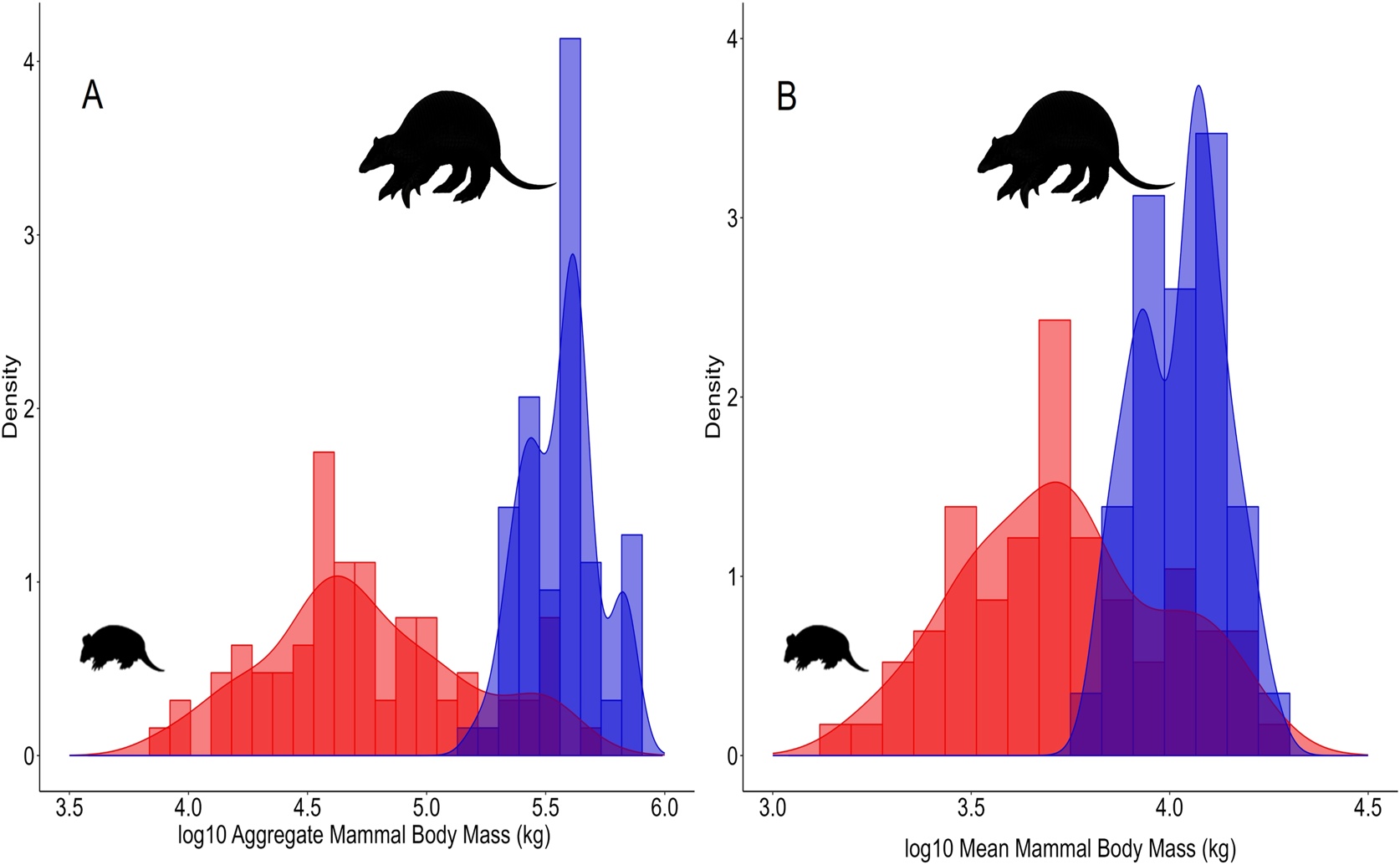
Figure from study shows a dramatic decline in mammal biomass across the Caatinga region, with contemporary assemblages (red) exhibiting significantly lower aggregate and mean body mass compared to those reconstructed from historical species distributions (blue), indicating widespread defaunation.
Key Findings
- This study in Brazil’s Caatinga region reveals a severe loss of mammal diversity, with 90% of the area experiencing a 20-80% decline in species
- Mammal communities in the Caatinga have shrunk by roughly 77% of their original biomass, largely due to habitat loss from agriculture and overhunting
- Protected areas show lower rates of mammal loss, highlighting their importance for conservation, though even these areas haven’t fully prevented declines
References
Main Study
1) Reconstructing the degree of mammal defaunation throughout the Caatinga - the largest dry tropical forest region of South America
Published 24th November, 2025
https://doi.org/10.1371/journal.pone.0336562
Related Studies
2) Defaunation in the Anthropocene.
3) Vertebrates on the brink as indicators of biological annihilation and the sixth mass extinction.
Related Articles
 11th September, 2025 | Jenn Hoskins