How Surroundings Affect Snail Numbers and Where They Live

Jim Crocker
17th September, 2025

How Surroundings Affect Snail Numbers and Where They Live

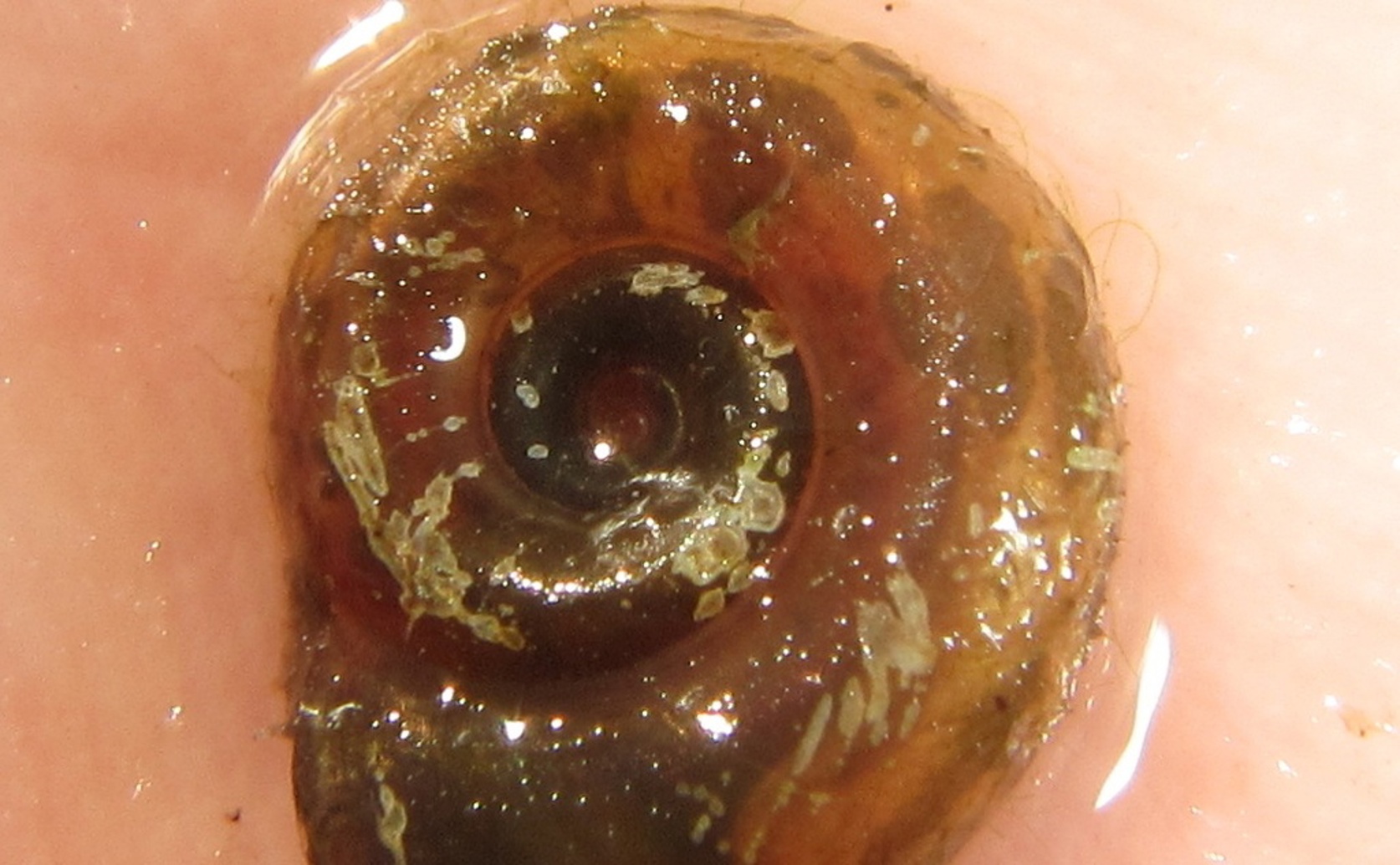
The abundance of the snail Biomphalaria pfeifferi (pictured), one of twelve snail species examined in this study, increases in warmer and more conductive water, demonstrating how specific environmental factors can promote the populations of disease vectors.

Photo adapted from: Robert Taylor / CC BY (Source)

Key Findings

  • This study in Edu LGA, Nigeria, identified twelve snail species, with Bulinus and Biomphalaria genera acting as schistosomiasis intermediate hosts
  • Snail populations peaked during the dry season, likely due to stable water levels and moderate temperatures, offering a window for targeted control efforts
  • Water velocity, dissolved oxygen, and conductivity significantly influenced snail abundance, highlighting key environmental factors for managing schistosomiasis transmission
Schistosomiasis, a parasitic disease affecting millions globally, particularly in tropical regions, remains a significant public health concern[2]. The disease is caused by parasitic worms transmitted to humans through contact with contaminated freshwater. Crucially, the snails act as intermediate hosts in the parasite’s life cycle, making their control a vital component of disease management. While treatment is available, preventing infection is paramount, and this relies heavily on understanding and disrupting the snails’ habitat and lifecycle. Approximately 230 million people are estimated to have contracted Schistosomiasis globally, with a staggering 700 million still at risk[2]. Researchers from Kwara State University and the National College Autonomous recently investigated the ecological factors influencing snail populations in Edu Local Government Area (LGA), Nigeria[1]. Their study aimed to identify which environmental conditions promote the presence and abundance of different snail species known to carry the Schistosoma parasite. This is particularly important in regions like southwestern Nigeria, where Schistosomiasis prevalence is high[3]. The study involved collecting snails fortnightly for a year, encompassing both the rainy and dry seasons, using a standard net. Simultaneously, environmental variables like water depth, temperature, alkalinity (a measure of acidity/basicity), and conductivity (a measure of the water’s ability to conduct electricity, indicating dissolved salts) were measured. A total of 4,760 snails representing eight different species were identified. Three species – Bulinus jousseaumei, Bulinus globosus, and Biomphalaria pfeifferi – were found to be the most common. The research team then used statistical methods, specifically Generalized Linear Models (GLM) and Redundancy Analysis (RDA), to analyze the data and determine the relationship between snail abundance and environmental factors. Their findings revealed distinct patterns. Bulinus jousseaumei numbers decreased with increasing water depth, while Bulinus globosus was strongly influenced by water temperature, alkalinity, and depth. Biomphalaria pfeifferi’s abundance correlated with water temperature and conductivity. These results highlight the importance of specific environmental conditions in supporting snail populations. For example, the negative correlation between B. jousseaumei and water depth suggests that shallower water bodies are more conducive to its survival and reproduction. Similarly, the sensitivity of B. globosus to water temperature and alkalinity indicates that changes in these parameters can significantly impact its population size. The predictive risk models of bulinid species in this study provided a robust output for the study area which could be used as base-line for other areas in that ecological zone[3]. This study builds upon prior research which has consistently identified Bulinus snails as key vectors of Schistosomiasis[4]. The study in the Ase River, Nigeria, for instance, demonstrated that over 41% of Bulinus snails were infected with the parasite[4]. Understanding the geospatial and seasonal transmission patterns of these snails is vital for targeted intervention strategies. The research from Kwara State University and the National College Autonomous extends this knowledge by pinpointing the specific environmental factors driving snail distribution. Furthermore, this work aligns with the broader understanding of neglected tropical diseases (NTDs) and their disproportionate impact on vulnerable populations in sub-Saharan Africa[5]. The high prevalence of hookworm, schistosomiasis, and other helminth infections underscores the need for comprehensive control programs. The findings from contribute to this effort by providing a detailed ecological assessment that can inform localized interventions aimed at reducing snail populations and, consequently, disease transmission. The study also corroborates earlier work that highlights the importance of constant proximity to infected water as a significant hurdle in reducing exposure[2]. By identifying key environmental predictors, this research provides a foundation for developing more effective control strategies. For instance, interventions could focus on managing water levels, altering water chemistry, or targeting breeding sites based on temperature and alkalinity levels. This targeted approach, informed by ecological data, represents a significant step towards reducing the burden of Schistosomiasis in endemic regions.

EnvironmentWildlifeEcology

References

Main Study

1) Environmental influences on the abundance and distribution of gastropods in Edu Local Government Area, North Central Nigeria

Published 16th September, 2025

https://doi.org/10.1371/journal.pwat.0000364


Related Studies

2) Schistosomiasis: Still a Cause of Significant Morbidity and Mortality.

https://doi.org/10.2147/RRTM.S204345


3) Models for predicting bulinids species habitats in southwestern Nigeria.

https://doi.org/10.1016/j.parepi.2022.e00256


4) Spatiotemporal and seasonal transmission dynamics of Schistosoma haematobium and snail infectivity in Ase River catchment, Delta State, Nigeria.

https://doi.org/10.1007/s12639-024-01656-4


5) Neglected tropical diseases in sub-saharan Africa: review of their prevalence, distribution, and disease burden.

https://doi.org/10.1371/journal.pntd.0000412


Related Articles

An unhandled error has occurred. Reload 🗙