
Roads and Wildlife: How Structures Help Animals Cross Forests
Jenn Hoskins
8th September, 2025


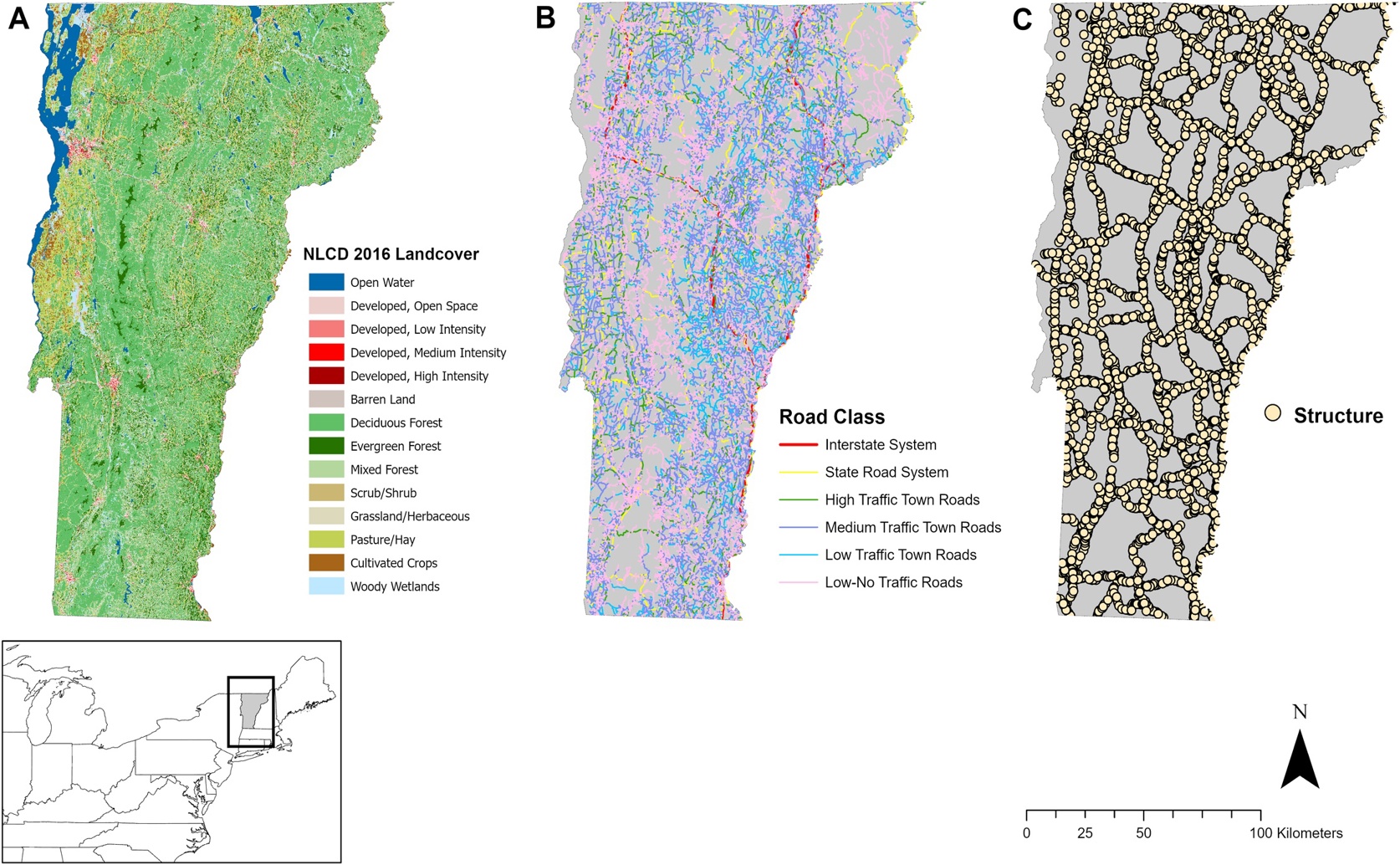
This assessment of landscape connectivity utilized detailed landcover data (a) and roadway classifications (b) to evaluate the capacity of 5,912 transportation structures (c) to facilitate terrestrial mammal movement across the fragmented Vermont landscape.
Key Findings
- This Vermont study modeled wildlife movement for eight mammal species to identify priority areas for improving road connectivity
- Forest-dependent animals like black bear showed the highest potential movement through forested areas, while raccoon favored developed landscapes
- Ranking roadway structures for improvement varied depending on whether the focus was statewide movement patterns or local conditions near the structure
References
Main Study
1) Assessing the connectivity value of roadway structures for terrestrial mammals across the Northern Appalachian forest of Vermont
Published 4th September, 2025
https://doi.org/10.1371/journal.pone.0331493
Related Studies
2) Ability of wildlife overpasses to provide connectivity and prevent genetic isolation.
3) Do all roads lead to resistance? State road density is the main impediment to gene flow in a flagship species inhabiting a severely fragmented anthropogenic landscape.
Related Articles
 27th August, 2025 | Jenn Hoskins