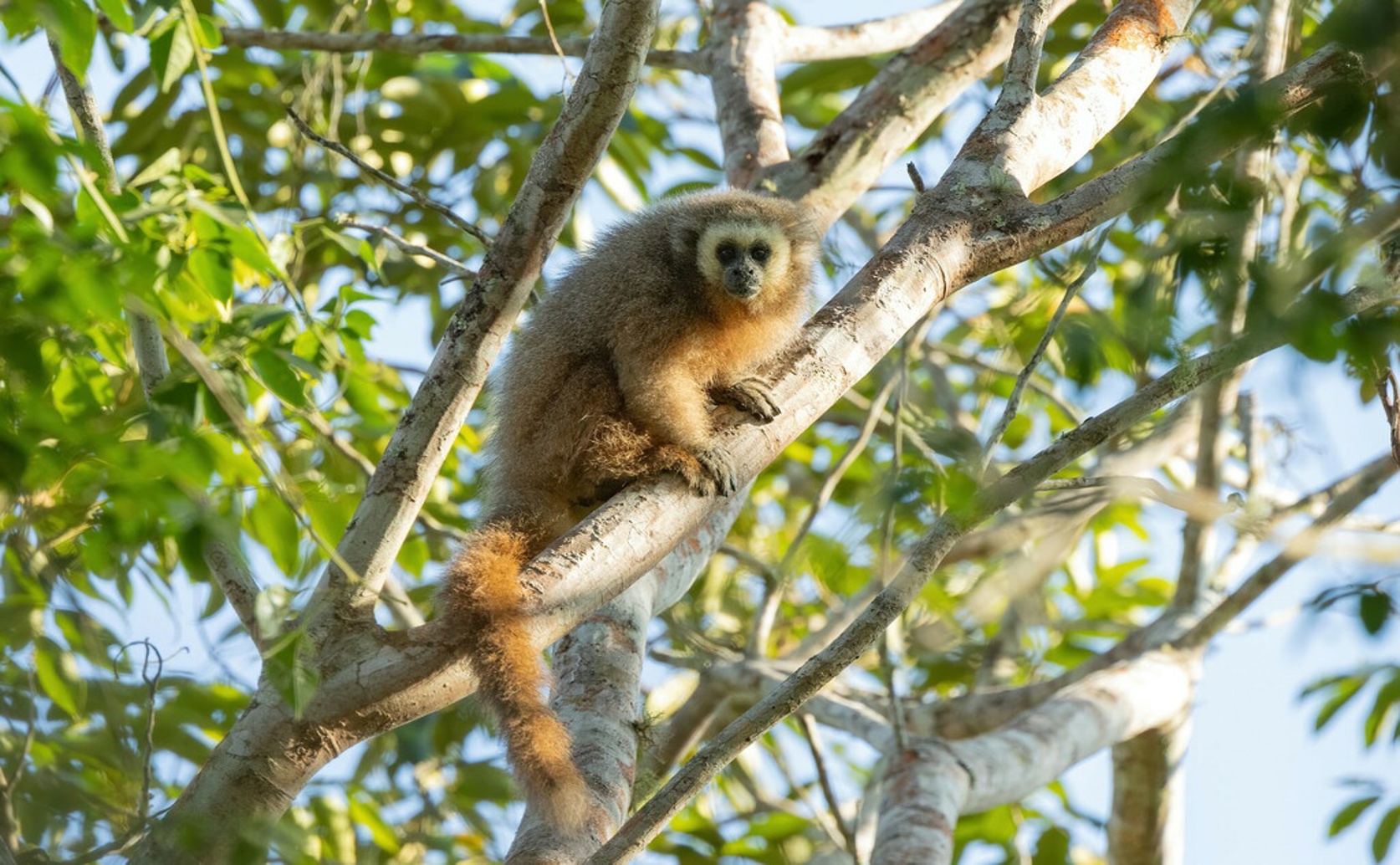
Survey of endangered woolly monkeys in city forests

Jenn Hoskins
28th August, 2025

Survey of endangered woolly monkeys in city forests

Rio Mayo Titi (Plecturocebus oenanthe)

Photo adapted from: Thibaud Aronson / CC BY SA (Source)

Key Findings

  • In Moyobamba, Peru, San Martin titi monkeys were found in 17 of 23 surveyed forest patches, indicating these areas are crucial for their survival
  • Larger forest patches and greater distances between patches were positively linked to more monkey groups, suggesting habitat size and connectivity support the population
  • Ambient noise negatively correlated with monkey call frequency, potentially impacting communication and territory defense
Urban growth presents a significant threat to wildlife globally, as cities expand into natural habitats, fragmenting forests and isolating animal populations. This is particularly concerning for species with limited dispersal abilities and specific habitat requirements. The city of Moyobamba in Peru, experiencing rapid population growth since 1970, provides a case study for understanding how primates persist within increasingly urbanized landscapes. A recent study by researchers at Neotropical Primate Conservation[1] investigated the presence and population size of the San Martin titi monkey ( Plecturocebus oenanthe), a Critically Endangered species endemic to the region, within the city’s remaining forest patches. The San Martin titi monkey is facing severe threats due to habitat loss, historically driven by deforestation[2]. While small-scale reforestation efforts have shown some success in restoring habitat and supporting populations in areas like Pucunucho[3], the increasing pressure from urban expansion presents a new set of challenges. The study aimed to determine if these urban forest patches could serve as viable refuges for the species, and to identify the factors influencing their distribution and abundance. The researchers conducted an 18-month survey across 23 forest patches within Moyobamba. They focused on detecting the presence of P. oenanthe and, where present, estimating group numbers and population density using a technique called triangulation. Triangulation involves using multiple observations from different locations to pinpoint the location of animal groups, providing a robust method for estimating population size. The results revealed that P. oenanthe was found in 17 of the 23 patches surveyed, and was never observed outside of these forested areas. This suggests that these patches are crucial for the species’ survival within the city. Population estimates indicated approximately 26 groups of monkeys residing within the urban forest fragments. Statistical analysis showed a positive correlation between the number of monkey groups per patch and two key variables: patch area and the distance between patches. Larger patches naturally provide more resources and suitable habitat, while greater distances between patches likely reduce the risk of isolation and promote genetic diversity. Interestingly, other landscape features and habitat structure did not significantly influence the presence or density of the monkeys. This study builds upon previous research highlighting the vulnerability of Peruvian primates to illegal trade[4]. While the Moyobamba population isn’t directly assessed for trade pressure in this study, the findings underscore the importance of protecting remaining habitat to prevent further declines. The research also complements work documenting successful reforestation initiatives[3], demonstrating that habitat restoration can contribute to species recovery. However, the current study focuses on a different, and arguably more challenging, conservation context – the dynamic environment of an expanding city. The findings of are particularly relevant given the broader context of primate conservation in Peru, which faces threats from both habitat loss and hunting[2]. The fact that P. oenanthe is restricted to forest patches within an urban setting emphasizes the need for proactive conservation strategies that integrate wildlife considerations into urban planning. Prioritizing the preservation of existing forest patches and establishing green corridors to connect them are crucial steps toward ensuring the long-term persistence of this endangered species in a rapidly developing landscape. The study highlights that urban forests can indeed support important primate populations, offering a glimmer of hope for biodiversity conservation in human-dominated environments.

EnvironmentWildlifeEcology

References

Main Study

1) A survey of critically endangered plecturocebus oenanthe in moyobamba’s urban forests, Peru

Published 25th August, 2025

https://doi.org/10.1038/s41598-025-17148-1


Related Studies

2) A high-diversity primate community in a mid-elevation flooded forest, the Jungla de Los Monos Community Reserve, Peru.

https://doi.org/10.1007/s10329-020-00833-2


3) Natural re-establishment of a population of a critically endangered primate in a secondary forest: the San Martin titi monkey (Plecturocebus oenanthe) at the Pucunucho Private Conservation Area, Peru.

https://doi.org/10.1007/s10329-016-0581-8


4) Diagnostic overview of the illegal trade in primates and law enforcement in Peru.

https://doi.org/10.1002/ajp.22516


Related Articles

An unhandled error has occurred. Reload 🗙