
Tick Life Cycles, Host Relationships, and Disease Tracking in a Texas Forest
Jenn Hoskins
22nd August, 2025


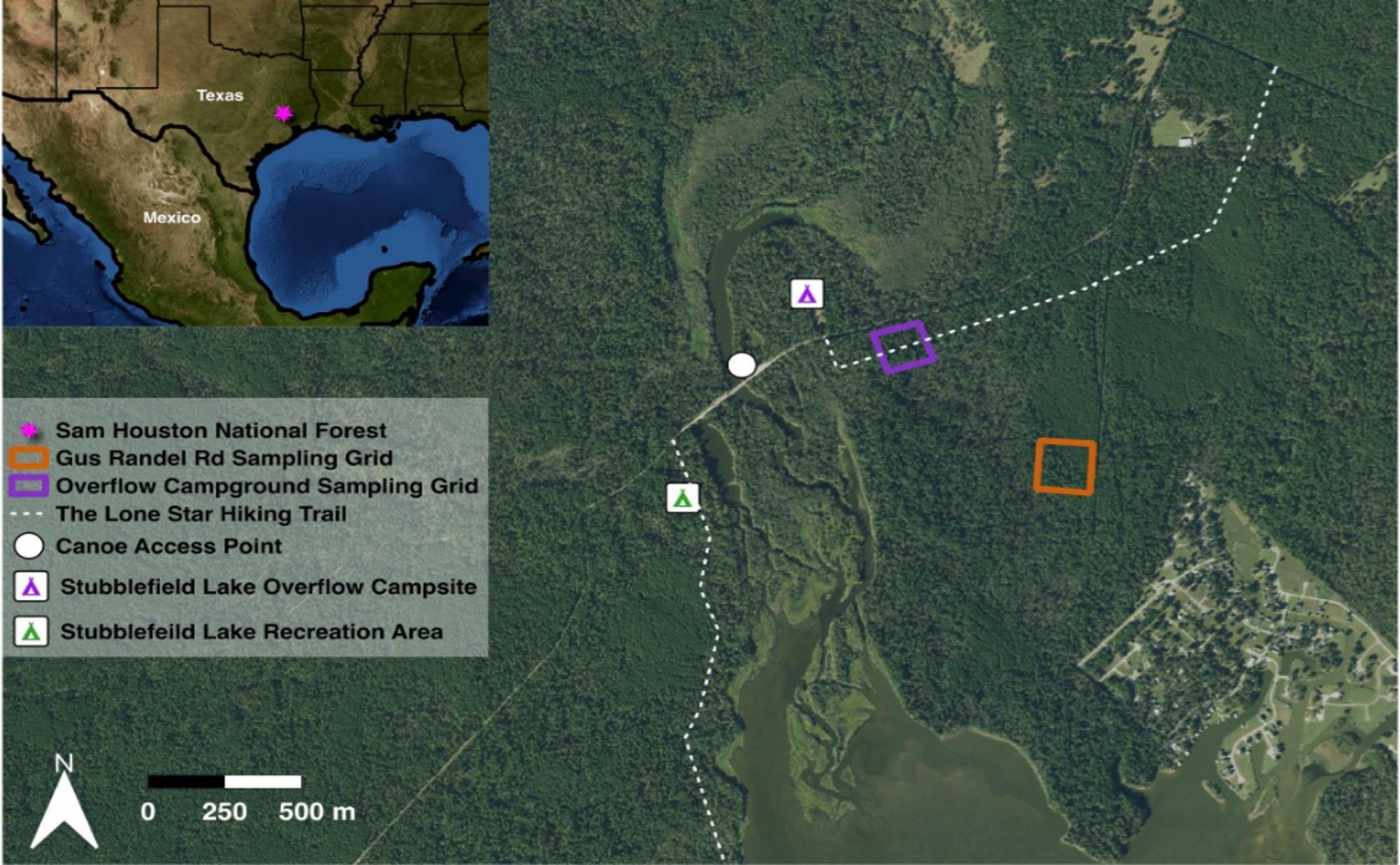
Surveillance grids were established within the pine-dominated (Pinus spp.) Sam Houston National Forest, Texas, to characterize tick ecology in an area of high human recreational activity.
Key Findings
- This Texas study investigated tick activity, host preferences, and pathogen presence in Sam Houston National Forest over one year
- Tick activity varied by species and life stage, with lone star ticks most abundant in spring/summer and blacklegged ticks peaking in winter
- Researchers identified several Rickettsia bacteria within ticks, but found no evidence of Borrelia burgdorferi, the Lyme disease bacterium
References
Main Study
1) Tick phenology, tick-host associations, and tick-borne pathogen surveillance in a recreational forest of East Texas, USA
Published 21st August, 2025
https://doi.org/10.1371/journal.pone.0330826
Related Studies
2) Emerging tick-borne pathogens of public health importance: a mini-review.
3) The Need for a National Strategy to Address Vector-Borne Disease Threats in the United States.
4) Synchronous phenology of juvenile Ixodes scapularis, vertebrate host relationships, and associated patterns of Borrelia burgdorferi ribotypes in the midwestern United States.
5) Co-feeding transmission in Lyme disease pathogens.
Related Articles
 8th August, 2024 | Jenn Hoskins