Using Biology and Engineering to Reduce Power Plant Impact

Jenn Hoskins
8th May, 2025

Using Biology and Engineering to Reduce Power Plant Impact

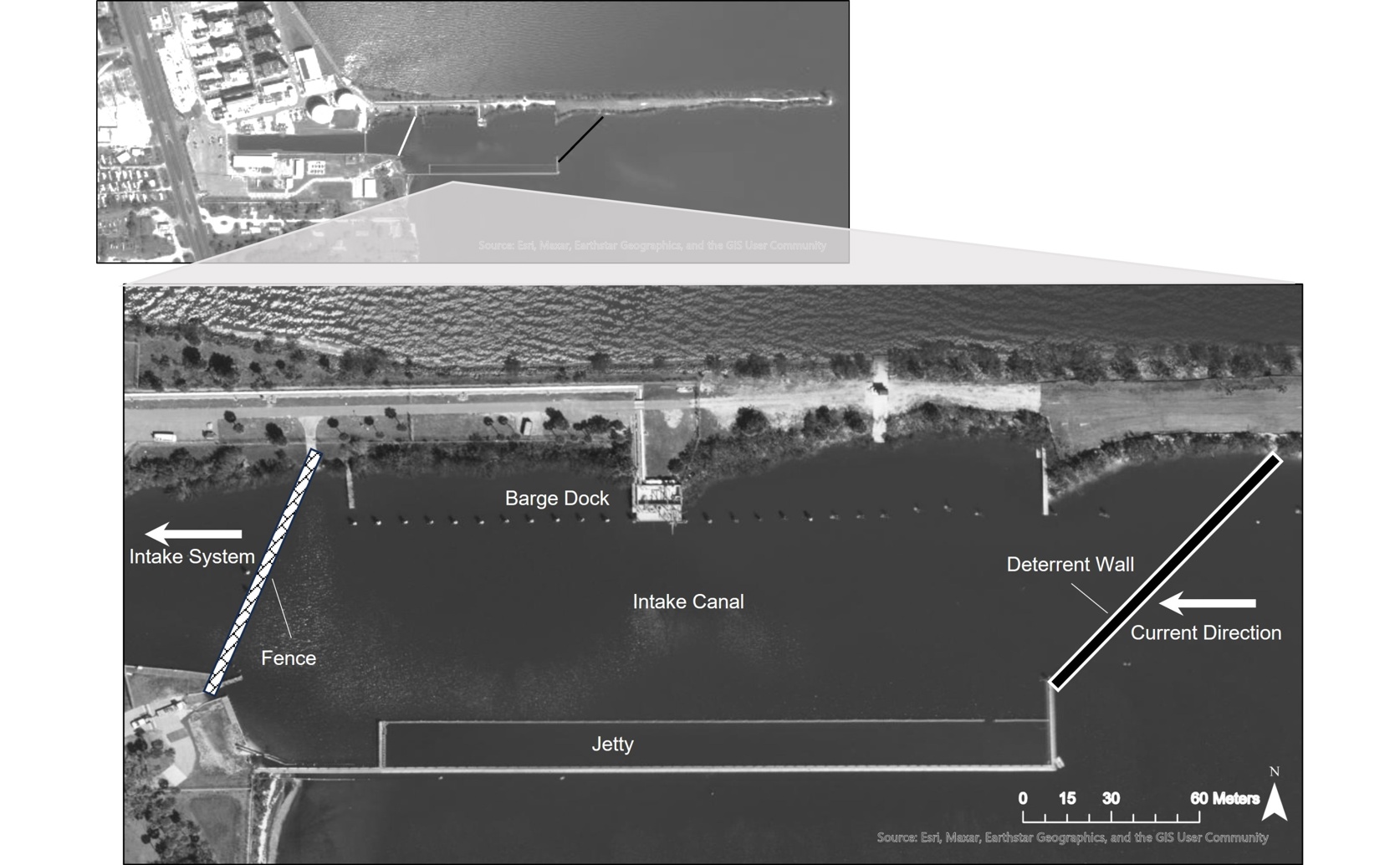
The strategic repositioning of the barrier from the ineffective prototype fence location (brick bar) to the permanent deterrent wall at the entrance of the intake canal (black solid bar) was a critical design change that prevented American horseshoe crabs (Limulus polyphemus) from being corralled by the intake current, successfully reducing their impingement.

Image adapted from: Crowley-McIntyre et al. / CC BY (Source)

Key Findings

  • In Florida’s Northern Indian River Lagoon, a power plant was trapping many horseshoe crabs with its water intake screens
  • Installing a specially designed deterrent wall reduced the number of trapped horseshoe crabs by over 97%
  • This successful collaboration protected marine life while allowing the power plant to continue operating smoothly
Electric generating plants play a crucial role in providing energy but can also impact marine ecosystems through the impingement of marine organisms on water intake screens. Impingement refers to the trapping of organisms against intake structures, which can lead to mortality or injury. Reducing this impact is essential for maintaining healthy marine populations and complying with environmental regulations. A recent study conducted by the Florida Fish and Wildlife Conservation Commission in collaboration with the University of Florida and the Sarasota Bay Estuary Program[1] addressed the significant impingement of American horseshoe crabs at a power plant located on the Northern Indian River Lagoon (NIRL) in Florida. In 2014, the power plant identified that its intake bar screens were impinging a large number of adult horseshoe crabs, which are vital for the ecosystem and have declining populations. Initially, the power plant installed a prototype fence to mitigate the impingement. However, this solution proved insufficient, resulting in the impingement of approximately 50,188 horseshoe crabs annually. Recognizing the need for a more effective approach, the plant sought to collaborate with the Florida Fish and Wildlife Conservation Commission and the University of Florida to redesign the deterrent system. The goal was to reduce the number of horseshoe crabs being impinged while ensuring that other marine species, such as manatees and sea turtles, as well as operational necessities like fuel barge passage, were not adversely affected. The team focused on improving the design by considering factors such as the structural orientation of the barrier, the materials used, and the natural behavior of horseshoe crabs. Horseshoe crabs are known to be sensitive to certain stimuli, and understanding their movement patterns was crucial in designing an effective deterrent. The improved design involved a permanently submerged deterrent wall installed across the width of the intake channel. After the installation of the new barrier in November 2017, the results were remarkable. Monitoring and maintenance revealed a 97.3% reduction in horseshoe crab impingement, bringing the average yearly impingement down to approximately 648 individuals. This significant decrease demonstrates the effectiveness of the collaborative engineering approach taken by the power plant and its partners. This study builds on earlier research conducted in Malaysia, where marine organisms were found to be significantly impacted by impingement at power plant intake screens[2]. In the Malaysian context, a variety of species, including fish, shrimp, and crabs, were affected, with penaeid shrimps being particularly susceptible. The findings from the Malaysian study highlight the broader issue of multispecies impingement and the challenges in finding mitigation solutions that are effective across different tropical environments[2]. The Florida study expands on this by focusing specifically on horseshoe crabs and tailoring a solution that considers local species' behaviors and environmental conditions. By collaborating with the Florida Fish and Wildlife Conservation Commission and leveraging the expertise of the University of Florida, the power plant was able to develop a targeted solution that not only met regulatory requirements under Section 316(b) of the Clean Water Act but also preserved the ecological balance of the NIRL. The use of a permanently submerged deterrent wall represents a significant advancement in impingement mitigation technologies, offering a model that can be replicated in other regions facing similar challenges. Furthermore, the success of this project underscores the importance of ongoing monitoring and adaptive management. Continuous assessment ensures that the deterrent remains effective and that any necessary adjustments can be made promptly to address changing conditions or emerging issues. This proactive approach is essential for sustaining the benefits achieved and for fostering a harmonious relationship between energy production and marine conservation. In conclusion, the study by the Florida Fish and Wildlife Conservation Commission and its partners provides a compelling example of how collaborative efforts and innovative engineering can effectively reduce the impingement of marine organisms at power plants. By significantly lowering the number of horseshoe crabs affected, the project not only contributes to the conservation of an important species but also sets a precedent for future initiatives aimed at minimizing environmental impacts of energy infrastructure.

EnvironmentWildlifeEcology

References

Main Study

1) Biological knowledge combined with innovative engineering to reduce power plant impingement of horseshoe crabs

Published 5th May, 2025

https://doi.org/10.1371/journal.pone.0322119


Related Studies

2) Multispecies impingement in a tropical power plant, Straits of Malacca.

https://doi.org/10.1016/j.marenvres.2010.02.004


Related Articles

An unhandled error has occurred. Reload 🗙