Citizen Science Tracks Spread of Invasive Asian Mantleslug

Jenn Hoskins
4th September, 2025

Citizen Science Tracks Spread of Invasive Asian Mantleslug

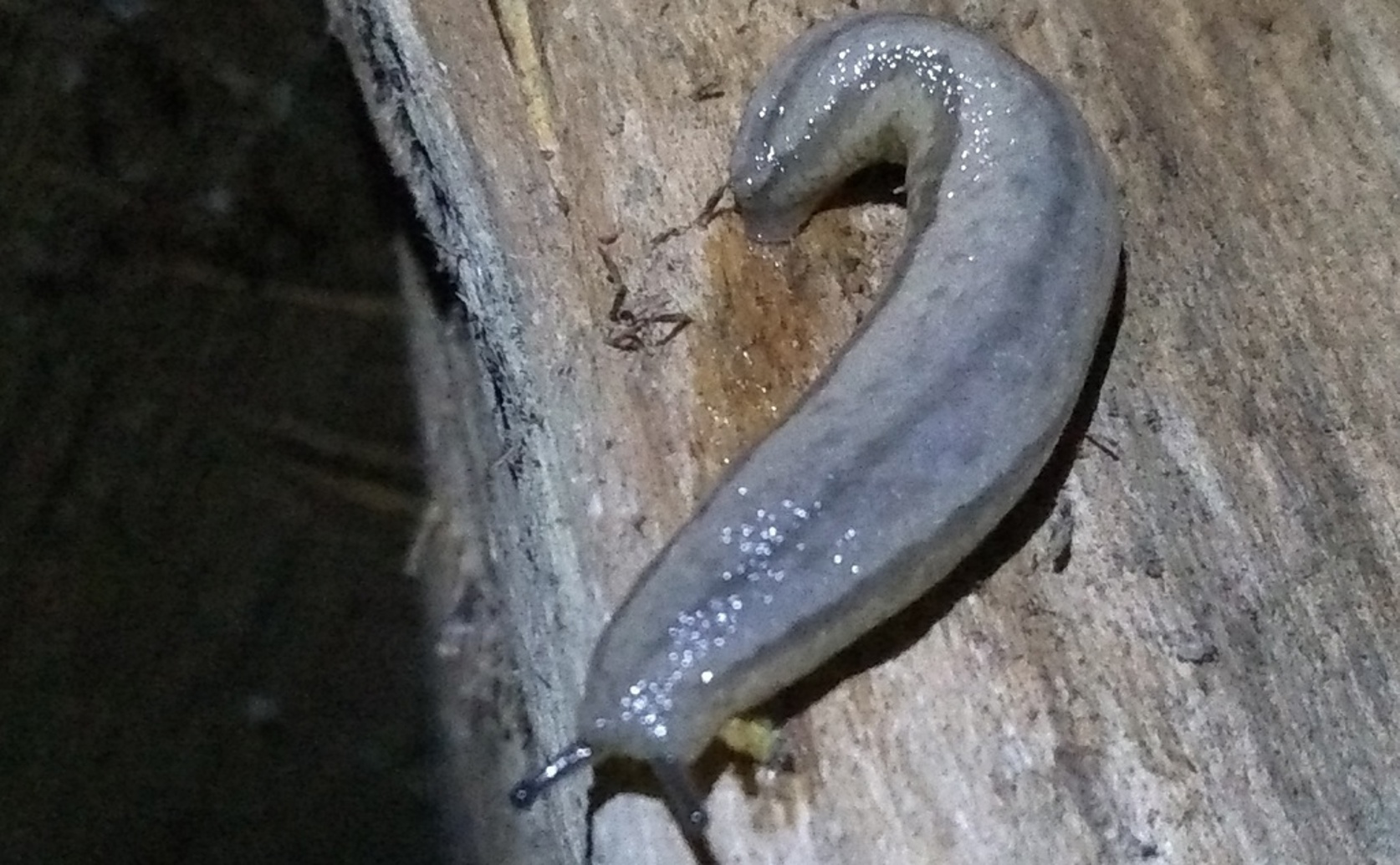
Meghimatium pictum

Photo adapted from: Daniel Duarte / CC BY (Source)

Key Findings

  • Researchers used citizen science data from Brazil to map the Asian mantleslug’s spread, confirming its presence in four new states
  • Genetic analysis suggests the slugs in Brazil likely originated from Guangzhou, China, a major port city
  • A species distribution model indicates the slug thrives in subtropical Atlantic Forest areas, with potential for expansion into similar regions
The Asian mantleslug, Meghimatium pictum, is a relatively recent arrival to Brazil, first formally identified in 2011. Despite arriving in the late 1990s, it quickly became recognized as an agricultural pest and was classified as an invasive species. Importantly, it was also found to act as an intermediate host for a parasitic nematode, Angiostrongylus costaricensis, a worm that can cause illness in humans[2]. However, following the initial report of its presence, no further research was conducted to understand the extent of its spread. A recent study by researchers at the University of São Paulo[1] addresses this gap in knowledge, utilizing a novel approach to map the slug’s current distribution and predict its potential future range. The core problem this study tackles is the need for effective monitoring of invasive species. Traditional ecological surveys can be expensive and time-consuming, making it difficult to track rapidly spreading organisms. The researchers sought to overcome this limitation by leveraging data contributed by citizen scientists through the iNaturalist platform. iNaturalist allows users to upload photos of organisms they encounter, which are then identified (often with the help of other users and automated tools) and geolocated. This creates a large, publicly available database of species observations. The study compiled 520 new records of M. pictum from across Brazil, significantly expanding the known distribution of the species. These records confirmed its presence in four additional states – Distrito Federal, Minas Gerais, Espírito Santo, and Paraná – beyond those previously documented. Currently, the slug has been found in seven Brazilian states: Distrito Federal, Minas Gerais, Espírito Santo, Rio de Janeiro, São Paulo, Paraná, Santa Catarina, and Rio Grande do Sul. This expansion highlights the slug’s ability to adapt and proliferate in diverse environments. Beyond simply mapping the slug’s current distribution, the researchers also investigated the genetic relationships between Brazilian and Asian populations of M. pictum. Using genetic barcode data – short, standardized DNA sequences used to identify species – they found a close link between the slugs in South America and those originating from Okinawa, Taiwan, and Guangzhou in mainland China. The strongest genetic evidence suggests that the South American populations most likely originated from Guangzhou, providing valuable insight into the pathways of invasion. Understanding how a species spreads is only half the battle; predicting where it could spread is crucial for proactive management. To address this, the researchers employed a species distribution model. This type of model uses environmental factors – such as temperature, rainfall, and elevation – to identify areas with suitable conditions for a species to thrive. The model revealed that, within Brazil, M. pictum is largely confined to subtropical areas within the Atlantic Forest ecoregion. However, it also identified several other areas with similar environmental characteristics where the slug has not yet been recorded, suggesting potential sites for future establishment. This research builds upon earlier findings regarding the role of gastropods – slugs and snails – as intermediate hosts for Angiostrongylus species[3]. The discovery that M. pictum hosts A. costaricensis[2] is particularly concerning, as it creates a potential pathway for human infection. The expansion of the slug’s range therefore has direct implications for public health. The study demonstrates the power of citizen science as a tool for monitoring invasive species. The iNaturalist platform provided a wealth of data that would have been difficult and expensive to collect through traditional methods. The researchers emphasize the importance of continued data collection and encourage both professional scientists and amateur naturalists to contribute observations to the platform. The use of this data, combined with genetic analysis and species distribution modeling, provides a comprehensive approach to understanding and managing invasive species in Brazil.

EnvironmentWildlifeEcology

References

Main Study

1) Citizen science reveals alarming update on the invasion of the Asian mantleslug Meghimatium pictum in Brazil

Published 2nd September, 2025

https://doi.org/10.1371/journal.pone.0330518


Related Studies

2) Invasive slug Meghimatium pictum (Stoliczka, 1873) infected by Angiostrongylus costaricensis Morera & Céspedes, 1971, and the possible risk of human infection associated with grape consumption.

https://doi.org/10.1017/S0022149X18000822


3) Gastropods as intermediate hosts of Angiostrongylus spp. in the Americas: bioecological characteristics and geographical distribution.

https://doi.org/10.1590/0074-02760200236


Related Articles

An unhandled error has occurred. Reload 🗙