Protein crucial for bone growth linked to osteoporosis risk

Jim Crocker
20th October, 2025

Protein crucial for bone growth linked to osteoporosis risk

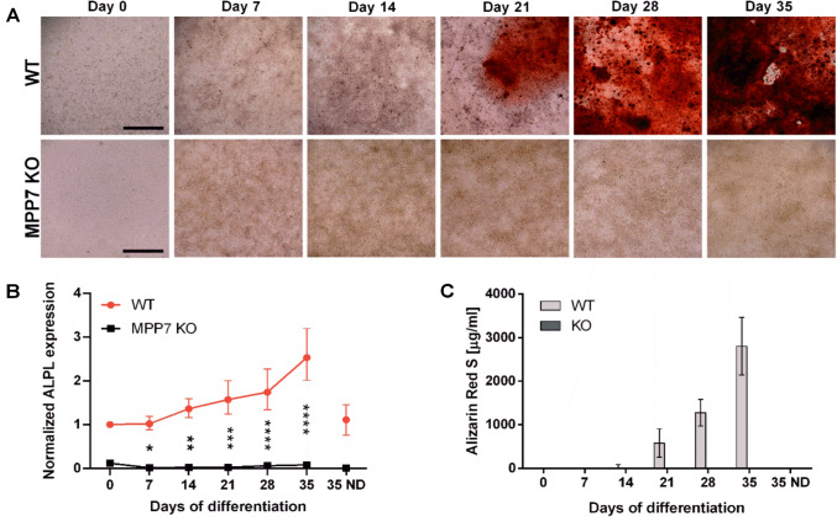
Mineralization and ALPL expression are abolished in MPP7-KO cells.

Image adapted from: Malavašič et al. / CC BY (Source)

Key Findings

  • This study, conducted in Slovenia, found lower levels of the MPP7 gene in bone samples from patients with osteoporosis compared to those with osteoarthritis or healthy bones
  • Removing the MPP7 gene from bone cells in the lab prevented them from maturing and forming mineral, essential for strong bones, by reducing production of the ALPL enzyme
  • The research suggests MPP7 is crucial for bone health and could be a target for new osteoporosis treatments, as it influences bone cell structure and function
Osteoporosis, a condition characterized by weakened bones, significantly increases the risk of fractures, particularly in older adults. Identifying the underlying causes of osteoporosis is crucial for developing effective treatments and preventative measures. Recent research has focused on genetic factors influencing bone mineral density – a key indicator of bone strength – with the goal of pinpointing specific genes that contribute to the disease. A study conducted by researchers at Novo Mesto General Hospital[1] investigated the role of a gene called membrane palmitoylated protein 7 (MPP7) in bone health. Previous genome-wide association studies had identified MPP7 as a potential candidate gene linked to bone mineral density, but its precise function remained unclear. The research team aimed to understand how MPP7 contributes to the development and maintenance of healthy bone tissue. The study began by examining bone samples from individuals with osteoporosis, osteoarthritis (a joint disease), and those with healthy bones. Researchers found that MPP7 expression – the level at which the gene is ‘turned on’ and produces a protein – was significantly lower in the bone tissue of patients with osteoporosis, approximately halved compared to the other groups. This initial observation suggested that reduced MPP7 levels might be associated with the development of osteoporosis. To further investigate this link, the researchers used a technique called CRISPR/Cas9 gene editing. This technology allows scientists to precisely disable specific genes within cells. They created a ‘knockout’ of the MPP7 gene in human bone cells grown in the laboratory (specifically, a cell line called HOS). By removing MPP7, they could observe the effects on the cells’ behavior. The results were striking. Removing MPP7 significantly impaired the cells’ ability to develop into mature bone-forming cells, a process called osteogenic differentiation. Crucially, the knockout cells were also unable to properly mineralize – meaning they couldn’t deposit the calcium and other minerals that give bones their strength and rigidity. This mineralization failure was linked to a reduction in the production of a key enzyme called ALPL, essential for bone formation. Furthermore, the cells exhibited changes in their shape and how they adhered to surfaces, suggesting that MPP7 plays a role in maintaining the correct structure and organization of bone cells. These findings align with and expand upon earlier work examining the genetic basis of osteoporosis[2]. That study identified several genetic targets associated with bone mineral density, including genes involved in cell growth and signaling pathways. The current research adds MPP7 to this list, providing a more detailed understanding of the genetic factors at play. The impact of fractures on quality of life is substantial[3]. That earlier study demonstrated that fractures, particularly in the spine, hip, and upper leg, can lead to significant reductions in physical function, vitality, and overall well-being, often comparable to or even worse than those experienced by individuals with chronic conditions like diabetes or arthritis. Understanding the underlying biological mechanisms, such as the role of MPP7, is therefore critical for developing strategies to prevent fractures and improve the lives of those affected by osteoporosis. The Novo Mesto General Hospital team also drew support from genetic studies conducted in zebrafish, a model organism frequently used in biological research. These studies independently pointed to MPP7 as a crucial gene for bone development, reinforcing the findings from the human cell experiments. The combined evidence strongly suggests that MPP7 is a key regulator of osteoblast function – the cells responsible for building new bone – and that its deficiency can contribute to osteoporosis susceptibility. The study highlights the importance of MPP7 in maintaining bone health and suggests that it could be a potential target for new osteoporosis treatments. Further research is needed to explore how MPP7 functions at a molecular level and to determine whether therapies aimed at increasing MPP7 expression or activity could help prevent or reverse bone loss.

MedicineHealthGenetics

References

Main Study

1) Membrane Palmitoylated Protein 7 is Required for Osteogenesis and is Linked with Bone Mineralization and Osteoporosis: The Functional Evaluation of GEFOS GWAS Hit

Published 17th October, 2025

https://doi.org/10.1007/s00223-025-01439-w


Related Studies

2) Genetic effects on bone health.

https://doi.org/10.1097/MCO.0000000000000482


3) Impact of prevalent fractures on quality of life: baseline results from the global longitudinal study of osteoporosis in women.

https://doi.org/10.4065/mcp.2010.0082


Related Articles

An unhandled error has occurred. Reload 🗙