
Exploring CTLA-4's Role in Gut Immune Balance in Inflammatory Bowel Disease
Greg Howard
23rd May, 2025


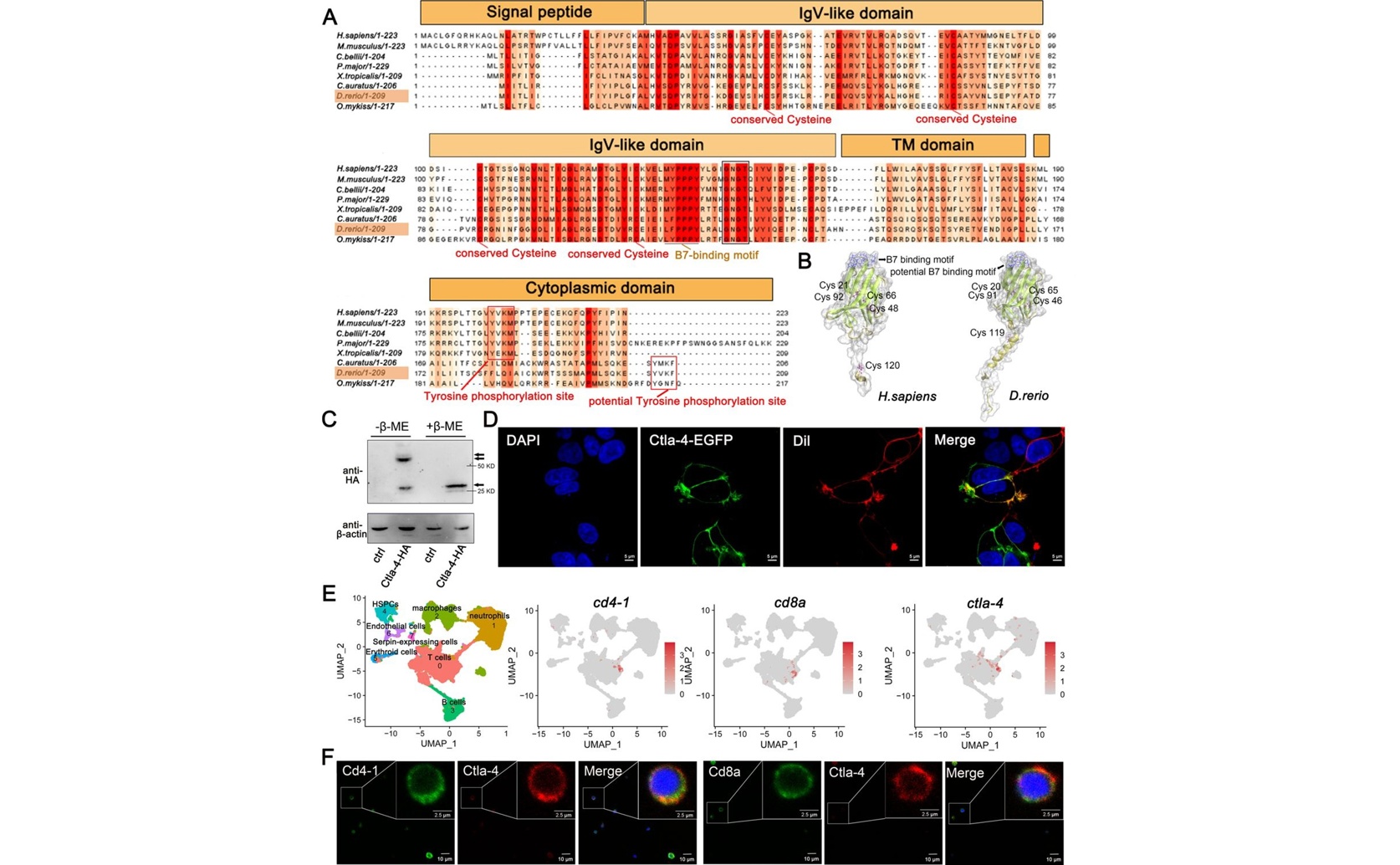
Sequence alignment and structural characterization confirm that zebrafish (Danio rerio) Ctla-4 retains conserved functional motifs and dimerization capabilities (a–c) while being predominantly expressed on the membrane of T lymphocytes (d–f), thereby validating the evolutionary conservation required for the study's IBD model.
Key Findings
- In Zhejiang University's zebrafish study, lacking the CTLA-4 gene led to weight loss, intestinal inflammation, and disrupted gut bacteria, similar to human inflammatory bowel disease (IBD)
- Detailed gene analysis showed increased inflammatory signals and changes in immune cells, highlighting CTLA-4’s role in maintaining gut health
- Administering a CTLA-4-like protein reduced inflammation in these fish, pointing to new potential treatments for IBD
References
Main Study
1) Unraveling the role of Ctla-4 in intestinal immune homeostasis through a novel Zebrafish model of inflammatory bowel disease
Published 20th May, 2025
https://doi.org/10.7554/eLife.101932
Related Studies
2) CTLA-4-expressing ILC3s restrain interleukin-23-mediated inflammation.
3) Gastric cancer, inflammatory bowel disease and polyautoimmunity in a 17-year-old boy: CTLA-4 deficiency successfully treated with Abatacept.
4) TNF-α modulation of intestinal epithelial tight junction barrier is regulated by ERK1/2 activation of Elk-1.
Related Articles
 13th April, 2025 | Jenn Hoskins