Magnetic particles boost enzyme production for better sugar synthesis

Jenn Hoskins
17th October, 2025

Magnetic particles boost enzyme production for better sugar synthesis

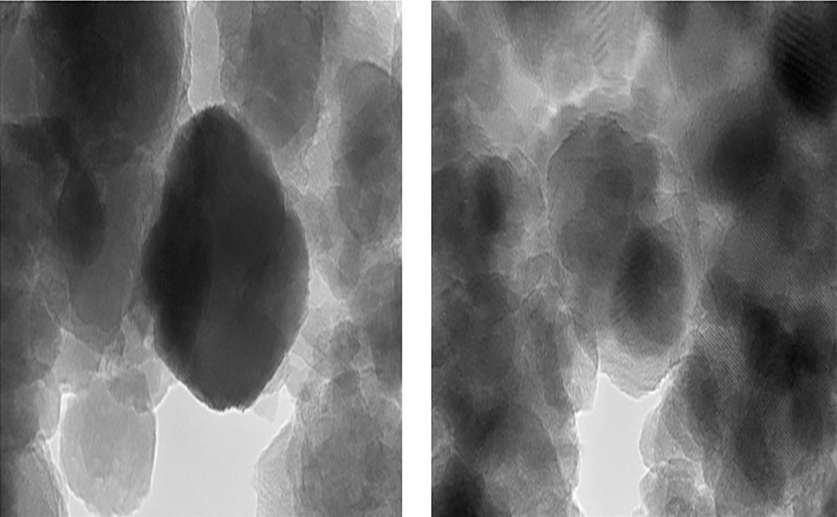
These microscope images from the study reveal how a biocompatible sugar coating transforms bare magnetic nanoparticles (left) into powerful, reusable "nano-factories" (right) for synthesizing healthier prebiotics.

Image adapted from: Makki et al. / CC BY (Source)

Key Findings

  • Researchers at multiple institutions improved the enzyme rlevblg1, which breaks down levan sugar into fructooligosaccharides (FOS), valuable for gut health
  • By attaching rlevblg1 to magnetic nanoparticles coated with oxidized dextran, the team created a more stable enzyme that could be easily recovered and reused
  • The modified enzyme, rlevblg1-OdexM-CLEAs, maintained 8.9 times more activity after one hour at 40°C compared to the original enzyme, and was reusable for at least ten cycles
Enzymes are increasingly used in industrial processes due to their ability to speed up chemical reactions[2]. However, natural enzymes often lack the robustness needed for large-scale applications, struggling with stability and reusability. Researchers are continually developing methods to improve enzyme performance, including techniques like protein engineering and immobilization. Immobilization involves attaching enzymes to a solid support, making them easier to recover and reuse, and often enhancing their stability. A recent study by researchers at the University of Tabuk, Universiti Teknologi Malaysia, and Nelson Mandela African Inst. of Science & Tech.[1] focused on improving the enzyme rlevblg1, which breaks down a sugar called levan into fructooligosaccharides (FOS). Levanase enzymes, like rlevblg1, are used to produce scFOSs from levan hydrolysis[3]. FOS are gaining popularity as healthy food ingredients, offering prebiotic benefits by promoting the growth of beneficial gut bacteria[4]. The challenge with using rlevblg1 directly is its instability; it can lose activity quickly under the harsh conditions often found in industrial settings. To address this, the team employed a sophisticated approach involving computational analysis – using computer modelling to predict the best location for attaching the enzyme to a magnetic support. This process, termed in silico analysis, identified a site on rlevblg1 away from the active site – the part of the enzyme directly involved in breaking down levan. The support material chosen was a magnetic nanoparticle (MNP) coated with oxidized dextran (Odex). Dextran is a complex sugar, and oxidation introduces aldehyde groups that facilitate attachment to the enzyme. The resulting material, rlevblg1-OdexM-CLEAs (magnetic cross-linked enzyme aggregates), was designed to be easily separated from the reaction mixture using a magnet, simplifying recovery and reuse. The researchers found that the immobilization process resulted in a recovered enzyme activity of 74.7%, meaning the enzyme retained most of its original function. Importantly, the immobilized enzyme still bound to levan with similar strength as the free enzyme. Further testing revealed that the rlevblg1-OdexM-CLEAs were significantly more stable than the free enzyme, particularly at higher temperatures. The optimum temperature shifted from 30°C to 40°C, and the immobilized enzyme maintained 8.9 times more activity after one hour at 40°C compared to the free enzyme. This is a critical improvement, as industrial processes often operate at elevated temperatures. Building on earlier work demonstrating the benefits of enzyme immobilization[3], this study took a more targeted approach by using computational modelling to optimize the attachment process. The rlevblg1-OdexM-CLEAs also showed good mechanical stability and could be reused for at least ten cycles, retaining over 50% of their activity for the first five cycles. Finally, the immobilized enzyme proved effective at converting levan into L-FOS, demonstrating its potential for industrial production. This research highlights the power of combining computational methods with enzyme technology to create more efficient and robust biocatalysts, furthering the development of valuable food ingredients like FOS[5].

BiotechGeneticsBiochem

References

Main Study

1) Oxidized dextran coated magnetic nanoparticles to develop magnetic cross-linked Bacillus lehensis G1 endolevanase aggregates for levan-type fructooligosaccharides synthesis

Published 15th October, 2025

https://doi.org/10.1371/journal.pone.0333803


Related Studies

2) Strategies for design of improved biocatalysts for industrial applications.

https://doi.org/10.1016/j.biortech.2017.05.031


3) Novel cross-linked enzyme aggregates of levanase from Bacillus lehensis G1 for short-chain fructooligosaccharides synthesis: Developmental, physicochemical, kinetic and thermodynamic properties.

https://doi.org/10.1016/j.ijbiomac.2020.04.262


4) Dietary fructooligosaccharides and potential benefits on health.

https://doi.org/10.1007/BF03180584


5) Recent advances on the difructose anhydride IV preparation from levan conversion.

https://doi.org/10.1007/s00253-017-8500-5


Related Articles

An unhandled error has occurred. Reload 🗙