Blue-green algae shows promise as a new source of a cancer-fighting enzyme

Jenn Hoskins
3rd October, 2025

Blue-green algae shows promise as a new source of a cancer-fighting enzyme

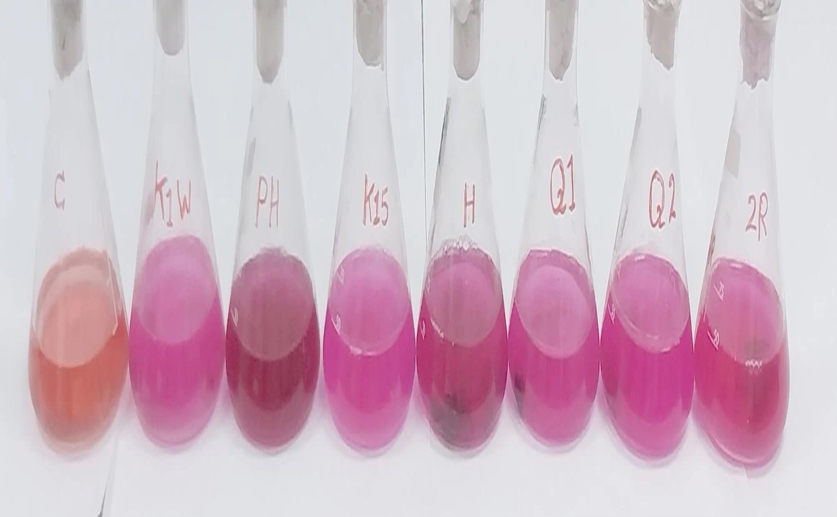
The microalgal isolates were allowed to grow on a modified F/2 medium (supplemented with phenol red as an indicator) at a temperature of 30 °C and pH 8.

Image adapted from: Gamal et al. / CC BY (Source)

Key Findings

  • Researchers isolated marine microalgae from the Mediterranean Sea to find a better source of L-asparaginase, an enzyme used in cancer treatment and food safety
  • Chroococcus turigidus was identified as the most efficient producer of L-asparaginase, yielding 212.413 IU/ml, a first-time report for this species
  • The algal extract selectively killed cancer cells (breast and liver) in lab tests, showing lower toxicity to normal cells and suggesting potential as an anti-cancer agent
L-asparaginase is an enzyme with significant medical and food industry applications, primarily due to its ability to combat cancer and reduce harmful compounds in food. It's a crucial component in treating certain types of leukemia, and its potential to mitigate the formation of acrylamide – a probable carcinogen found in cooked foods – is increasingly important. However, obtaining L-asparaginase in sufficient quantities for widespread use has been a challenge. Traditional sources and production methods can be costly and inefficient. Researchers at the National Institute of Oceanography and Fisheries (NIOF)[1] have been investigating marine microalgae as a potential solution to this problem. Microalgae are single-celled organisms that grow rapidly and produce a wide range of valuable compounds, making them attractive candidates for large-scale enzyme production. The recent study focused on isolating and characterizing microalgae capable of producing L-asparaginase, with the goal of identifying a highly efficient strain for commercial use. The NIOF team isolated seven different marine microalgae and assessed their L-asparaginase production capabilities. Among these, Chroococcus turigidus stood out as the highest producer, achieving a yield of 212.413 IU/ml – a measure of enzyme activity. This finding is particularly noteworthy as this is the first documented report of L-asparaginase production from this specific species of microalgae. To evaluate the potential of Chroococcus turigidus-derived L-asparaginase as an anti-cancer agent, the researchers tested its effect on cancer cells in vitro – meaning in a laboratory setting using cells grown in culture. They used breast carcinoma (MDA) and hepatoma (HepG-2) cell lines, comparing the results to normal human skin fibroblast (HSF) cells. The IC50 value, which represents the concentration of a substance needed to inhibit 50% of cell growth, was determined for each cell type. The algal extract showed relatively high IC50 values against normal cells (844.4 and 730.5 µg/mL after 24 and 48 hours), indicating low toxicity. However, significantly lower IC50 values were observed for the cancer cells (126.3 and 169.8 µg/mL), demonstrating a selective toxic effect on cancer cells. The selectivity index (SI) – a ratio comparing toxicity to normal cells versus cancer cells – was calculated to be 6.69 and 4.97, further confirming this selectivity. HepG-2 cells (liver cancer) exhibited slightly greater sensitivity to the treatment compared to MDA cells (breast cancer). These findings suggest that Chroococcus turigidus is a promising source of L-asparaginase with potential anti-cancer properties. The enzyme’s ability to selectively target cancer cells while sparing normal cells is a crucial advantage in cancer treatment. This research builds upon earlier work demonstrating the potential of microalgae to produce valuable compounds[2]. That study showed that supplementing microalgae cultures with glycine could enhance biomass production and the accumulation of bioactive metabolites, including amino acids, organic acids, and even fatty acids. This is relevant as optimizing growth conditions and nutrient availability is essential for maximizing enzyme yields in large-scale microalgae cultivation. The NIOF study’s success in identifying a high-producing strain like Chroococcus turigidus highlights the importance of screening diverse microalgae species for their specific biochemical capabilities. Furthermore, the potential of L-asparaginase to address dietary acrylamide exposure is significant, as epidemiological studies have linked acrylamide intake to an increased risk of certain cancers[3]. While the NIOF study did not directly investigate acrylamide mitigation, the enzyme’s known ability to break down acrylamide precursors suggests a potential application in food processing. The need for novel delivery systems for L-asparaginase, such as nanoparticles[4], is also being addressed by other researchers to improve drug efficacy and reduce side effects. Combining the high-yield production of L-asparaginase from Chroococcus turigidus with advanced delivery technologies could offer a powerful strategy for both cancer treatment and food safety. Finally, research into optimizing L-asparaginase production from Spirulina maxima[5] demonstrates the importance of factors like nitrogen concentration in culture media. The NIOF study could benefit from similar investigations to further enhance the enzyme yield from Chroococcus turigidus and improve the overall efficiency of the production process.

BiotechGeneticsBiochem

References

Main Study

1) Chroococcus turigidus, a novel cyanobacterial source for l-sparaginase production

Published 29th September, 2025

https://doi.org/10.1038/s41598-025-19839-1


Related Studies

2) Glycine differentially improved the growth and biochemical composition of Synechocystis sp. PAK13 and Chlorella variabilis DT025.

https://doi.org/10.3389/fbioe.2023.1161911


3) Dietary acrylamide intake and the risk of lymphatic malignancies: the Netherlands Cohort Study on diet and cancer.

https://doi.org/10.1371/journal.pone.0038016


4) Anticancer activity of fungal L-asparaginase conjugated with zinc oxide nanoparticles.

https://doi.org/10.1007/s10856-015-5380-z


5) Optimization of Growth Conditions for Purification and Production of L-Asparaginase by Spirulina maxima.

https://doi.org/10.1155/2016/1785938


Related Articles

An unhandled error has occurred. Reload 🗙