Virus that infects bacteria shows promise for controlling plant disease

Jenn Hoskins
15th October, 2025

Virus that infects bacteria shows promise for controlling plant disease

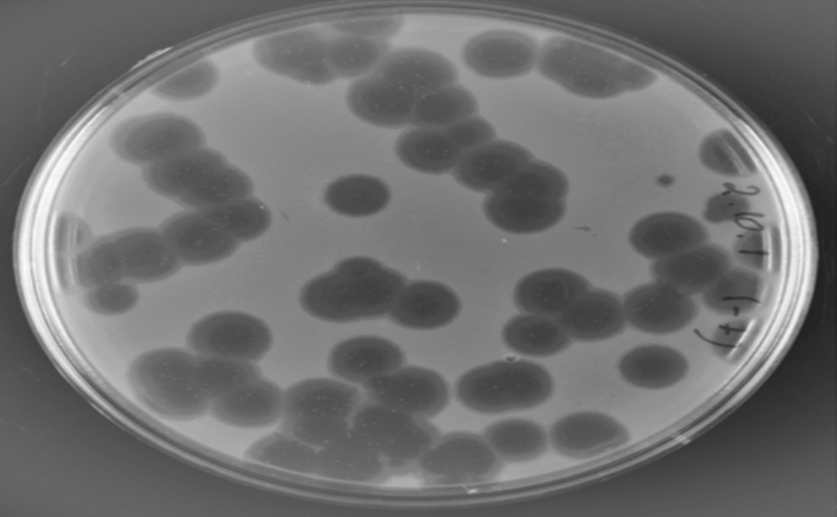
Phage plaques formed on a lawn of the bacterial host (CFBP7286)

Image adapted from: Gimranov et al. / CC BY (Source)

Key Findings

  • A new bacteriophage, Brt_Psa3, was isolated from soil in a Portuguese kiwifruit orchard and shows promise against Pseudomonas syringae pv. actinidiae (Psa)
  • Brt_Psa3 effectively reduced Psa levels on kiwifruit leaves by 40% in laboratory tests, demonstrating its potential as a biocontrol agent
  • Brt_Psa3 remained stable under conditions mimicking kiwifruit orchard environments, including varying temperatures, pH levels, and UVA radiation exposure
Bacterial canker, caused by the bacterium Pseudomonas syringae pv. actinidiae (Psa), is a serious threat to kiwifruit production globally. Current methods for controlling this disease are often ineffective, prompting a search for alternative solutions. Bacteriophages, viruses that specifically infect bacteria, are increasingly being investigated as a potential environmentally friendly biocontrol agent[2]. These viruses offer a targeted approach to disease management without the drawbacks associated with traditional pesticides or antibiotics. Researchers at the University of Minho recently isolated a new bacteriophage, named Brt_Psa3, from soil collected in a Portuguese kiwifruit orchard[1]. This phage shows promising characteristics for controlling Psa biovar 3, the most aggressive strain of the bacterium. Like other phages investigated for biocontrol purposes[2][3], Brt_Psa3 was identified through a process of isolating viruses capable of infecting and destroying Psa bacteria. The newly isolated Brt_Psa3 demonstrates a broad ability to infect various Pseudomonas strains, including different isolates of Psa itself. This broad host range is advantageous, as it suggests the phage could be effective against a wider range of Psa variants encountered in different kiwifruit orchards. Morphological analysis revealed Brt_Psa3 has a Podoviral structure – a common shape for phages – and forms clear zones of bacterial destruction, called plaques, on laboratory cultures. Further characterization of Brt_Psa3 showed it replicates efficiently, with a relatively short infection cycle (100 minutes) and produces a substantial number of new phage particles per infected cell (143 particles/cell). Crucially, the phage remained stable under conditions mimicking those found in kiwifruit orchards, including varying temperatures and pH levels. It also exhibited tolerance to UVA radiation, a factor relevant considering exposure to sunlight in the field. Genome sequencing revealed Brt_Psa3 belongs to the Autographiviridae family and Ghunavirus genus, providing further insight into its characteristics and evolutionary relationships with other phages. Importantly, the phage genome contained no genes associated with antibiotic resistance, a significant safety consideration for its use as a biocontrol agent. To assess its potential for controlling bacterial canker, researchers tested Brt_Psa3 directly on kiwifruit leaves. The results showed a significant 40% reduction in Psa levels on the leaf surfaces. This demonstrates the phage’s ability to directly target and reduce bacterial populations in a relevant setting. This finding aligns with previous studies demonstrating the effectiveness of phages in reducing bacterial contamination on various food products[2] and plant tissues[3]. The ability of phages to reduce bacterial populations even at relatively low concentrations, known as the multiplicity of infection (miMOI), is a key advantage. The stability of phages in the environment is critical for their effectiveness as biocontrol agents[4]. The study found Brt_Psa3 to be stable in a range of conditions, similar to phage PE204 which showed stability under varying temperatures and pH and even in the presence of surfactants[3]. This stability, combined with its tolerance to UVA irradiation, suggests Brt_Psa3 could maintain its activity in the kiwifruit orchard environment. While the study provides promising results, further research is needed to optimize the application of Brt_Psa3 in the field. This includes determining the optimal phage concentration, application frequency, and delivery methods. Additionally, understanding the long-term impact of phage application on the bacterial community within the kiwifruit orchard is crucial. As highlighted in earlier research[5], accurate genome annotation is essential for assessing the safety and efficacy of phages. The detailed genomic characterization of Brt_Psa3, identifying its open reading frames and absence of antibiotic resistance genes, is a positive step in this direction.

BiotechGeneticsBiochem

References

Main Study

1) Lytic properties and genomic analysis of bacteriophage Brt_Psa3, targeting Pseudomonas syringae pv. actinidiae

Published 11th October, 2025

https://doi.org/10.1007/s00253-025-13613-z


Related Studies

2) Isolation and characterization of bacteriophages from soil against food spoilage and foodborne pathogenic bacteria.

https://doi.org/10.1038/s41598-023-36591-6


3) Biocontrol potential of a lytic bacteriophage PE204 against bacterial wilt of tomato.

Journal: Journal of microbiology and biotechnology, Issue: Vol 22, Issue 12, Dec 2012


4) Bacteriophages in Natural and Artificial Environments.

https://doi.org/10.3390/pathogens8030100


5) The RAST Server: rapid annotations using subsystems technology.

https://doi.org/10.1186/1471-2164-9-75


Related Articles

An unhandled error has occurred. Reload 🗙