Effects of Arabian jasmine on zebrafish may offer key insights into anxiety

Jenn Hoskins
26th September, 2025

Effects of Arabian jasmine on zebrafish may offer key insights into anxiety

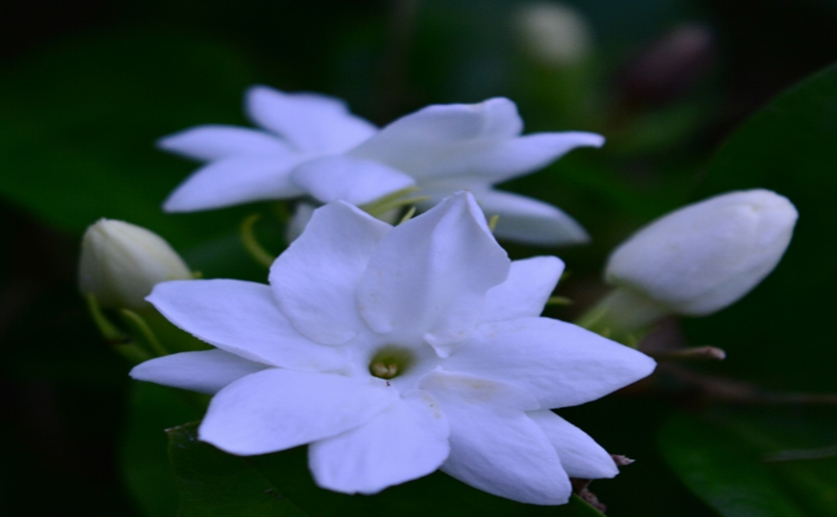
Arabian jasmine flowers.

Image adapted from Figure 1 in the research article by Atiratana et al. (licensed under CC BY)

Key Findings

  • Arabian jasmine’s effect on anxiety varies, studied in zebrafish from Thailand
  • Female AB zebrafish showed increased anxiety with jasmine extract, while others had no response
  • Individual personality traits in zebrafish influence how they react to jasmine, with shy females showing reduced anxiety
Jasminum sambac, or Arabian jasmine, has a long history of use in traditional medicine, particularly for addressing mental wellbeing. However, research into its effects has yielded inconsistent results: some studies show it reduces stress and anxiety, while others suggest it can actually increase feelings of arousal. A recent study by researchers at Srinakharinwirot University[1] investigated whether these differing effects might be linked to individual differences in zebrafish, a small freshwater fish often used as a model organism in biological research. The core problem is the variability in jasmine’s effect. Why does it help some people relax, but seem to stimulate others? The study hypothesised that factors like genetics (strain), sex, and even personality might play a role. The researchers began by chemically analyzing the jasmine flower extract to identify its key components. They found both linalool, a compound known for its calming properties[2], and benzaldehyde, which has the potential to induce anxiety. This finding immediately highlighted a possible reason for the conflicting results – the extract contains both anxiety-reducing and anxiety-inducing chemicals. To investigate the effects of the extract, the team used three different strains of zebrafish – AB, TL, and WIK. They created gelatin pellets containing varying doses of jasmine extract (5-20mg/kg) and fed them to the fish. They then observed the fish’s behavior in two tests designed to measure anxiety-related responses: the novel tank test and the mirror biting test. The novel tank test assesses anxiety by placing a fish in an unfamiliar environment and measuring how much time it spends near the bottom of the tank (anxious fish tend to stay closer to the bottom) and how much of the tank it explores (less exploration indicates higher anxiety). The mirror biting test measures aggressive behaviour, which can be an indicator of stress. 3-dimensional swim behaviour was recorded to assess these parameters. The results revealed a complex interplay of factors. In female AB fish, jasmine extract increased anxiety, shown by a decrease in both bottom distance and exploration in the novel tank test. This contrasted sharply with the WIK and TL strains, which showed no significant response to the extract. Interestingly, the study also found that personality type influenced the effects. Within the AB strain, shy females actually showed decreased anxiety (increased exploration) after receiving the extract, while low-activity males exhibited increased anxiety (increased bottom distance). This suggests that the way an individual fish typically behaves can change how it responds to jasmine. These findings build upon earlier research demonstrating that jasmine oil can increase autonomic arousal in humans[3]. The[3] study showed increases in breathing rate, blood pressure, and self-reported alertness after exposure to jasmine oil, suggesting a stimulating effect. The new zebrafish study offers a potential explanation for these seemingly contradictory results: the effects of jasmine aren't universal, and can depend on the individual. The study’s focus on zebrafish is particularly valuable because it allows for controlled experiments that are difficult to conduct in humans. The researchers were able to isolate the effects of jasmine extract while controlling for variables like diet and environment. Furthermore, using different zebrafish strains provides a way to study genetic influences on behaviour. The use of zebrafish also ties into research highlighting gender differences in responses to substances like ethanol[4], which demonstrates the importance of considering sex as a biological variable in these types of studies. Ultimately, the study by Srinakharinwirot University suggests that the variable effects of Arabian jasmine on anxiety are likely due to a combination of factors – the specific strains of jasmine used, the sex of the individual, and their inherent personality traits. This research highlights the importance of personalized approaches to aromatherapy and the need for further investigation into the complex interactions between botanical compounds and individual biology.

GeneticsPlant ScienceAnimal Science

References

Main Study

1) The effects of Arabian jasmine on zebrafish behavior depends on strain, sex, and personality

Published 23rd September, 2025

https://doi.org/10.1371/journal.pone.0332642


Related Studies

2) Effects of inhaled Linalool in anxiety, social interaction and aggressive behavior in mice.

https://doi.org/10.1016/j.phymed.2009.10.002


3) Stimulating effect of aromatherapy massage with jasmine oil.

Journal: Natural product communications, Issue: Vol 5, Issue 1, Jan 2010


4) Gender differences in ethanol-induced behavioral sensitivity in zebrafish.

https://doi.org/10.1016/j.alcohol.2010.08.018


Related Articles

An unhandled error has occurred. Reload 🗙