Plant Nano Defenders Fight Microbes, Protecting Rose and Night Queen Health

Greg Howard
24th September, 2025

Plant Nano Defenders Fight Microbes, Protecting Rose and Night Queen Health

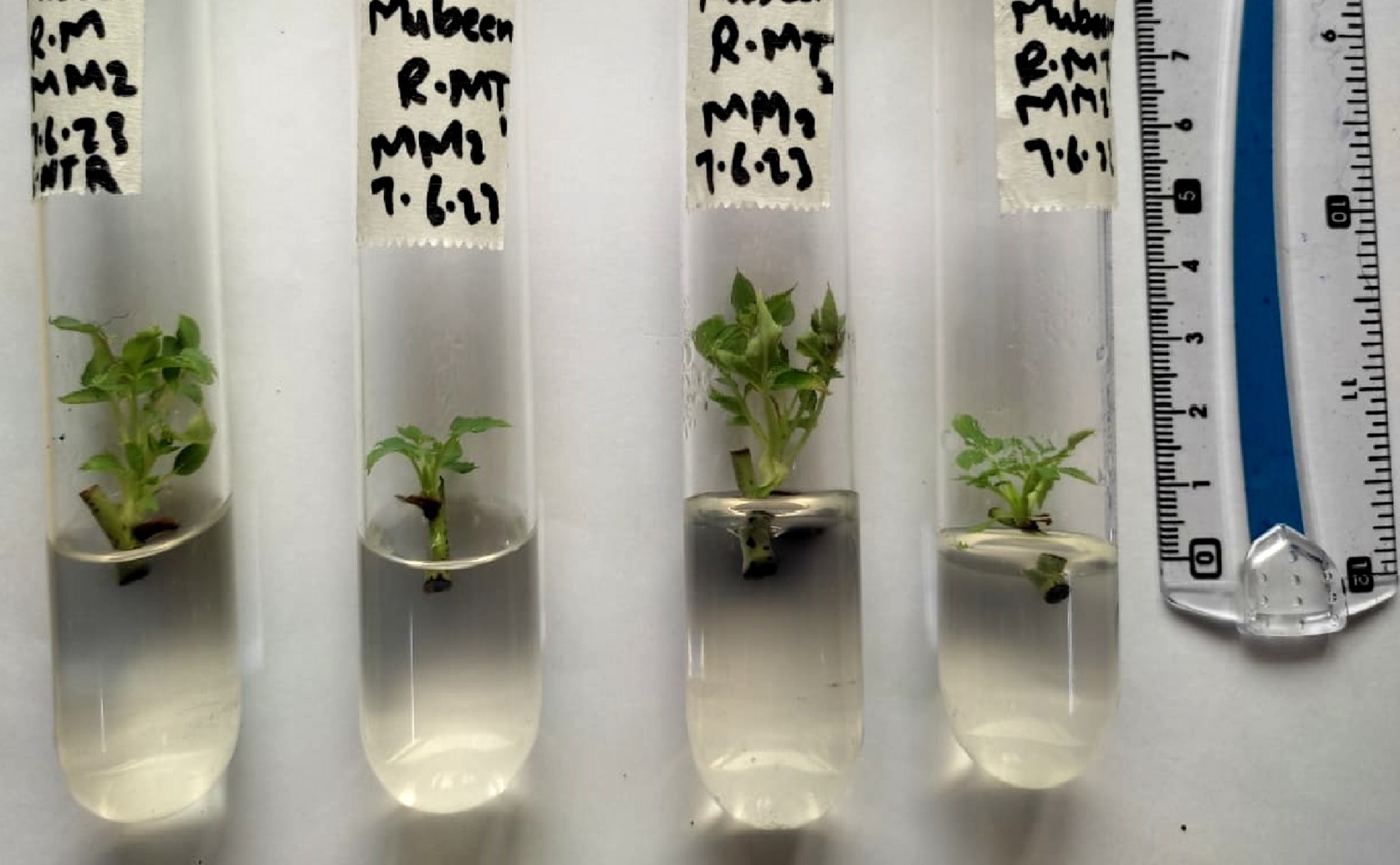
Shoot length measurement in rose plants for assessment of physical growth parameter.

Image adapted from: Jahangir et al. / CC BY (Source)

Key Findings

  • Researchers in Pakistan successfully grew rose and cestrum plants in lab cultures using silver nanoparticles (AgNPs) to fight contamination
  • A low concentration of 5 parts per million (ppm) of AgNPs effectively controlled bacterial and fungal contamination in both rose and cestrum cultures without harming the plants
  • The AgNPs treatment did not negatively impact plant cell structure, chlorophyll levels, or key gene expression patterns, suggesting it’s safe for plant development
Plant tissue culture, a method of growing plants from small pieces of plant material in a controlled environment, is a vital tool in modern agriculture and research. However, a significant challenge in this process is contamination by bacteria and fungi, which can ruin entire cultures. Traditional methods of preventing contamination often involve antibiotics, but the increasing prevalence of antibiotic-resistant microbes necessitates the search for alternative solutions. Researchers at the University of the Punjab, Superior University, Lahore College for Women University, University of the Punjab, Liupanshui Normal University, King Saud University, and University of Kashan[1] have investigated the potential of silver nanoparticles (AgNPs) as anti-contaminant agents in plant tissue culture, specifically focusing on rose (Rosa indica) and cestrum (Cestrum nocturnum). The study focused on creating AgNPs from the callus tissue of the papaya plant using silver nitrate. These AgNPs were then added to the growth medium used for culturing rose and cestrum shoots. The researchers tested three different concentrations of AgNPs – 2, 3, and 5 parts per million (ppm) – to determine the optimal dose for controlling contamination without harming the plants. The problem of bacterial resistance to existing antimicrobial agents is well-documented, and silver has a long history of use as an antimicrobial substance[2]. While metallic silver and compounds like silver nitrate have been used for centuries to treat wounds and infections, their use declined with the advent of antibiotics. However, the rise of antibiotic resistance has prompted a renewed interest in silver, particularly in its nanoparticle form[3]. Nanotechnology allows silver to be reduced to extremely small sizes, dramatically altering its properties and enhancing its antimicrobial activity. To assess the effectiveness of the AgNPs, the researchers meticulously examined the morphology of the tissue-cultured plants. They used fluorescent and scanning electron microscopy (SEM) to compare control plants (grown without AgNPs) to those grown with the different AgNP concentrations. The results showed that 5 ppm of AgNPs was the most effective concentration for controlling contamination in both rose and cestrum cultures, leading to the highest survival rate of plants. Importantly, this concentration did not visibly affect the structure of the plant cells, tissues, or vascular bundles. Beyond visual observation, the researchers investigated whether the AgNPs were causing stress to the plants at a molecular level. They analyzed the expression of two housekeeping genes – SAND and PP2A – using real-time PCR. Housekeeping genes are consistently expressed in plant cells and serve as indicators of overall cellular health. The results indicated that the expression levels of SAND and PP2A were the same in both the control plants and those treated with 5 ppm AgNPs, suggesting that the nanoparticles were not inducing a significant stress response. Previous research has highlighted the antioxidant and antibacterial properties of AgNPs synthesized using various plant extracts[4]. This study builds upon this knowledge by demonstrating the practical application of AgNPs in a critical area of plant biotechnology. Furthermore, studies have shown that AgNPs can also have antimicrobial effects in plant tissue culture, impacting ethylene production and seedling growth[5]. The findings of align with this, showcasing the potential of AgNPs to combat contamination without compromising plant development. The study’s success in maintaining chlorophyll content at levels comparable to control plants is significant. Chlorophyll is essential for photosynthesis, and any reduction in its levels would indicate a negative impact on plant physiology. The consistent chlorophyll content, coupled with the unchanged expression of housekeeping genes, provides strong evidence that the 5 ppm AgNP treatment is safe and well-tolerated by both rose and cestrum plants. In essence, the research provides a promising alternative to traditional contamination control methods in plant tissue culture. By utilizing bio-synthesized silver nanoparticles at a low concentration, researchers were able to effectively reduce bacterial and fungal attacks without affecting the morphology, physiology, or genetics of the plants.

AgricultureGeneticsPlant Science

References

Main Study

1) Plant based Nano defenders successfully fight microbial contaminants without damaging the morphology and genetics of rose and night queen

Published 23rd September, 2025

https://doi.org/10.1371/journal.pone.0331792


Related Studies

2) Silver nanoparticles as a new generation of antimicrobials.

https://doi.org/10.1016/j.biotechadv.2008.09.002


3) Biosynthesis of silver nanoparticles using ethanolic petals extract of Rosa indica and characterization of its antibacterial, anticancer and anti-inflammatory activities.

https://doi.org/10.1016/j.saa.2014.10.043


4) Antioxidant and antibacterial activity of silver nanoparticles synthesized by Cestrum nocturnum.

https://doi.org/10.1016/j.jaim.2017.11.003


5) Silver Nanoparticles: An Influential Element in Plant Nanobiotechnology.

https://doi.org/10.1007/s12033-016-9943-0


Related Articles

An unhandled error has occurred. Reload 🗙