How Plant Variety, Stress, and Growing Conditions Affect Quinoa Yield

Greg Howard
5th September, 2025

How Plant Variety, Stress, and Growing Conditions Affect Quinoa Yield

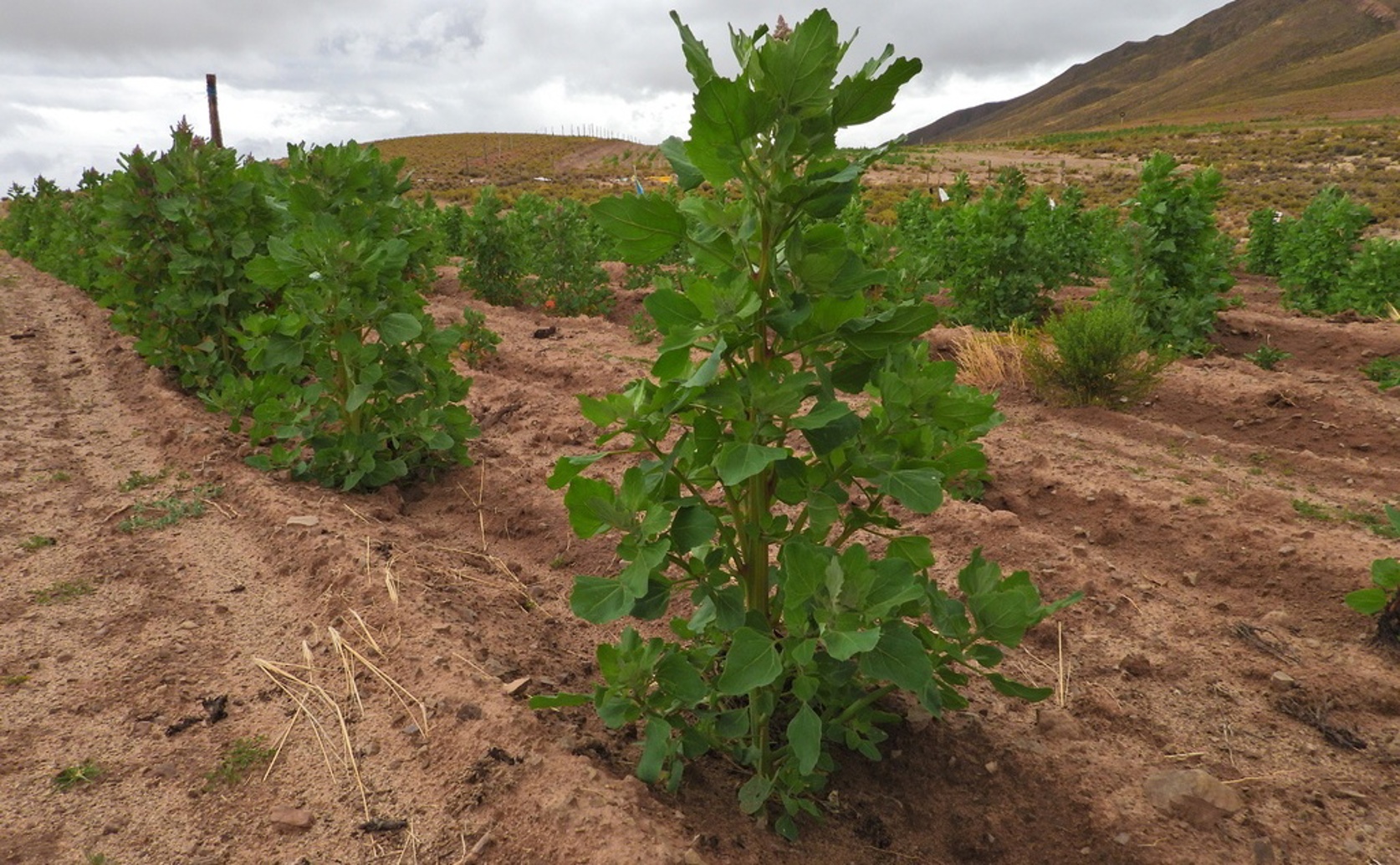
Quinoa (Chenopodium quinoa)

Photo adapted from: Humber Alberto / CC BY (Source)

Key Findings

  • This Vietnam-based study examined how five quinoa varieties responded to drought, salinity, and waterlogging during the flowering stage, a critical period for yield
  • Both the quinoa variety and the level of environmental stress significantly impacted plant growth and yield, with waterlogging causing the most substantial reductions
  • The interaction between quinoa variety and stress level was important, meaning some varieties performed better under specific stress conditions, highlighting the need for tailored breeding programs
Quinoa, a grain originating in the Andes, has gained global recognition as a highly nutritious food source[2]. Its resilience to harsh conditions makes it a promising crop for future food security, particularly as climate change intensifies[3]. However, understanding how different quinoa varieties respond to specific environmental stresses is crucial for optimizing its cultivation. A recent study conducted by researchers at Vietnam National University of Agriculture[1] investigated the impact of genotype, environmental stress, and the interaction between the two on quinoa’s flowering stage – a critical period for growth and yield. The study focused on five quinoa genotypes – Q1, Cahuil, G18, Isluga, and Q3 – and exposed them to four different conditions: a control group with no stress, waterlogging, salinity, and drought. These conditions were chosen to represent common climate-related challenges. Researchers used a controlled greenhouse environment and a randomized experimental design to minimize external variables and ensure reliable results. They then meticulously measured various morphological and yield traits, including plant height, number of leaves, leaf area, biomass, panicle length, and grain yield. The results clearly demonstrated that both the quinoa genotype and the environmental stress significantly affected all measured traits. Importantly, the interaction between genotype and environment – meaning how a specific variety performed under a specific stress – also had a substantial impact. This indicates that not all quinoa varieties respond to stress in the same way, highlighting the importance of selecting the right variety for a given environment. The order of stress severity, from most to least damaging, was waterlogging, drought, salinity, and then the control group. Waterlogging proved to be the most detrimental, causing the largest reductions in growth and yield. These findings build upon previous research that has already established quinoa’s inherent stress tolerance[3]. Quinoa’s ability to grow in saline soil, cold temperatures, and drought conditions is well-documented, and its genetic diversity allows for adaptation to varied environments. However, the Vietnam National University of Agriculture study goes further by quantifying the degree to which different varieties are affected by specific stresses, and importantly, identifies waterlogging as a particularly significant challenge. The study employed a statistical method called AMMI (Additive Main Effects and Multiplicative Interaction) analysis. This technique helped identify genotype-specific responses to each stress condition. Essentially, it revealed which varieties performed well under which stresses, and which struggled. This is crucial information for breeding programs aiming to develop quinoa varieties tailored to specific regions and anticipated climate conditions[4]. The research also connects to the need for improved agricultural practices. While quinoa is naturally resilient, optimizing irrigation management is vital, particularly in light of increasing water scarcity and the risk of events like waterlogging. Understanding how different quinoa varieties utilize water and respond to varying levels of soil moisture can inform more efficient irrigation strategies. Furthermore, the study supports the ongoing efforts to promote quinoa cultivation as a means of enhancing food security in a changing climate[2][3]. The identification of stress-tolerant genotypes is a key step in ensuring reliable quinoa production, even under adverse conditions.

AgricultureGeneticsPlant Science

References

Main Study

1) Impact of genotypes, environmental stresses, and genotype by environment interactions on growth and yield of quinoa at flowering stage

Published 2nd September, 2025

https://doi.org/10.1371/journal.pone.0331652


Related Studies

2) Quinoa (Chenopodium quinoa Willd.): An Overview of the Potentials of the "Golden Grain" and Socio-Economic and Environmental Aspects of Its Cultivation and Marketization.

https://doi.org/10.3390/foods9020216


3) Adaptive mechanisms in quinoa for coping in stressful environments: an update.

https://doi.org/10.7717/peerj.14832


4) Challenges and Perspectives for Integrating Quinoa into the Agri-Food System.

https://doi.org/10.3390/plants12193361


Related Articles

An unhandled error has occurred. Reload 🗙